Comparing fractions worksheets
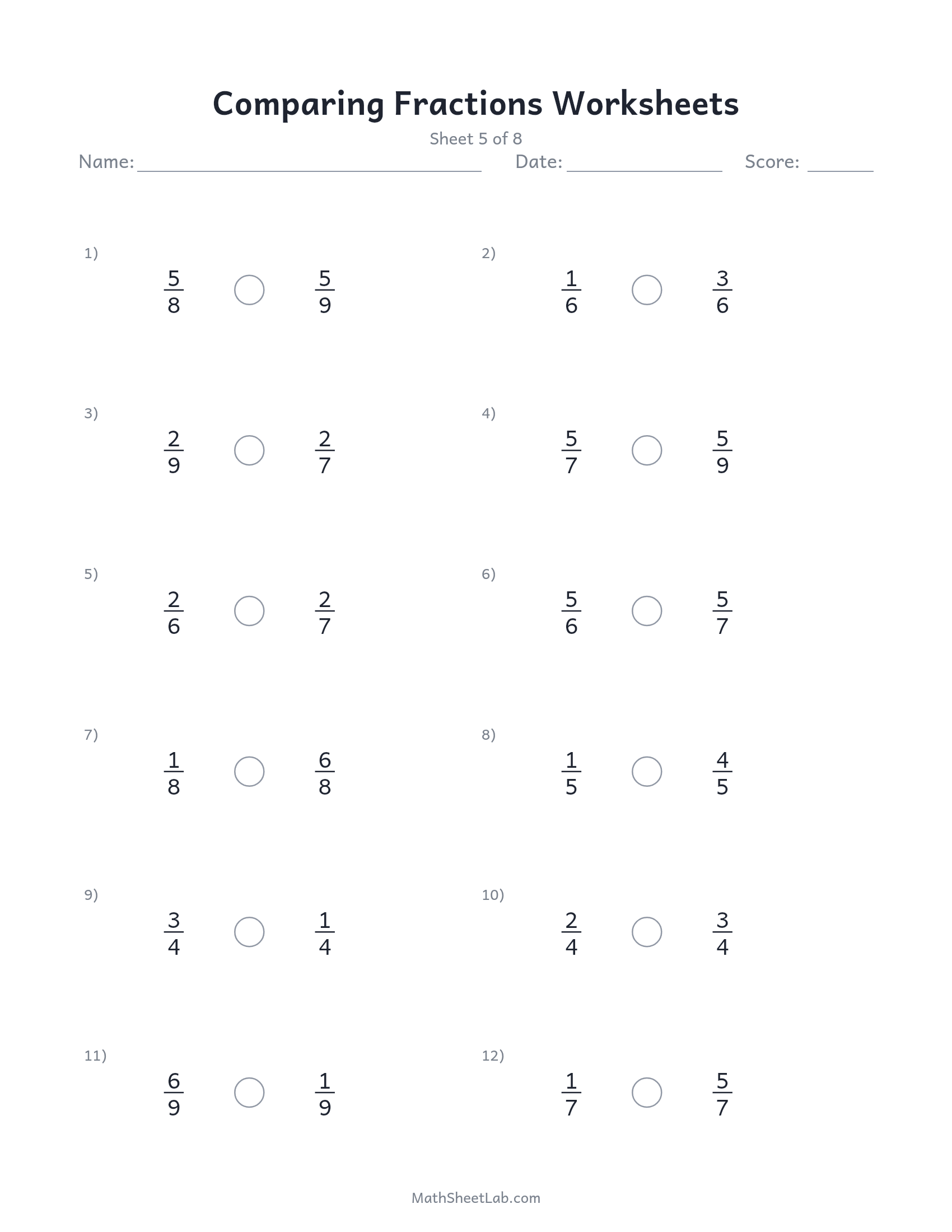
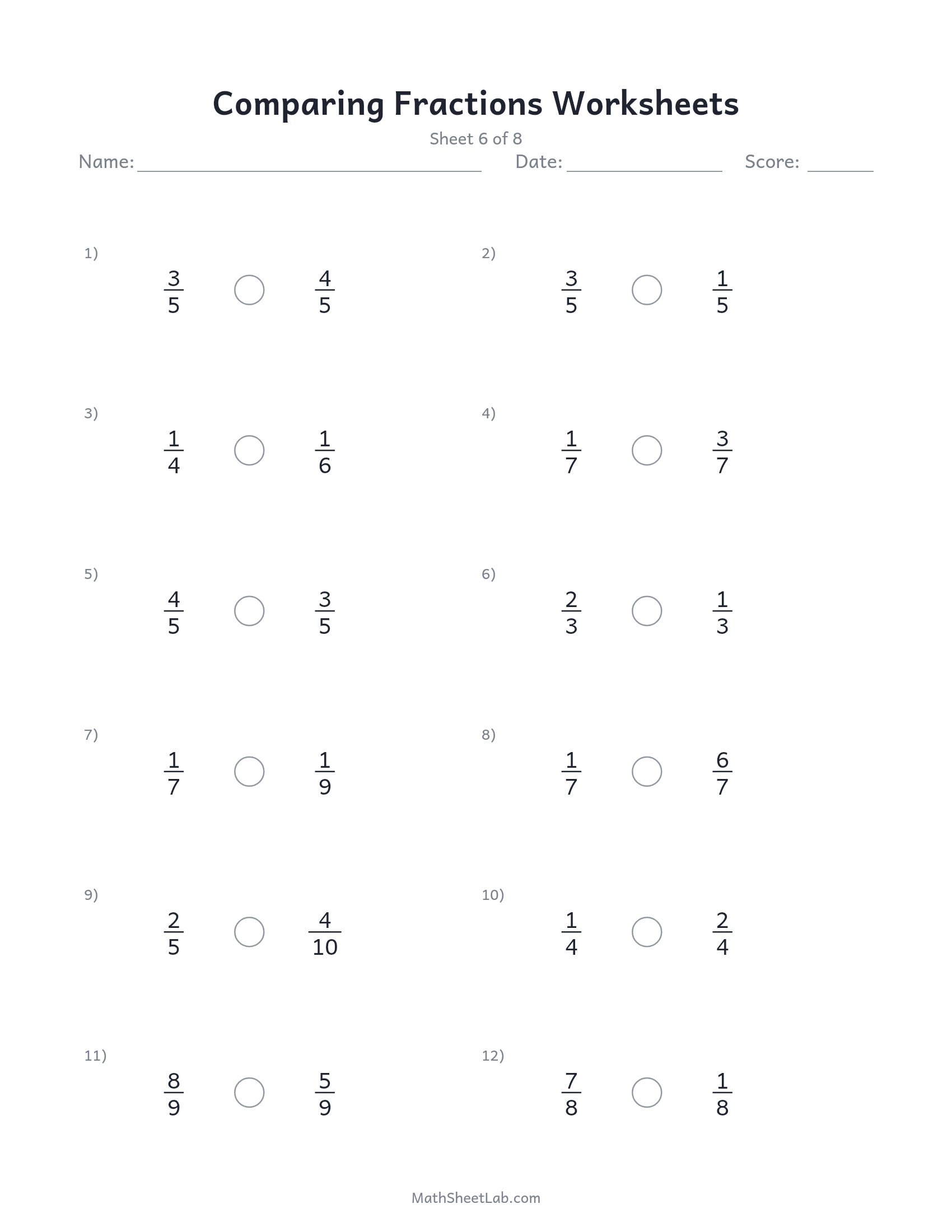
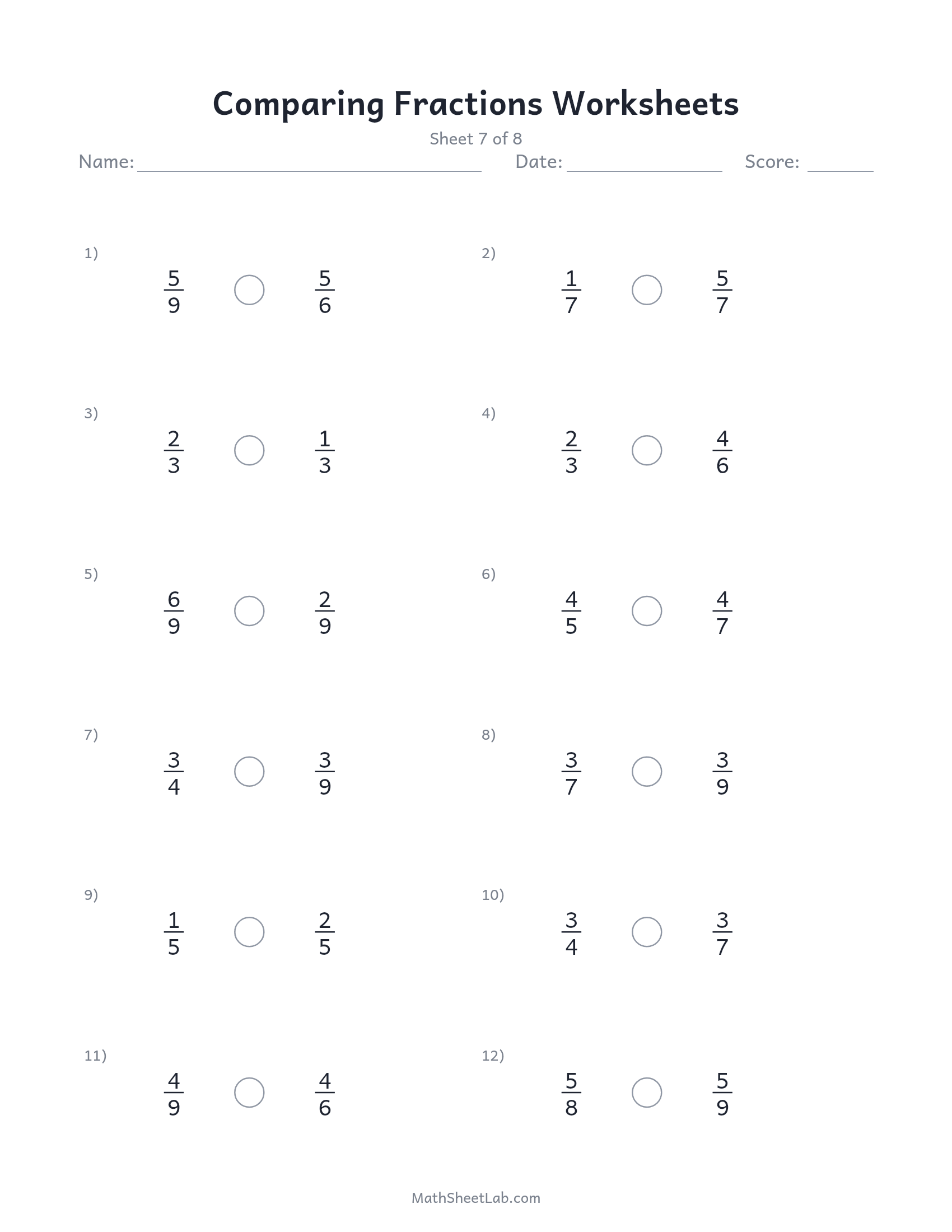
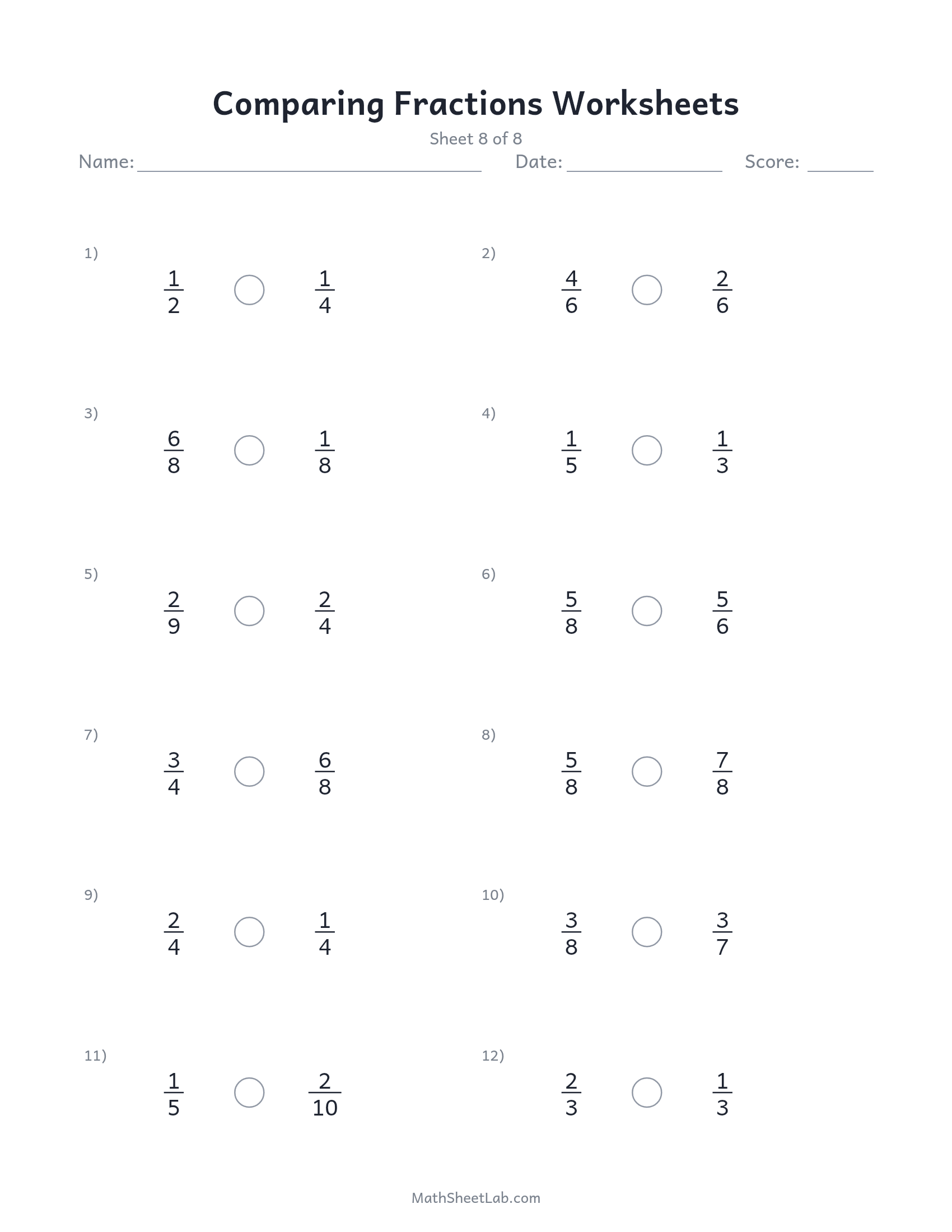
Twelve fraction pairs and an empty circle between each — fill in <, > or =.
Best fit: 3rd–4th grade · 8 sheets, answer keys included · Free, no sign-up
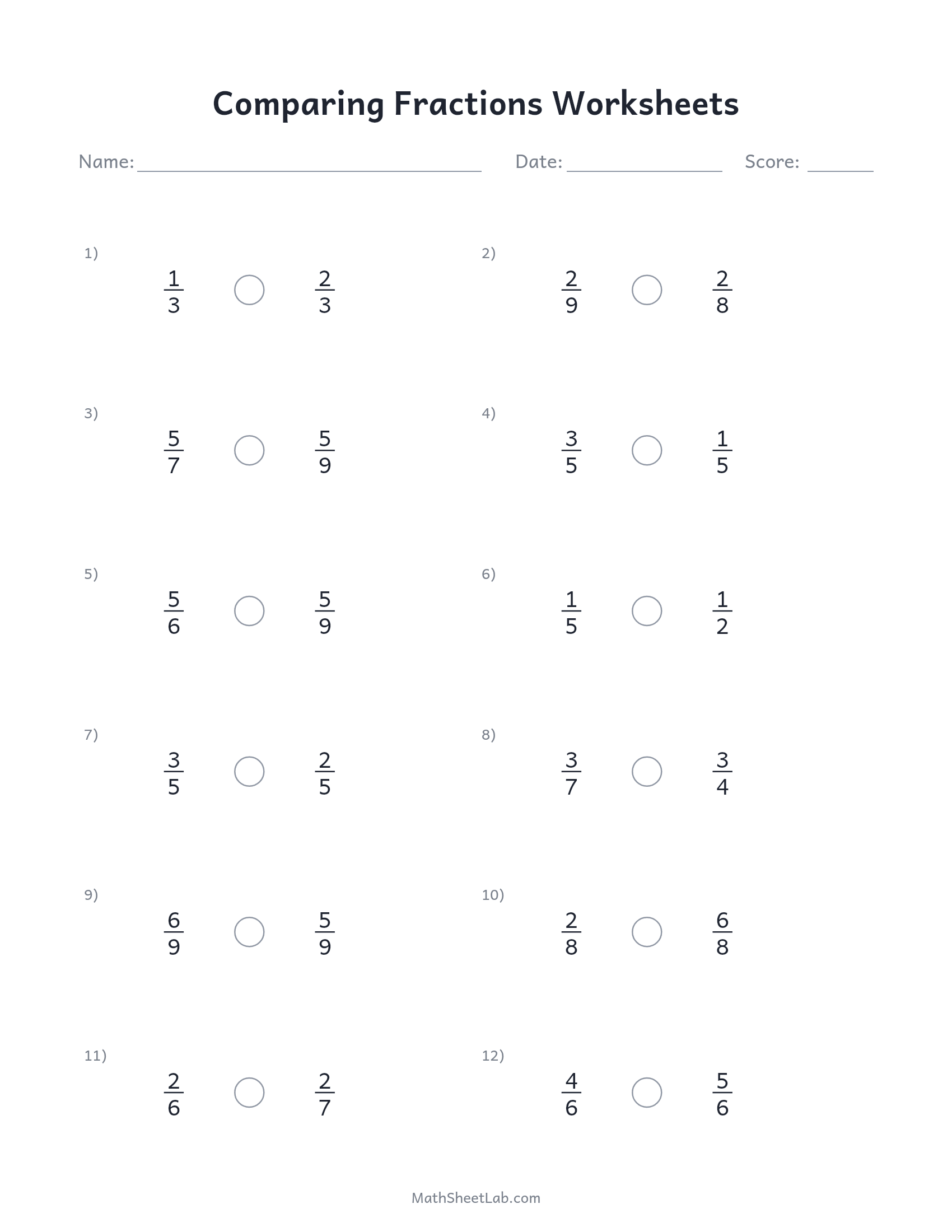
The full set: 8 worksheets with answer keys
Eight sheets in the same layout with different problems: download them as one PDF or print one at a time.
Worksheets
-
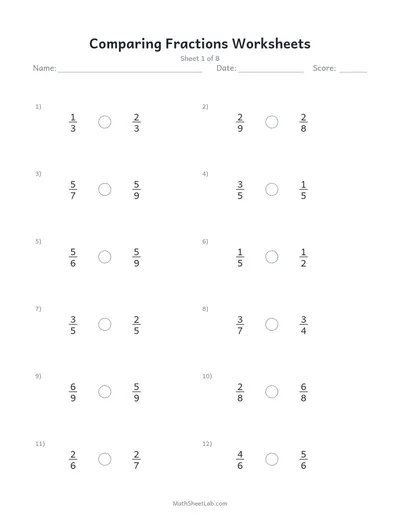
Sheet 1
-
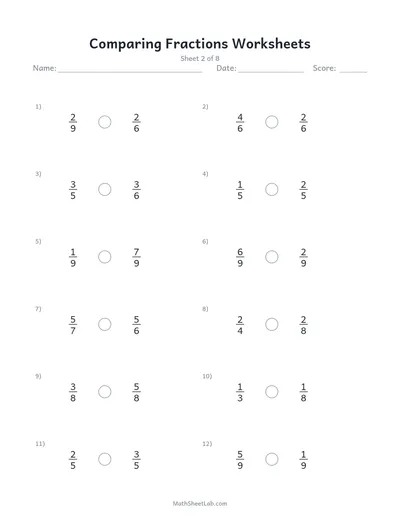
Sheet 2
-
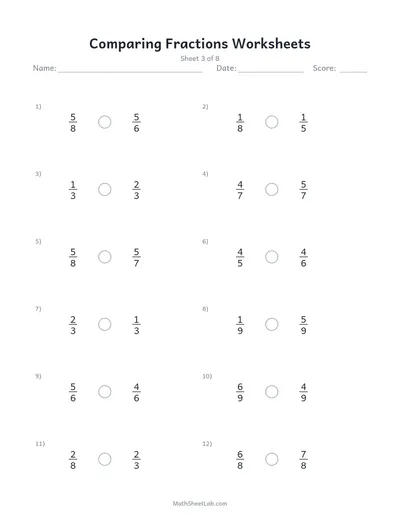
Sheet 3
-
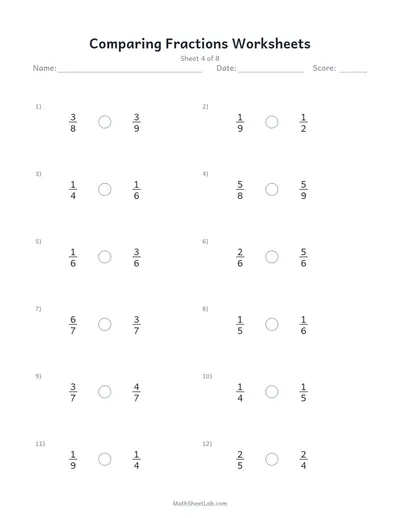
Sheet 4
-
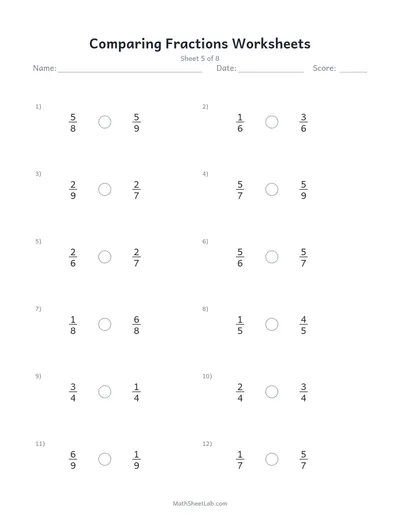
Sheet 5
-
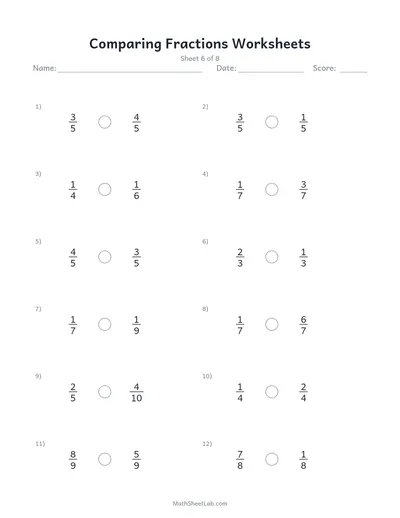
Sheet 6
-
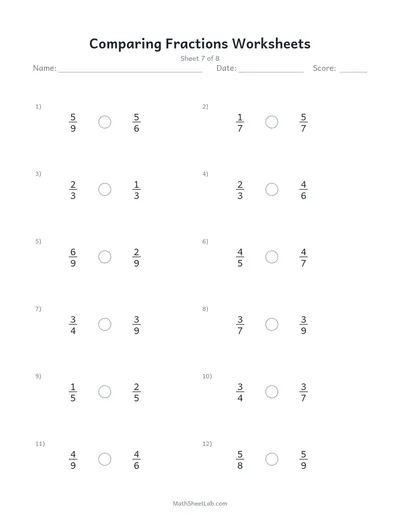
Sheet 7
-
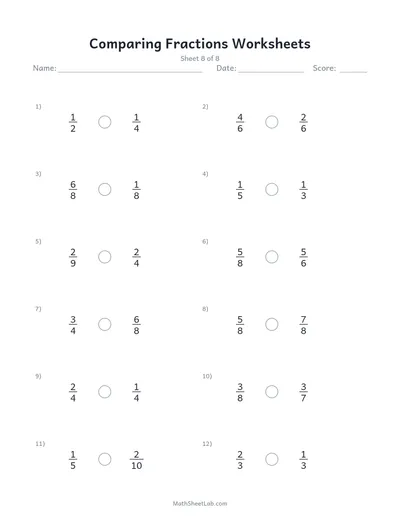
Sheet 8
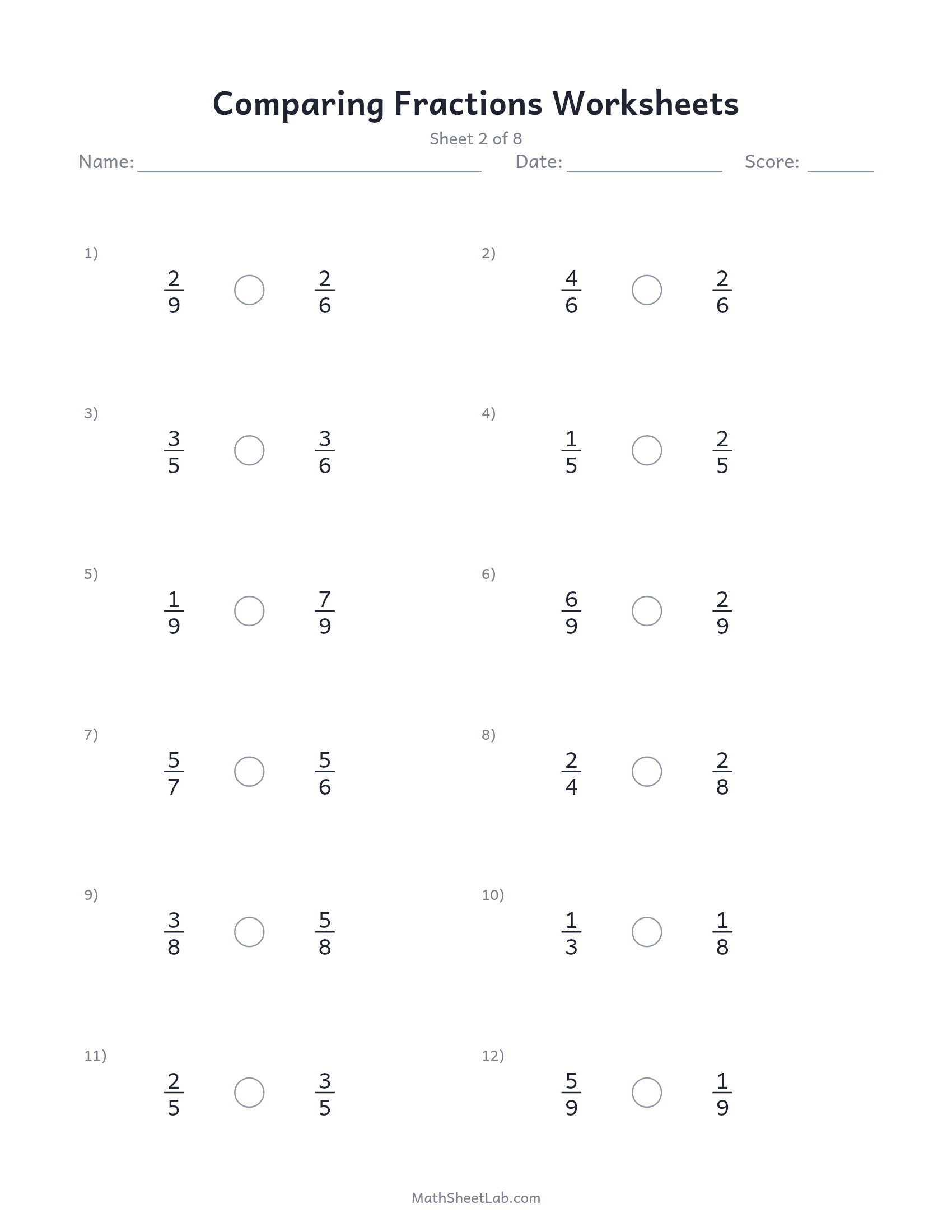
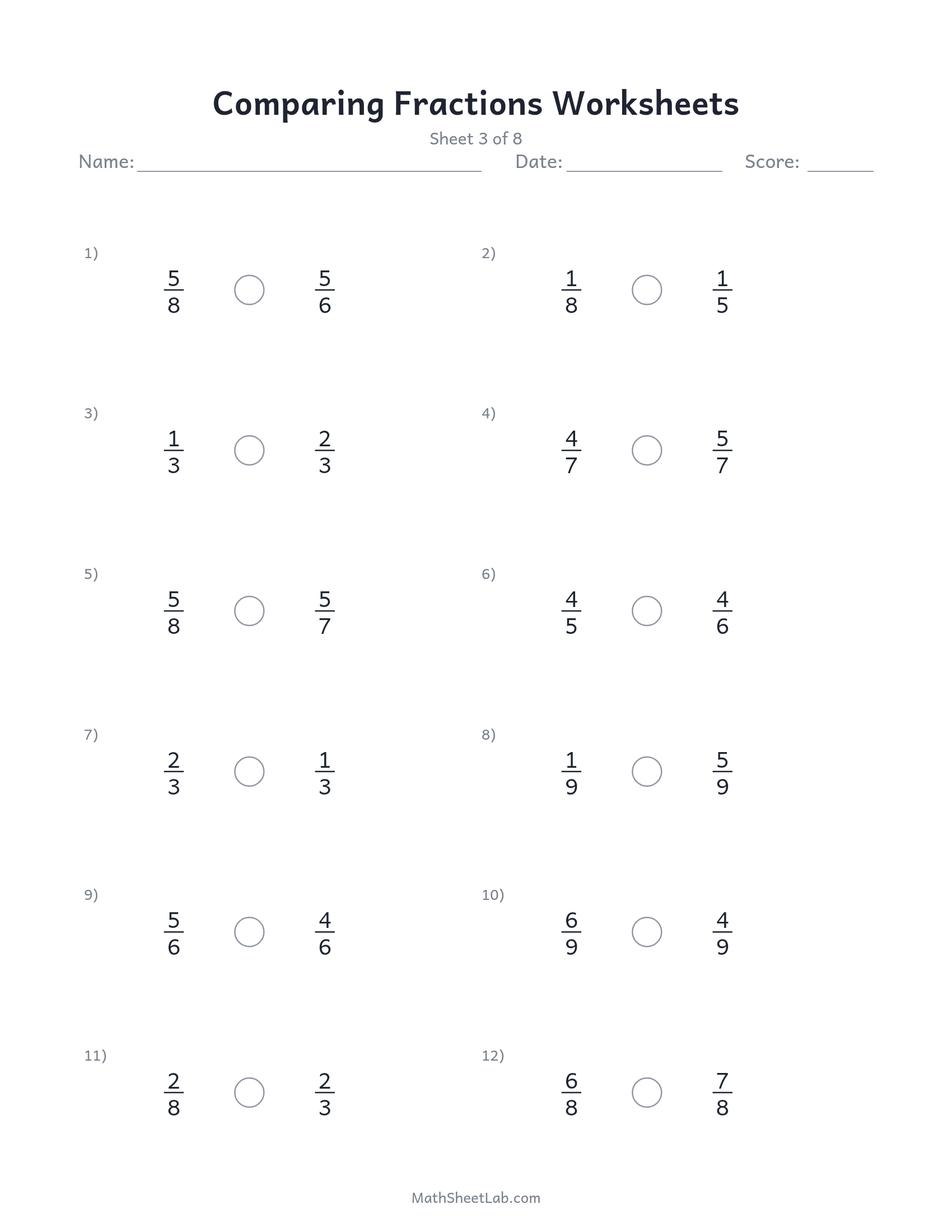
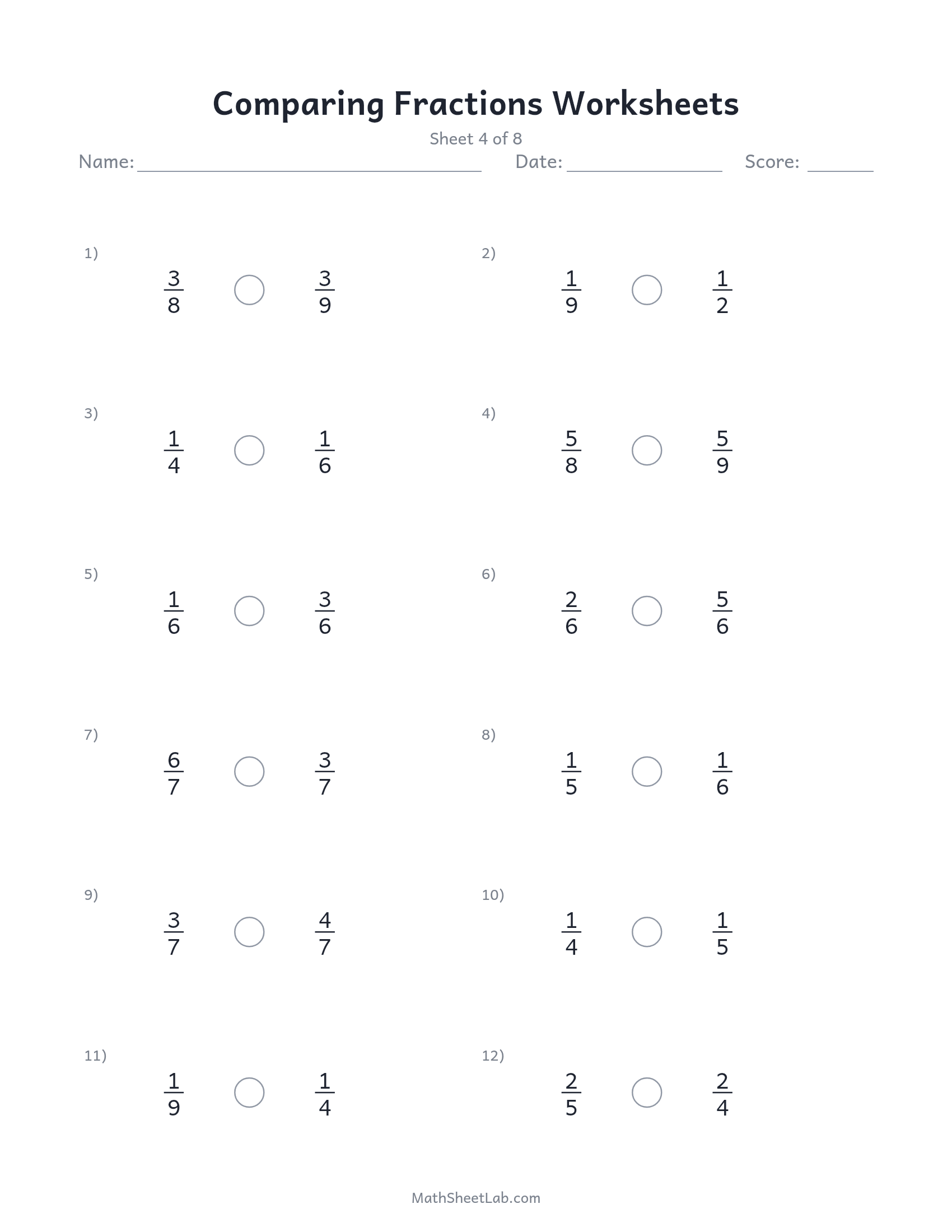
Answer keys
-
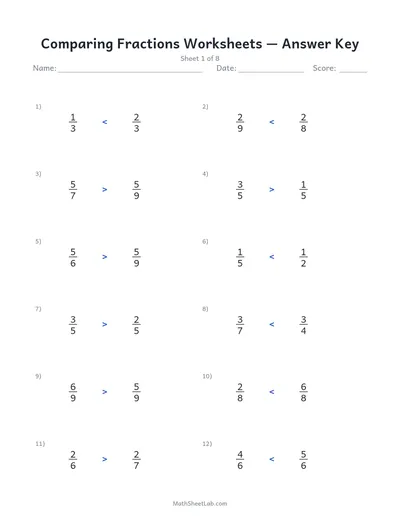
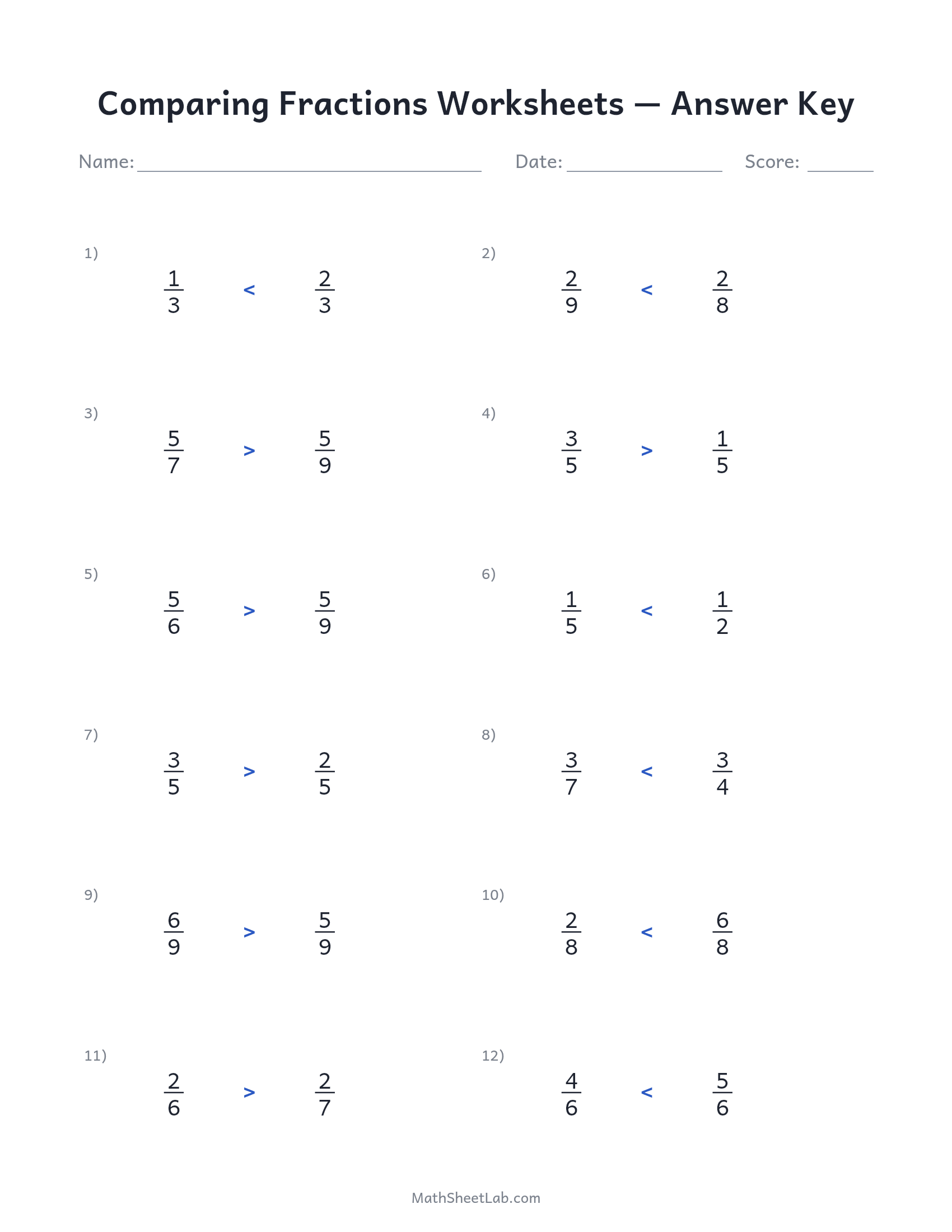
Sheet 1 answers
-
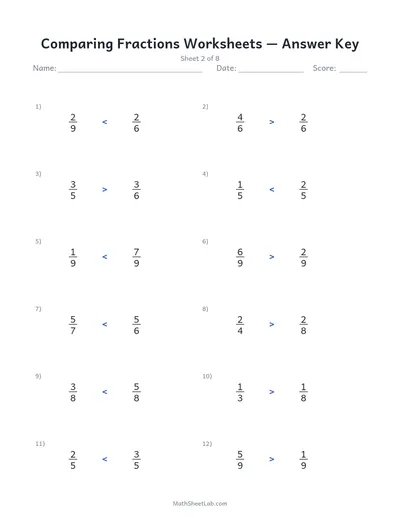
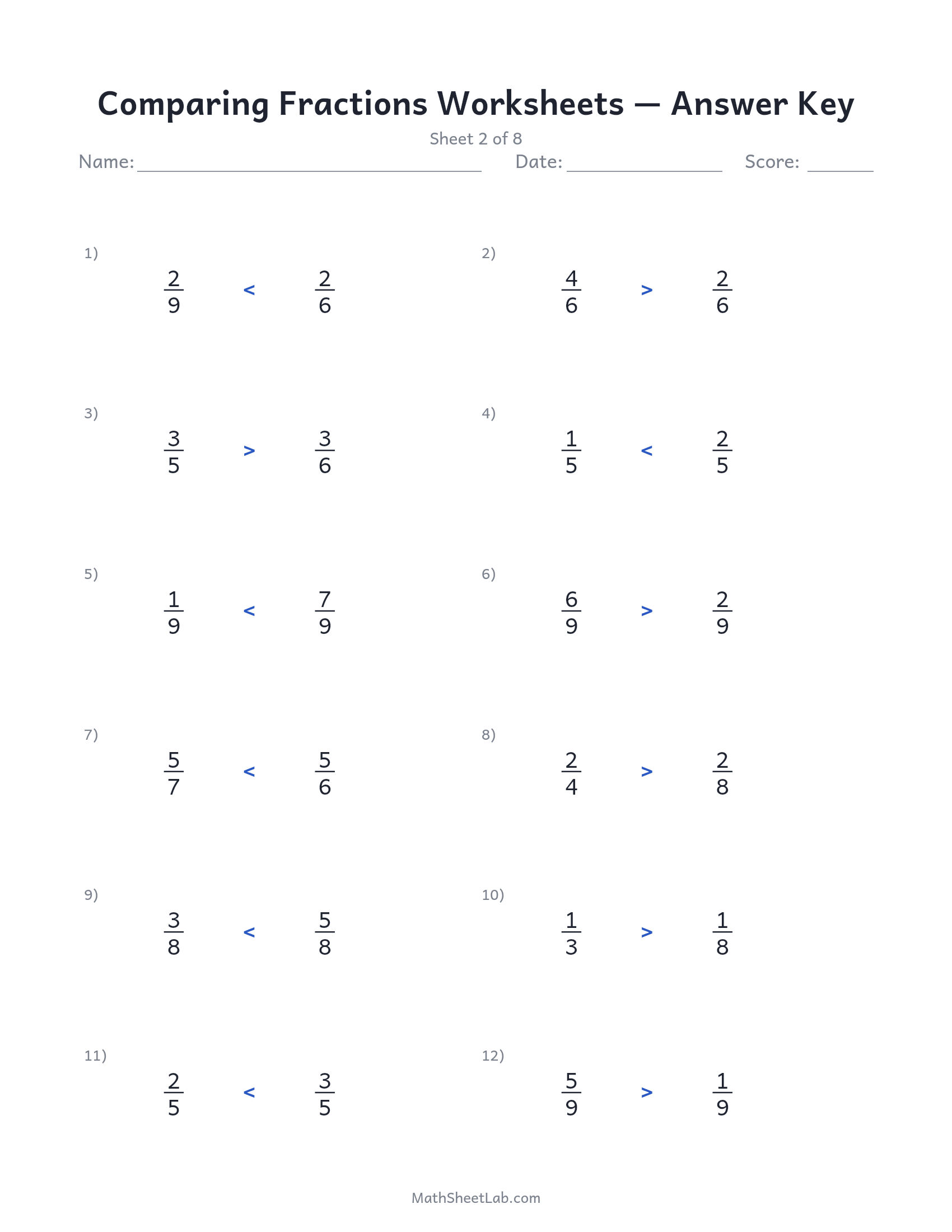
Sheet 2 answers
-
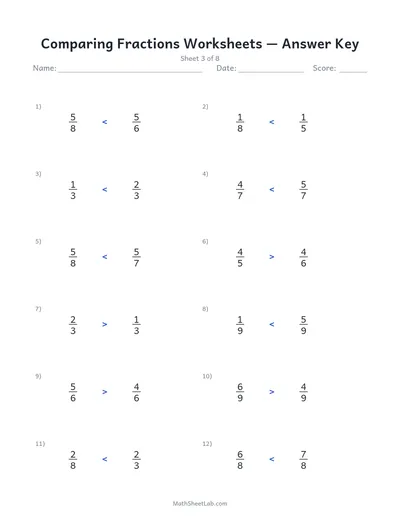
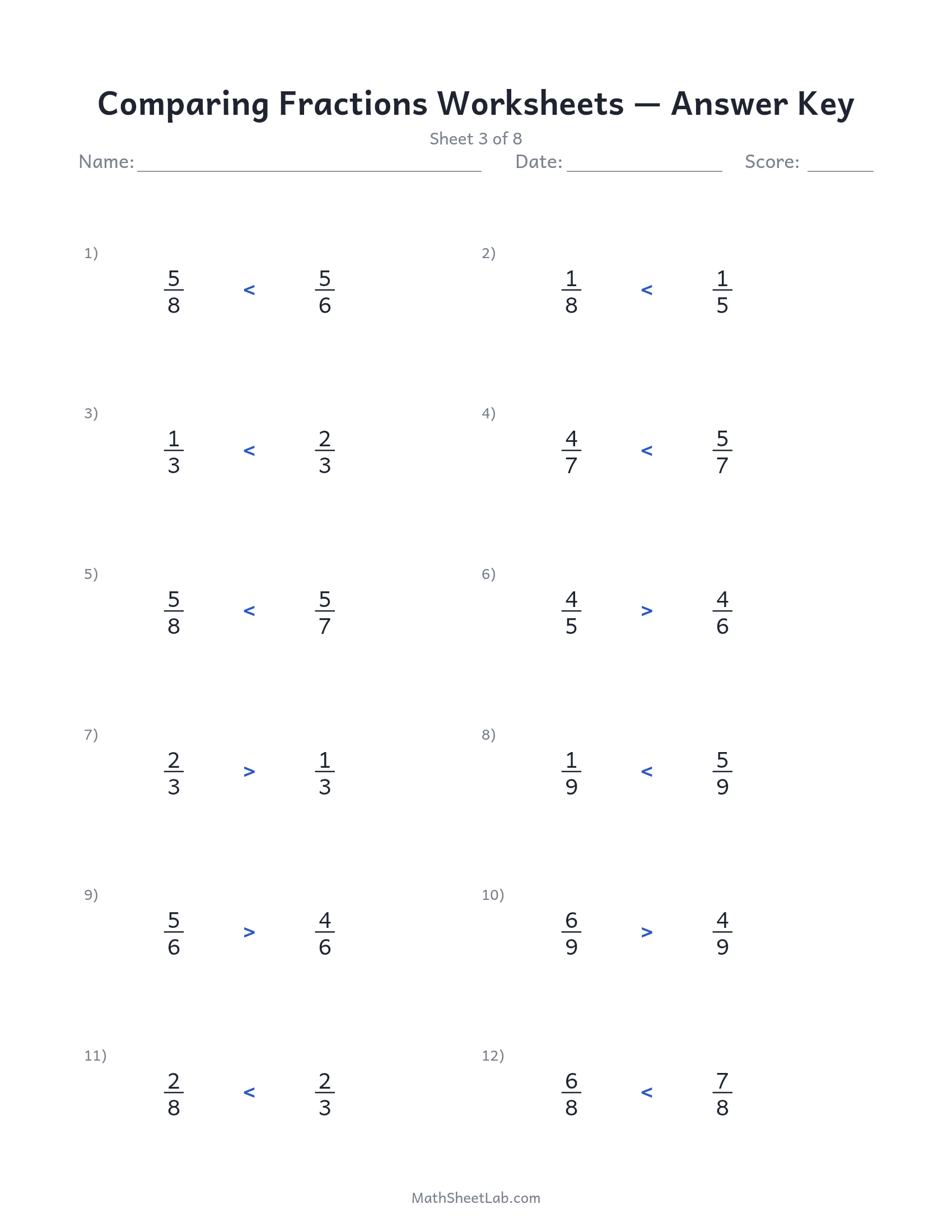
Sheet 3 answers
-
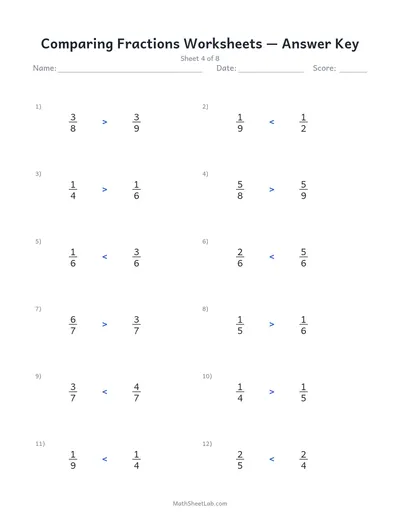
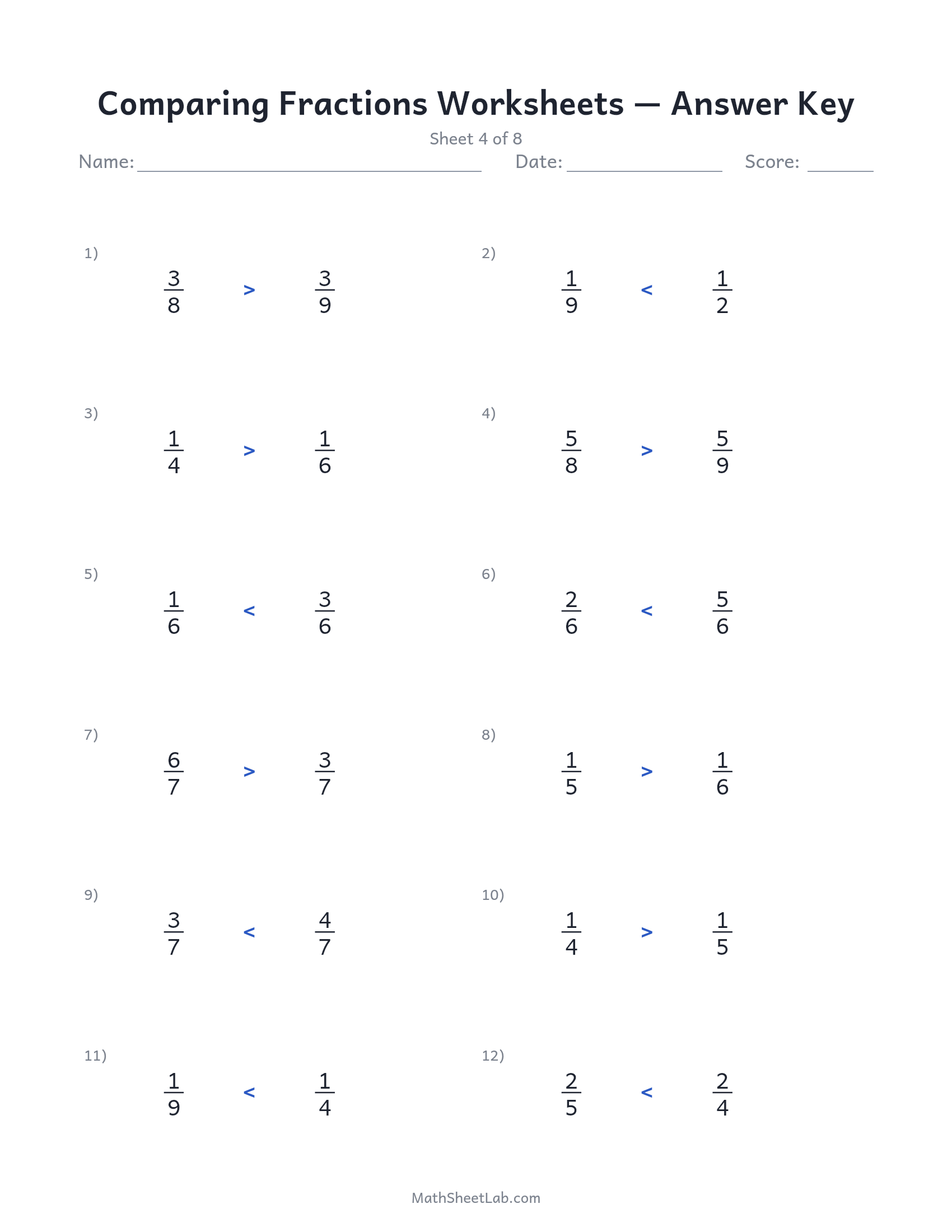
Sheet 4 answers
-
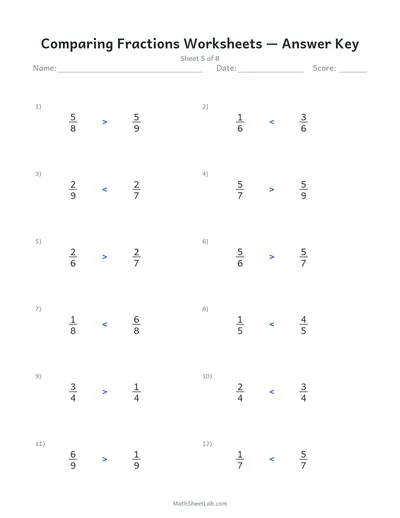
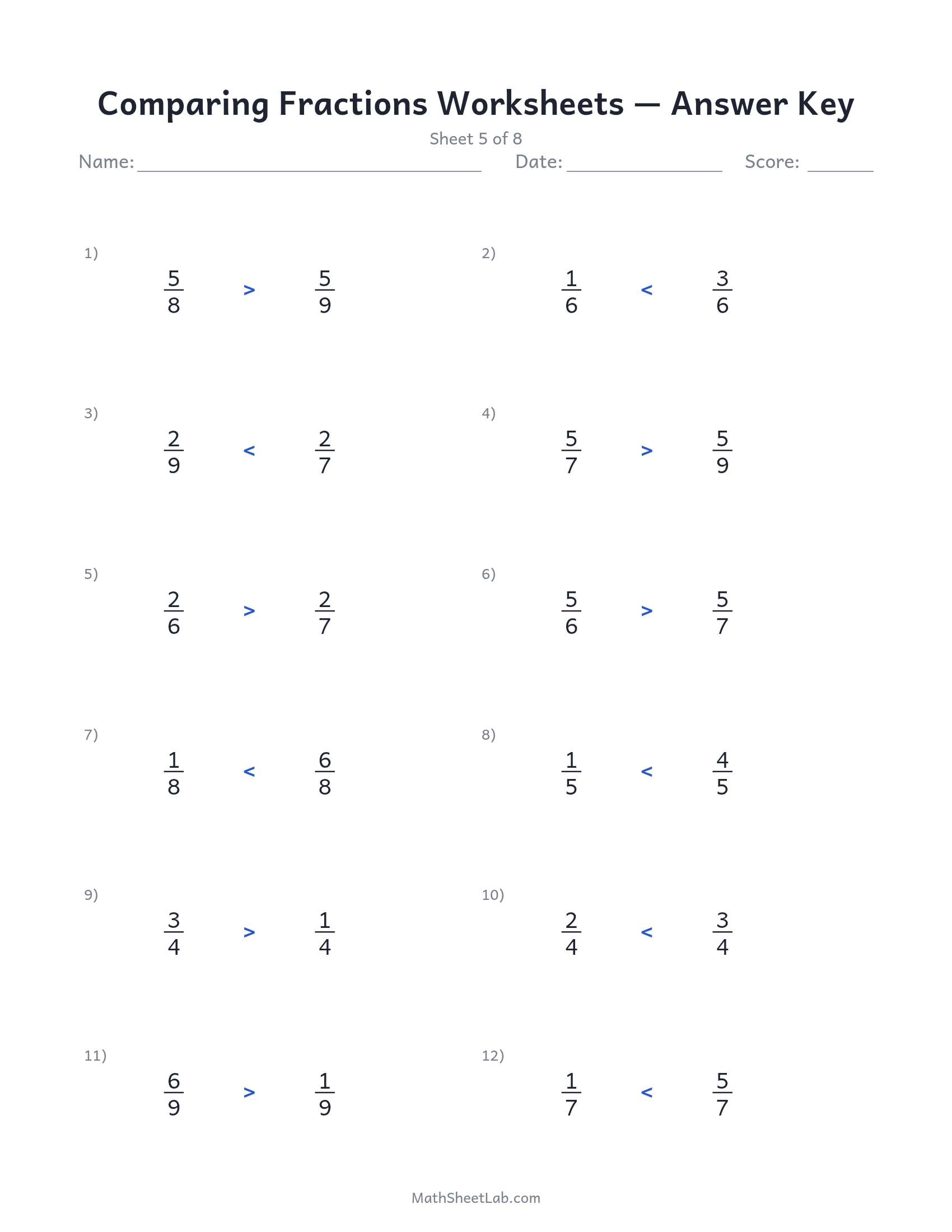
Sheet 5 answers
-
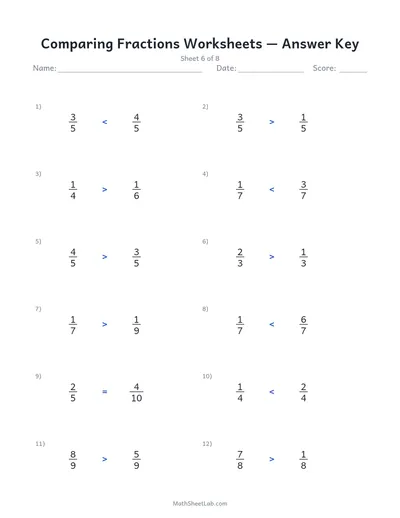
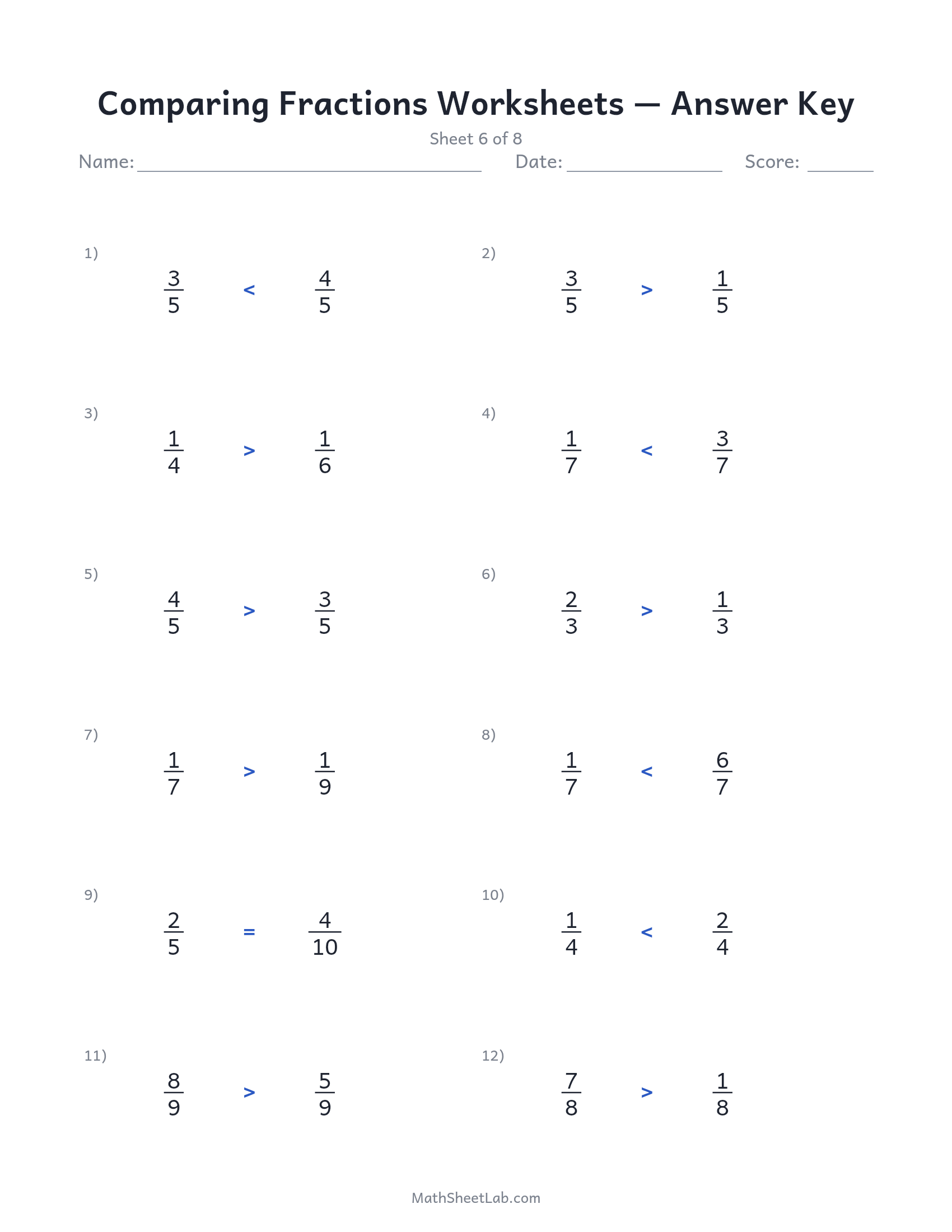
Sheet 6 answers
-
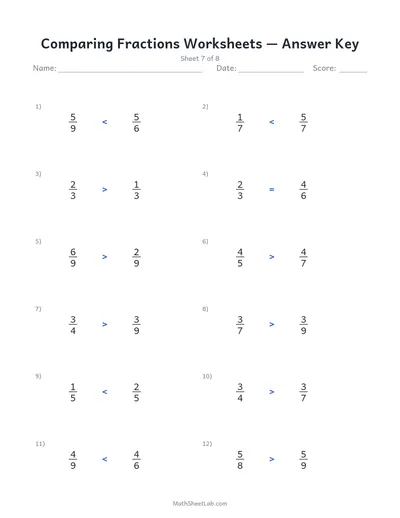
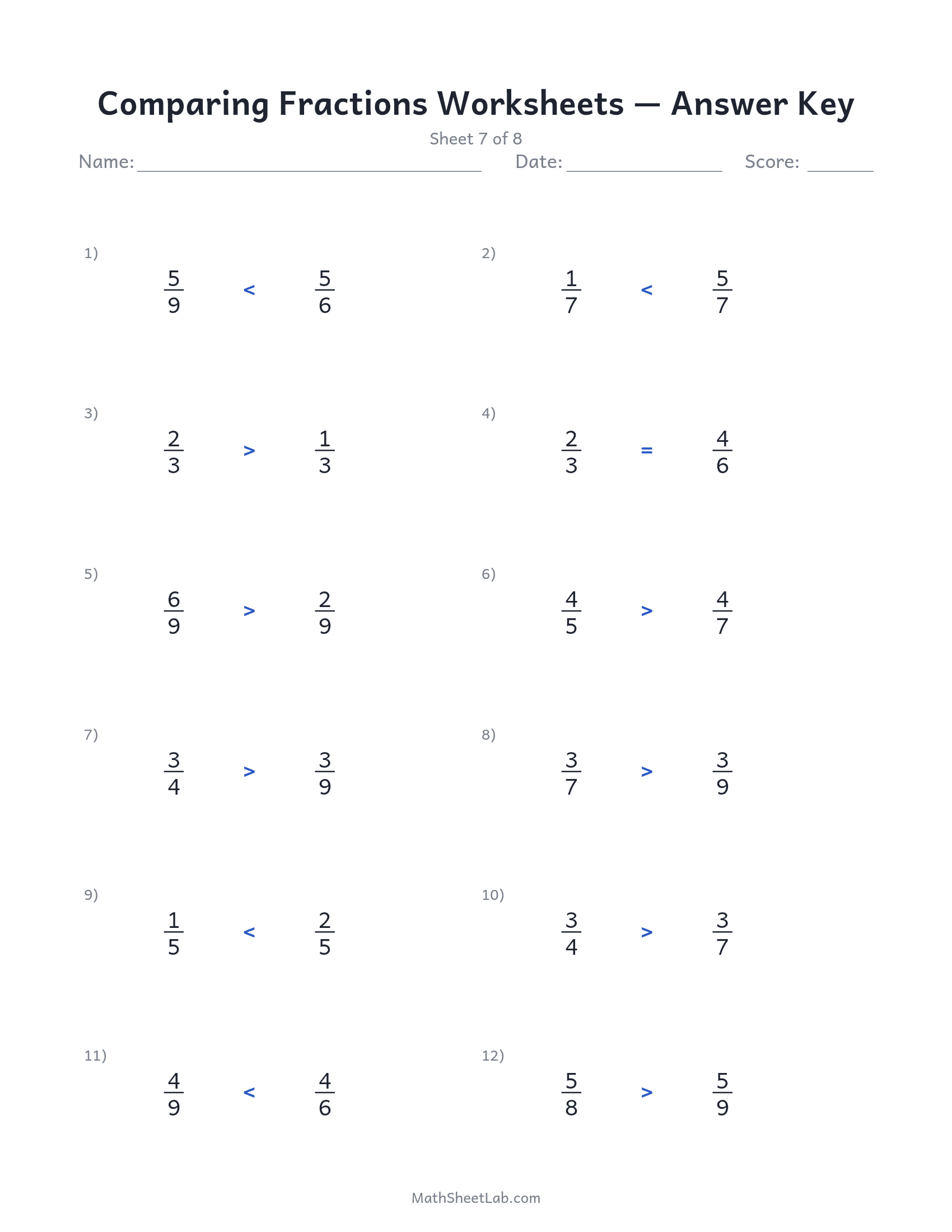
Sheet 7 answers
-
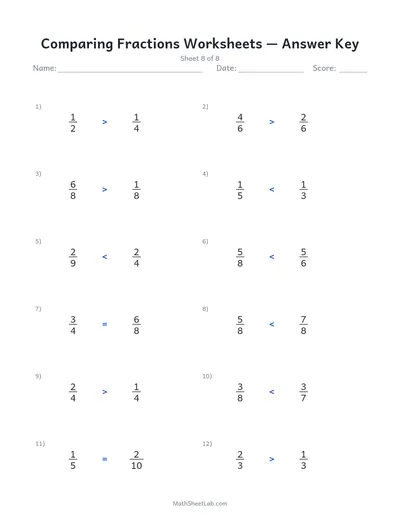
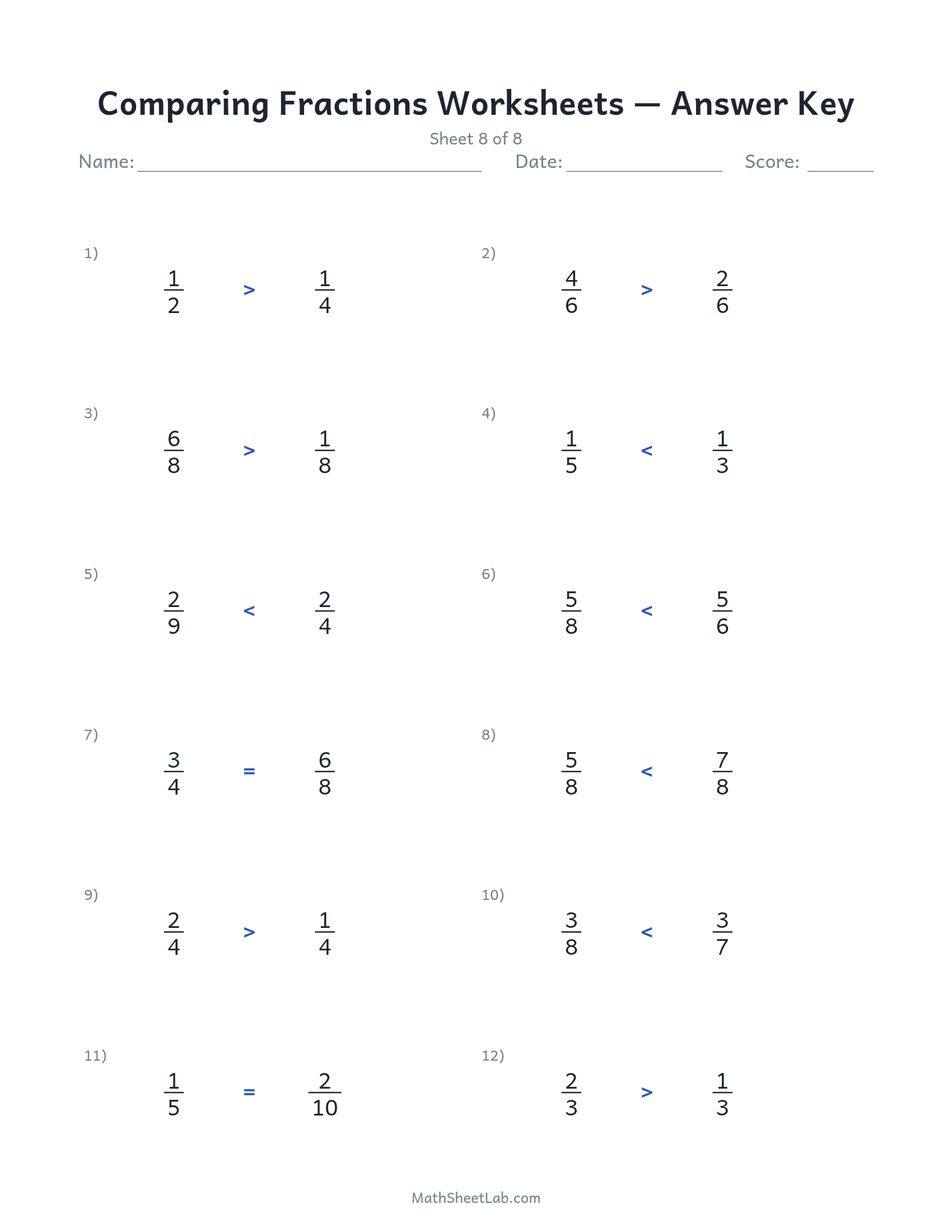
Sheet 8 answers
About these worksheets
Every sheet deliberately mixes the two comparable cases: same denominator (more parts of the same size wins) and same numerator (the same count of bigger parts wins — so 2/5 beats 2/9, which many children get wrong at first). That second case is where fraction sense is really built, because it forces thinking about the size of parts rather than just the count of them.
Frequently asked questions
How do you compare fractions with the same numerator?
Think about part size: ninths are smaller than fifths, so 2/9 < 2/5. Same count, smaller pieces, smaller total — the opposite of what the bigger denominator suggests.
Do these sheets need common denominators?
No — every pair shares either a denominator or a numerator, so reasoning beats calculation. Cross-multiplying comes later.
When is the answer =?
When both fractions name the same amount. Most pairs share a numerator or a denominator, and those can only be equal if they are the same fraction, so the sheets never print one. A few pairs are equivalent fractions written differently, such as 2/5 and 4/10, and those are the = answers.