Counting money worksheets
Bills and coins together on eight sheets — total each row in dollars and cents, dollar-sign notation and all.
Best fit: 2nd grade · 8 sheets, answer keys included · Free, no sign-up
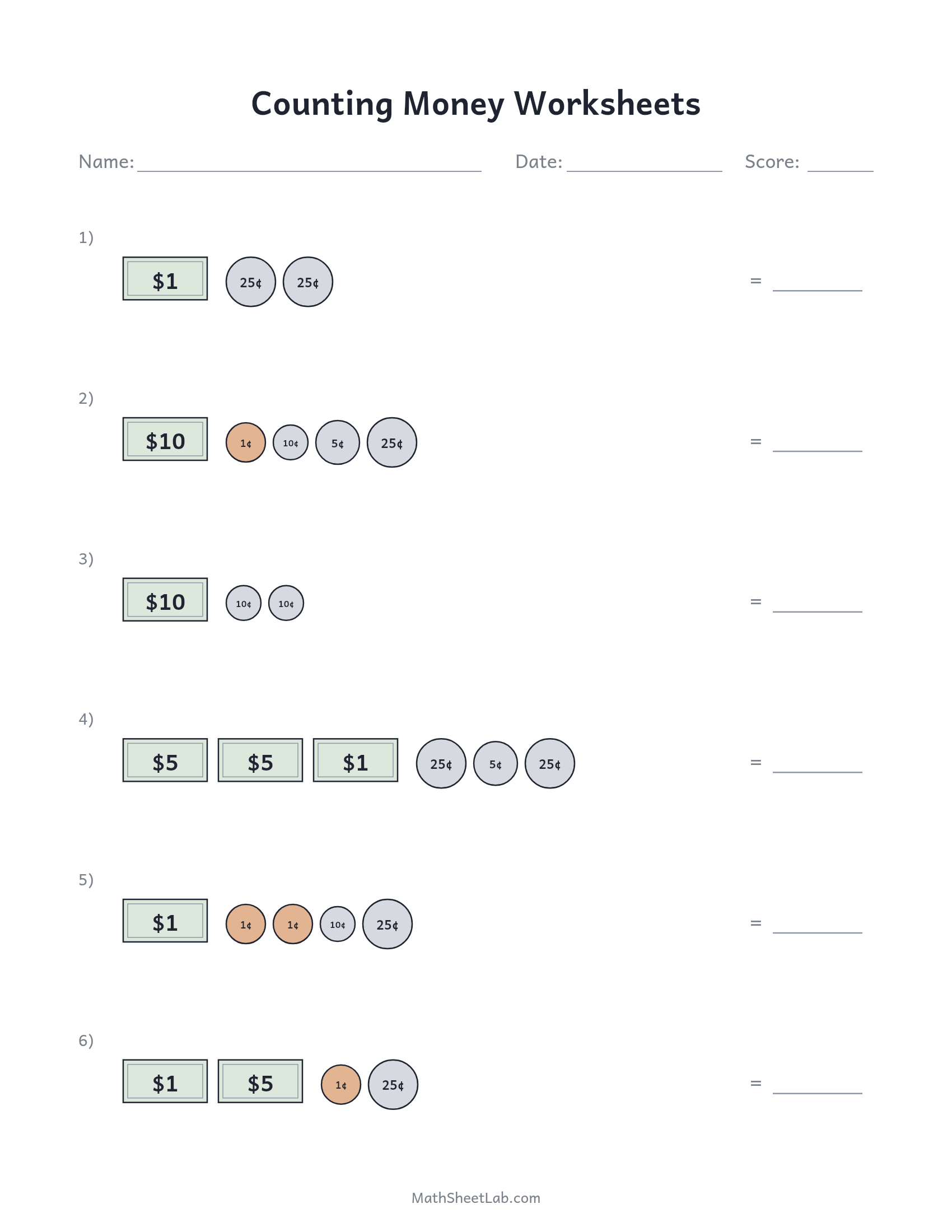
The full set: 8 worksheets with answer keys
Eight sheets in the same layout with different problems: download them as one PDF or print one at a time.
Worksheets
-
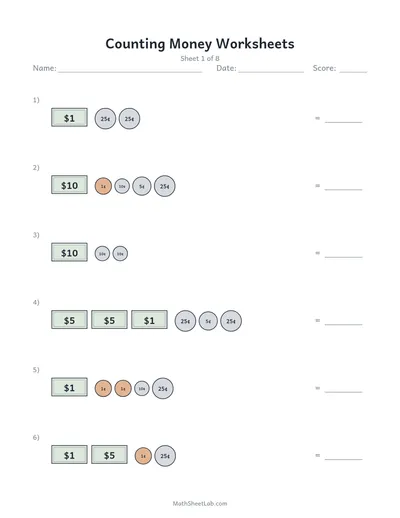
Sheet 1
-
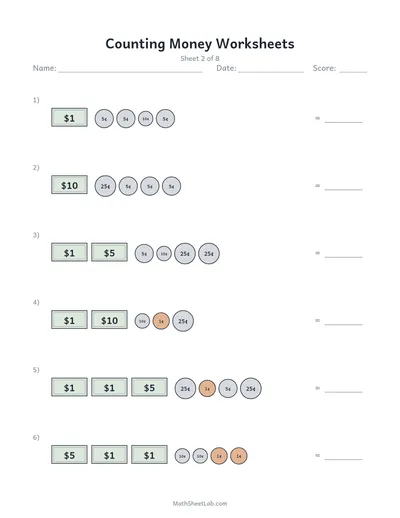
Sheet 2
-
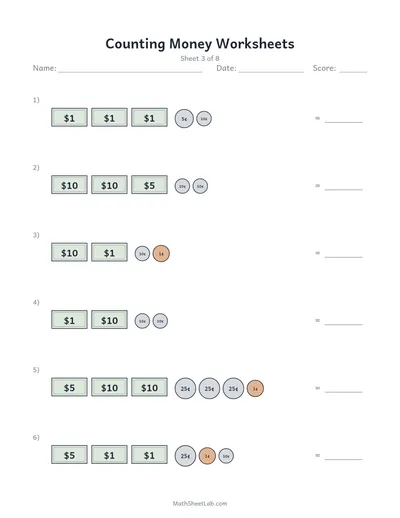
Sheet 3
-
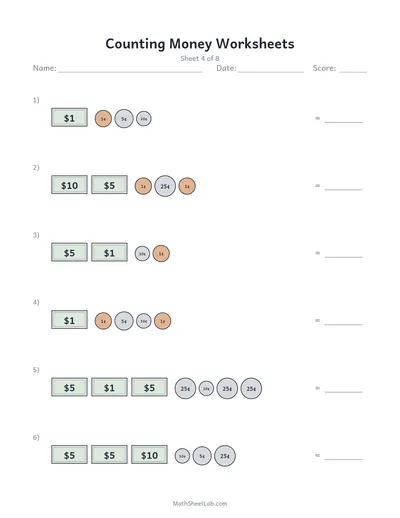
Sheet 4
-
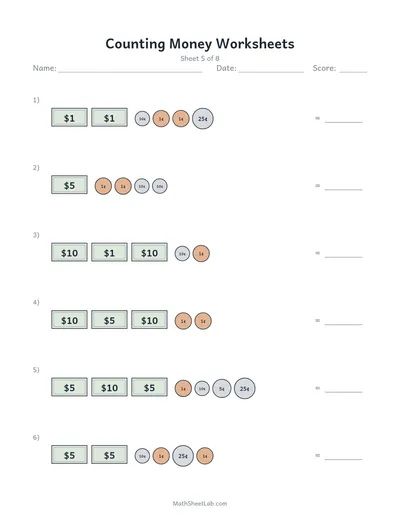
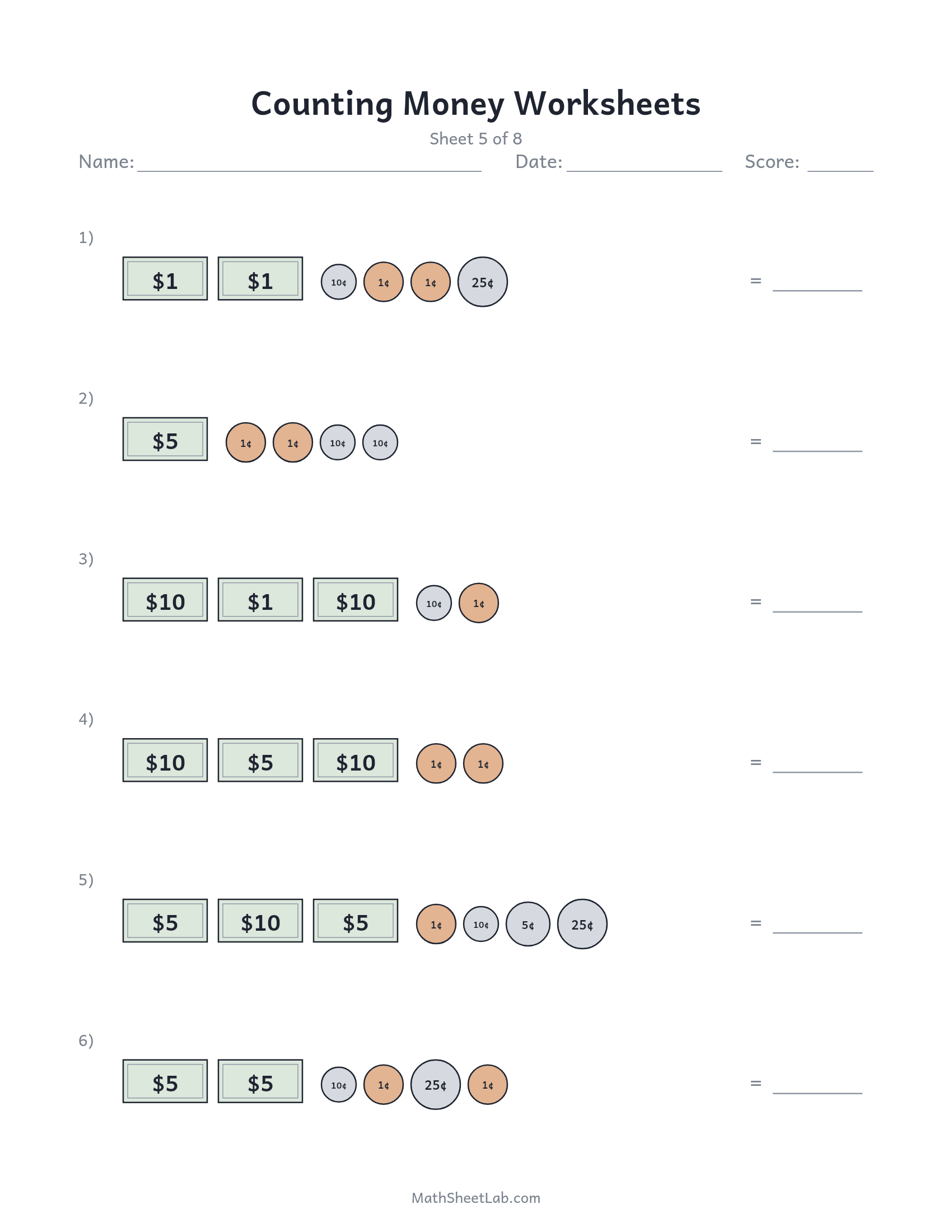
Sheet 5
-
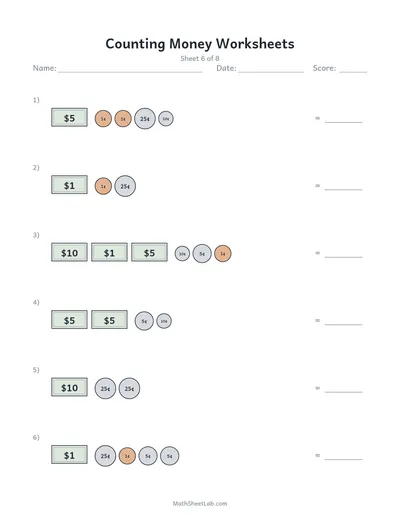
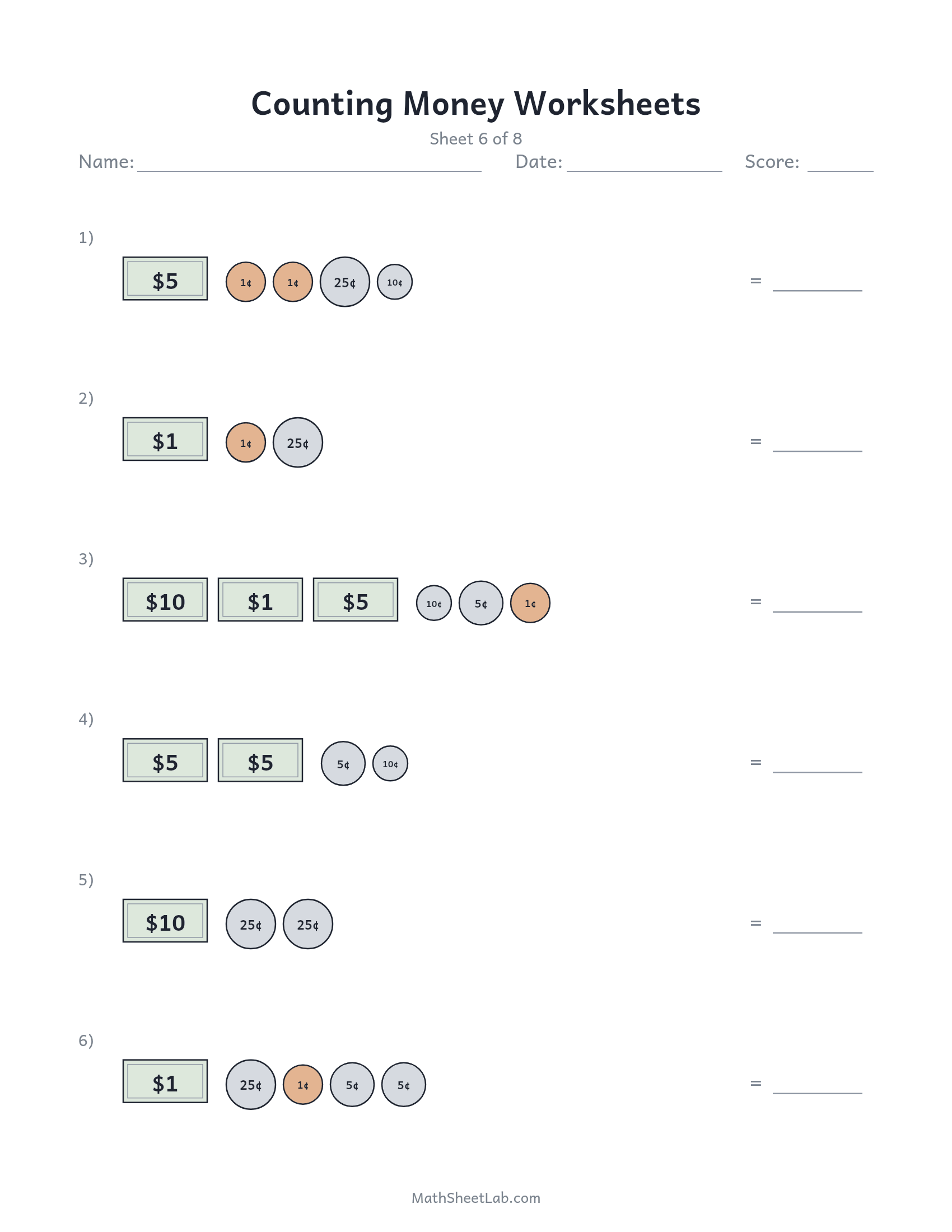
Sheet 6
-
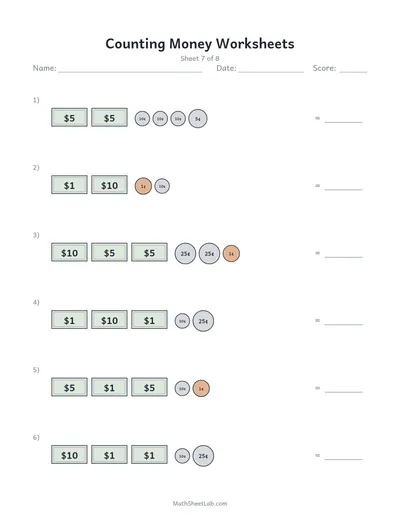
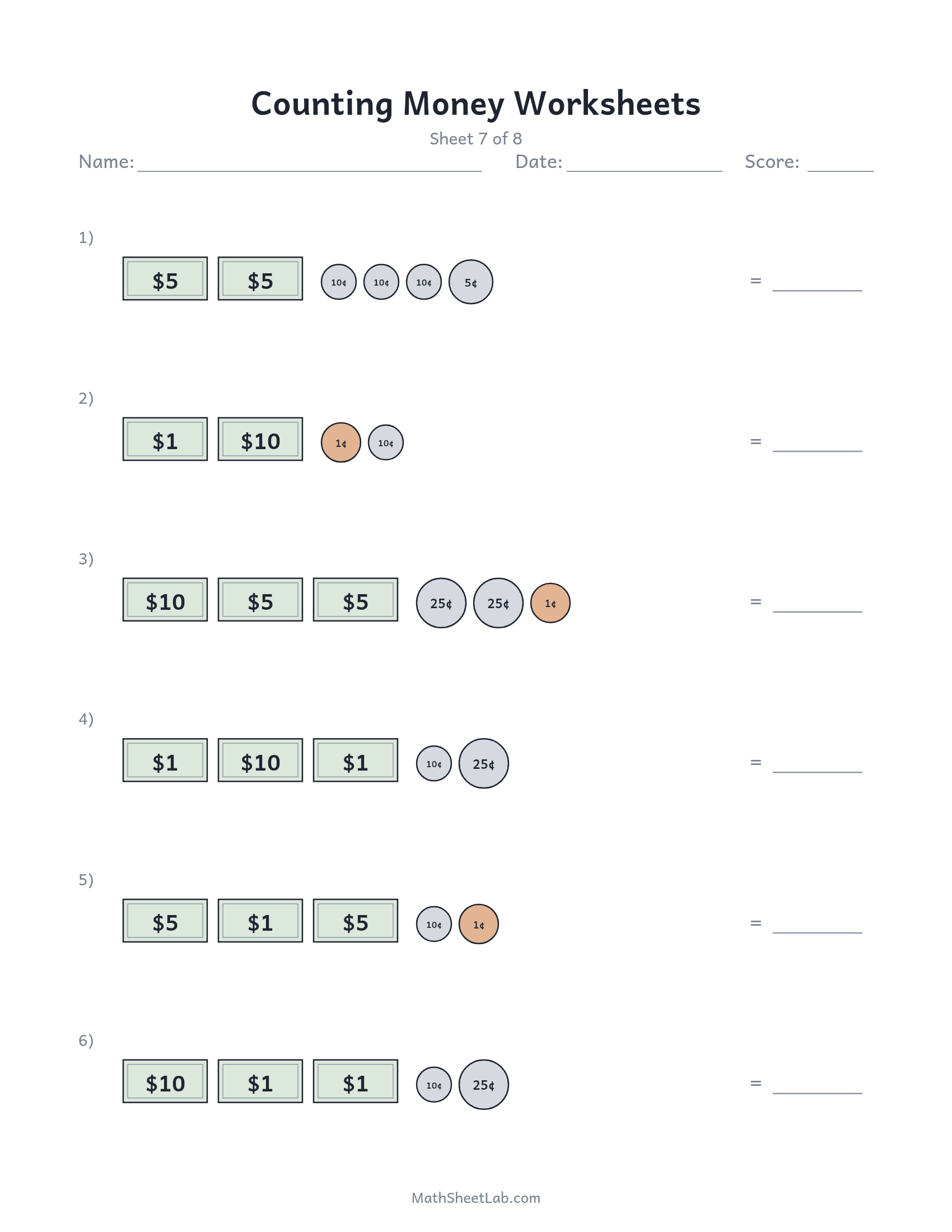
Sheet 7
-
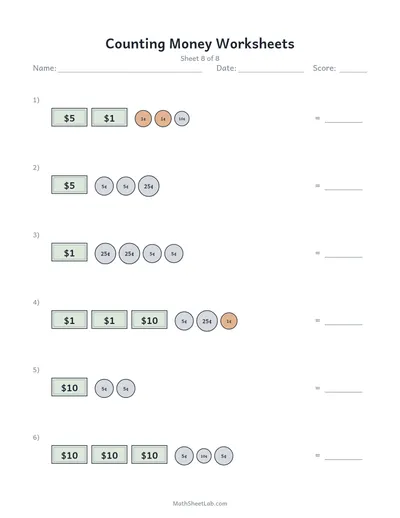
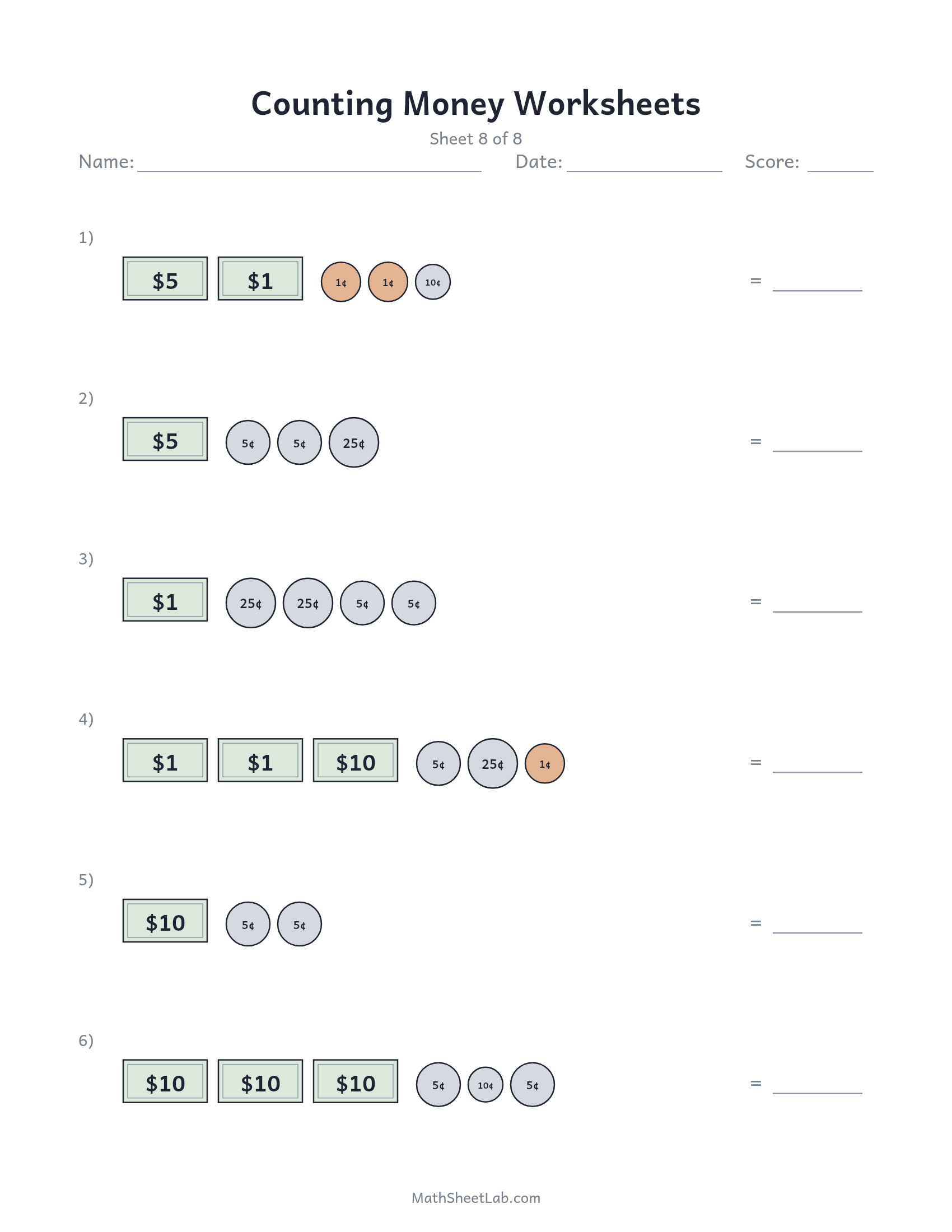
Sheet 8
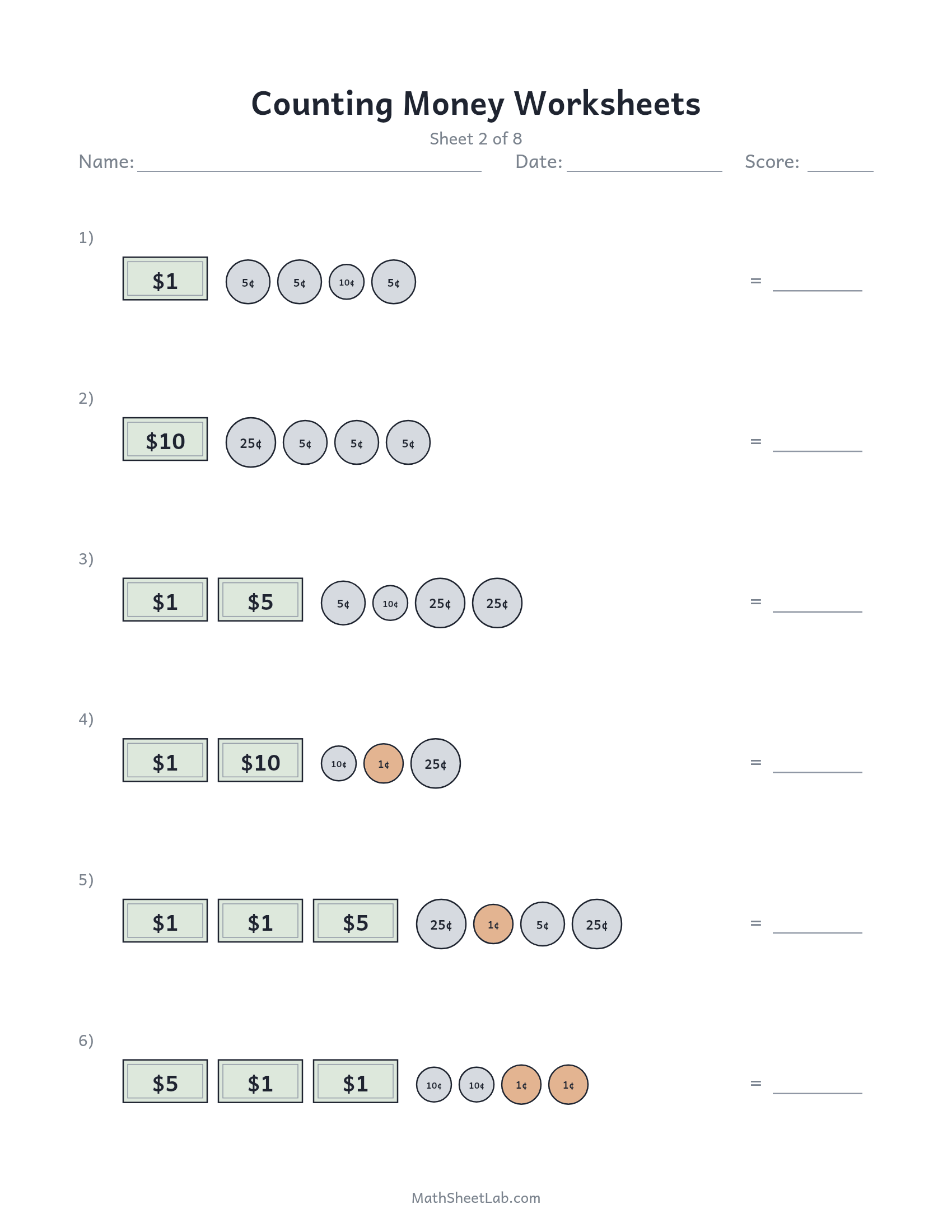
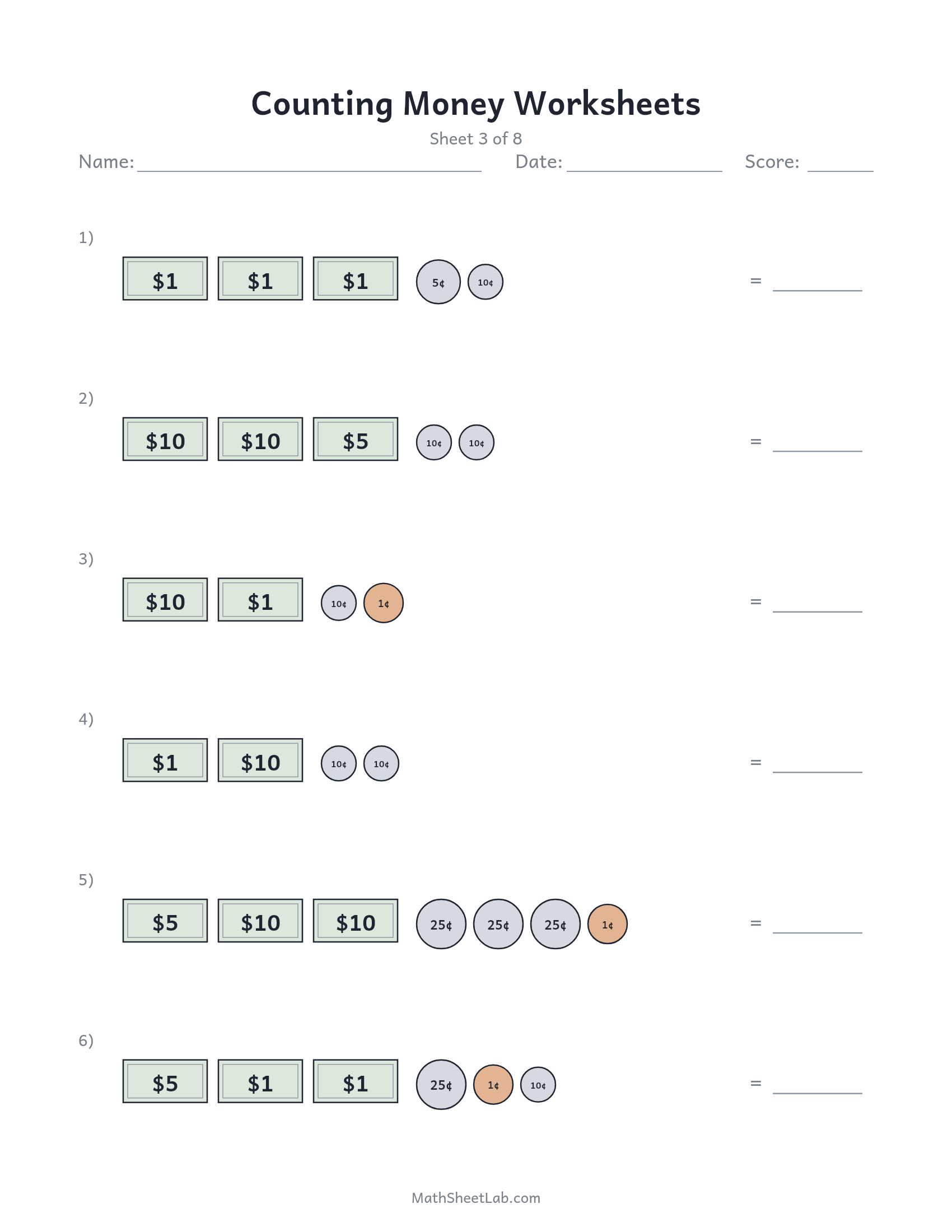
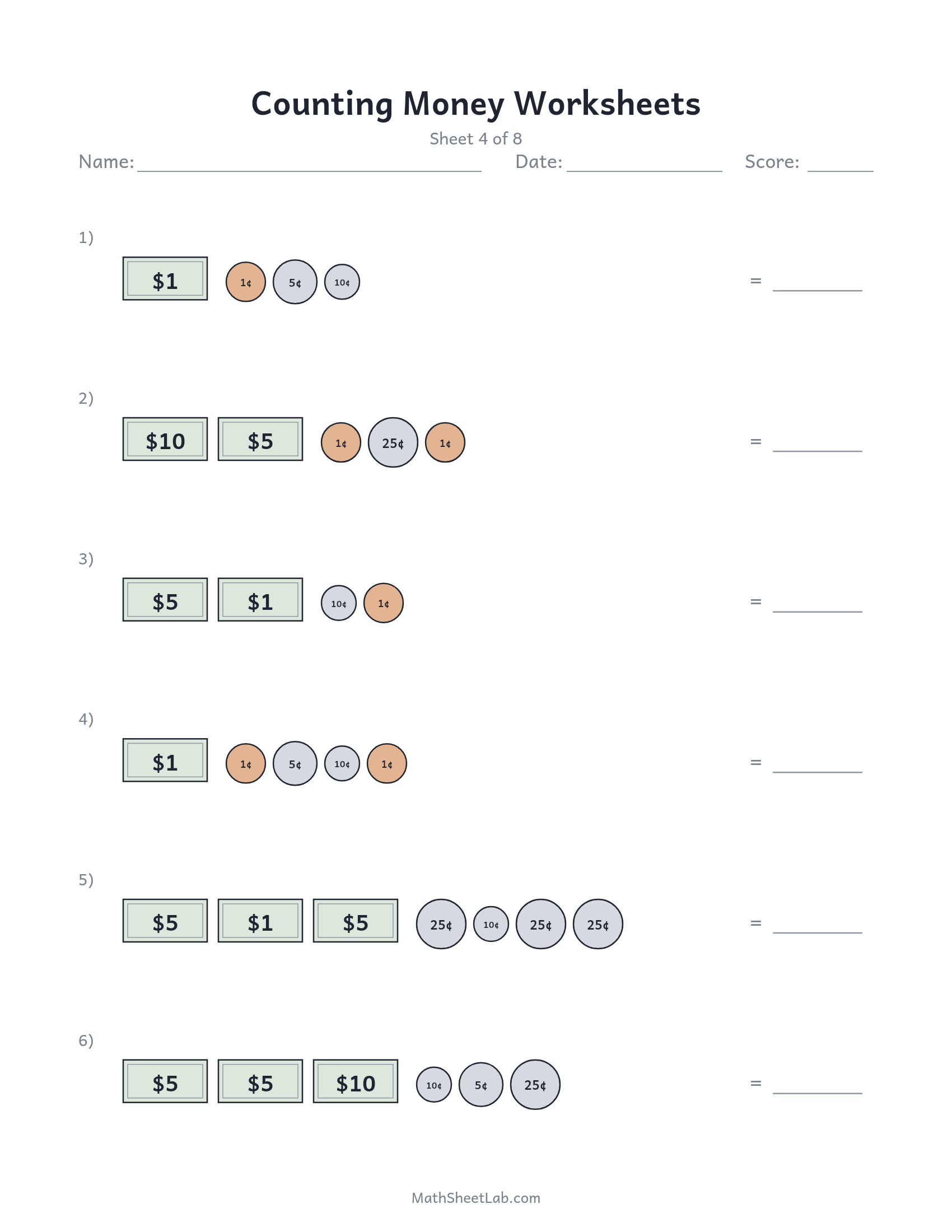
Answer keys
-
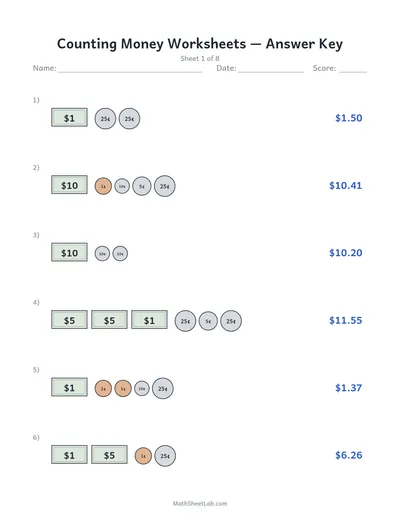
Sheet 1 answers
-
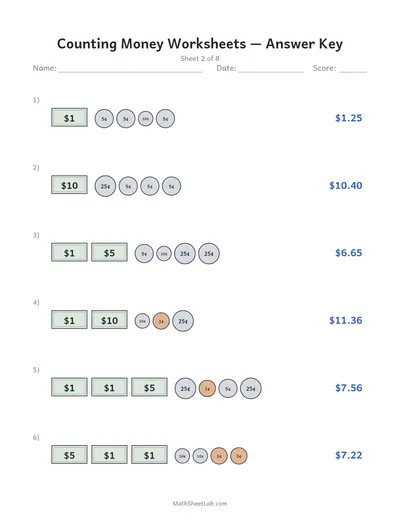
Sheet 2 answers
-
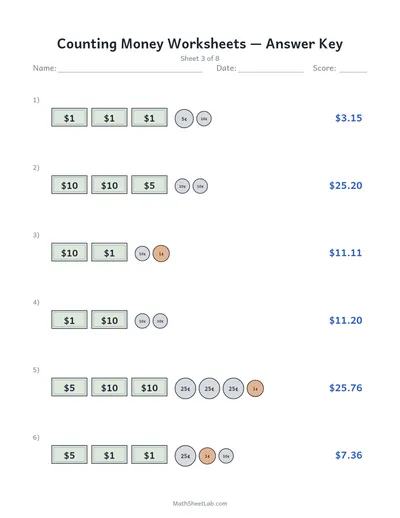
Sheet 3 answers
-
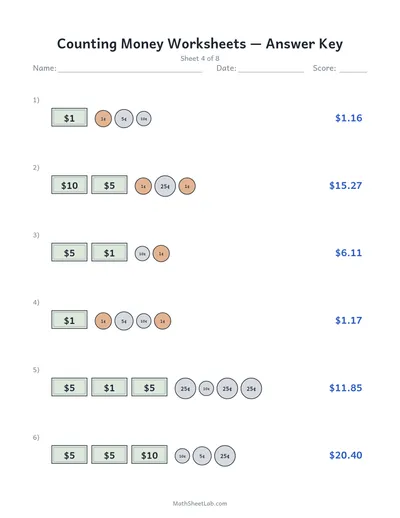
Sheet 4 answers
-
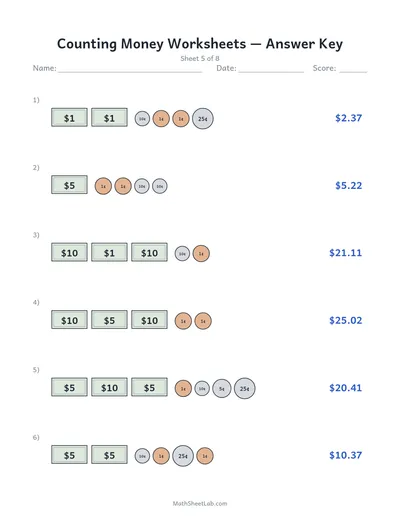
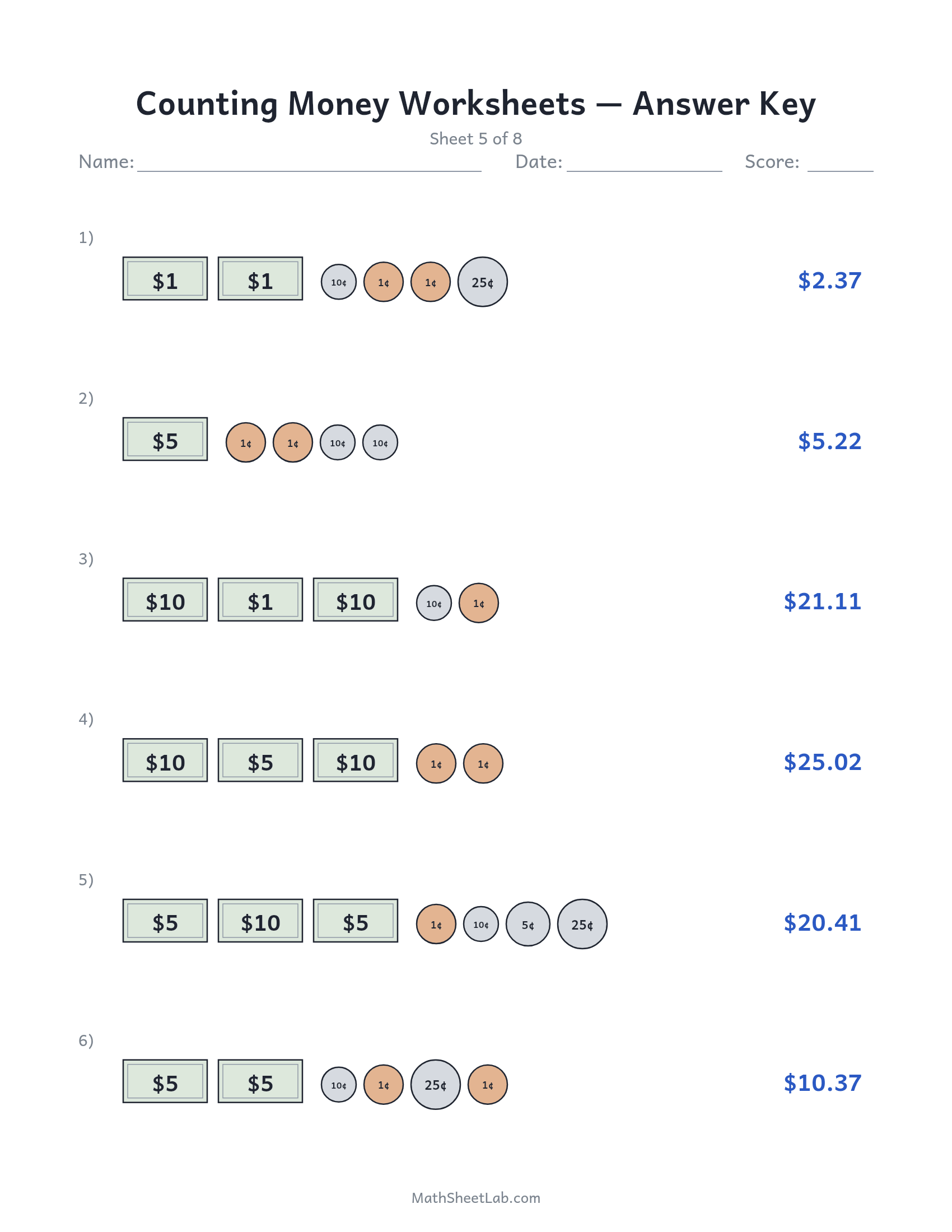
Sheet 5 answers
-
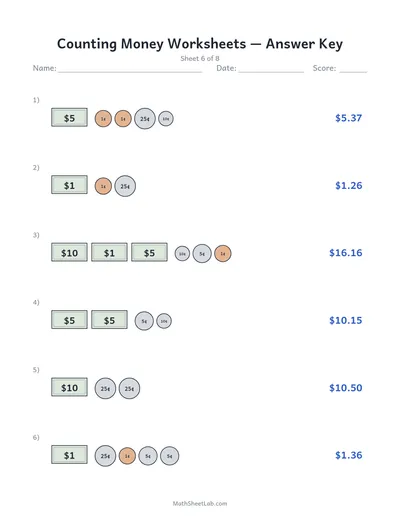
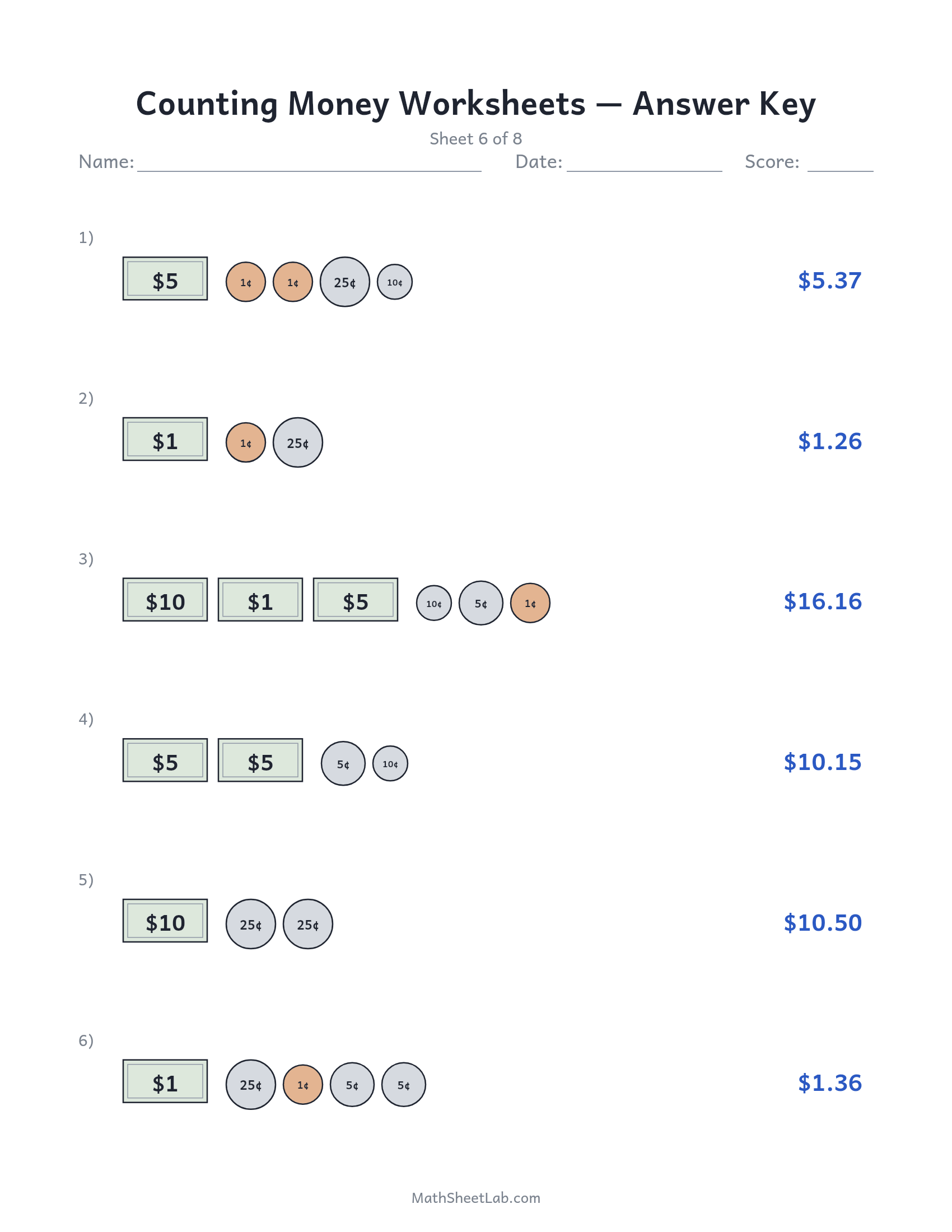
Sheet 6 answers
-
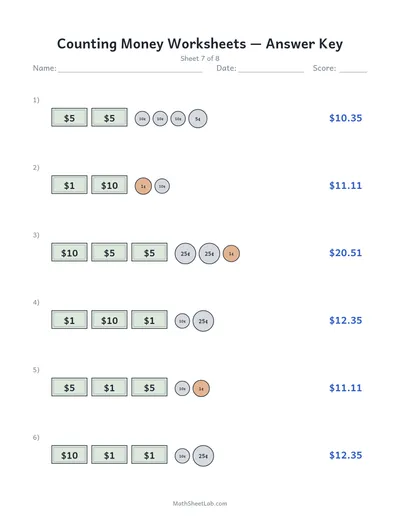
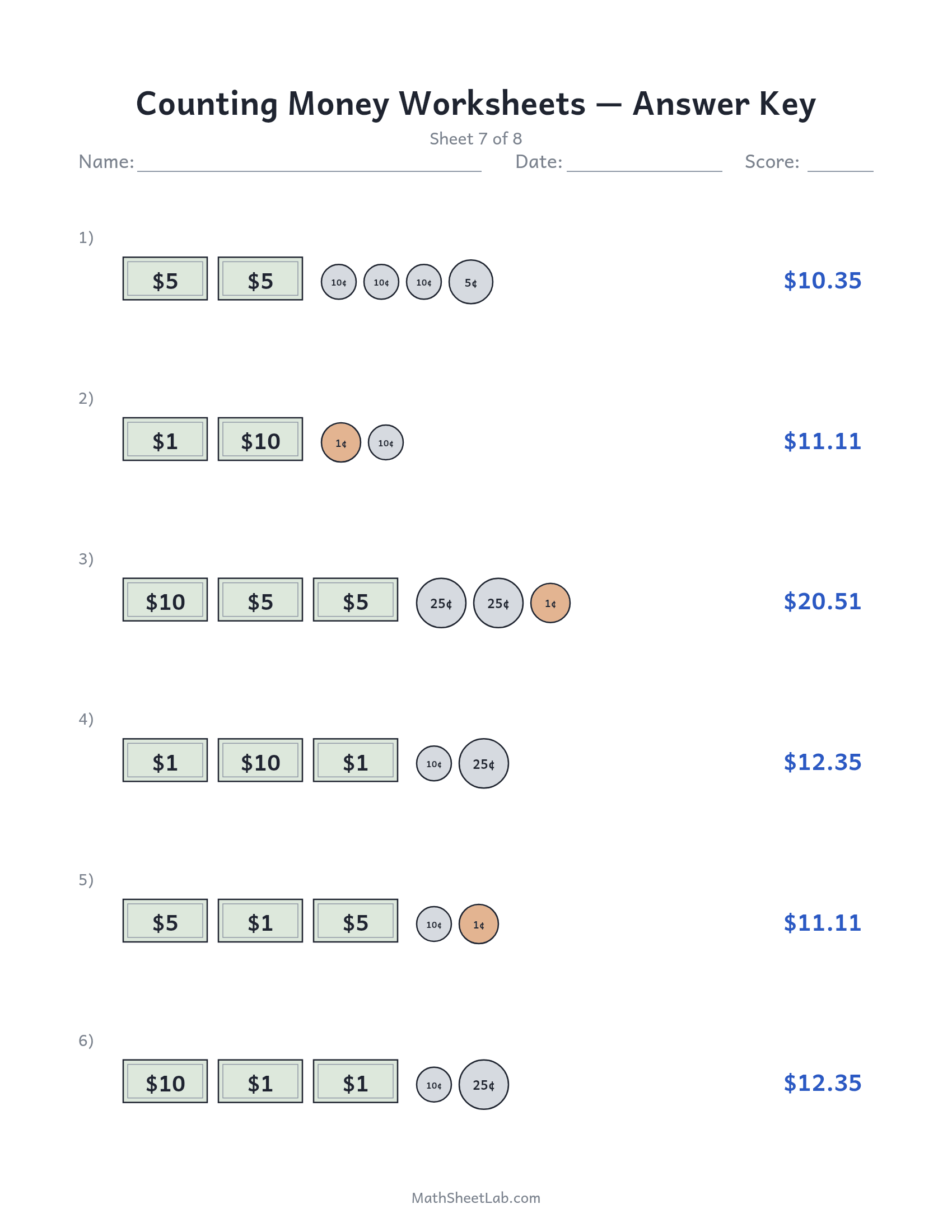
Sheet 7 answers
-
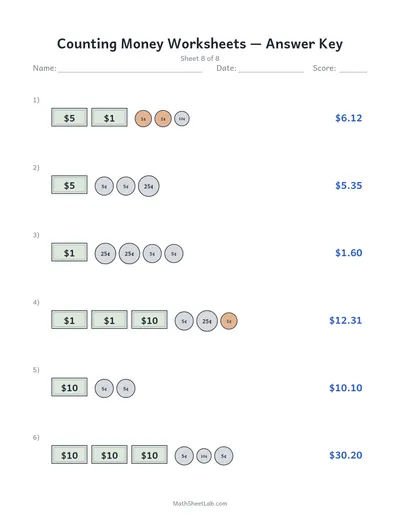
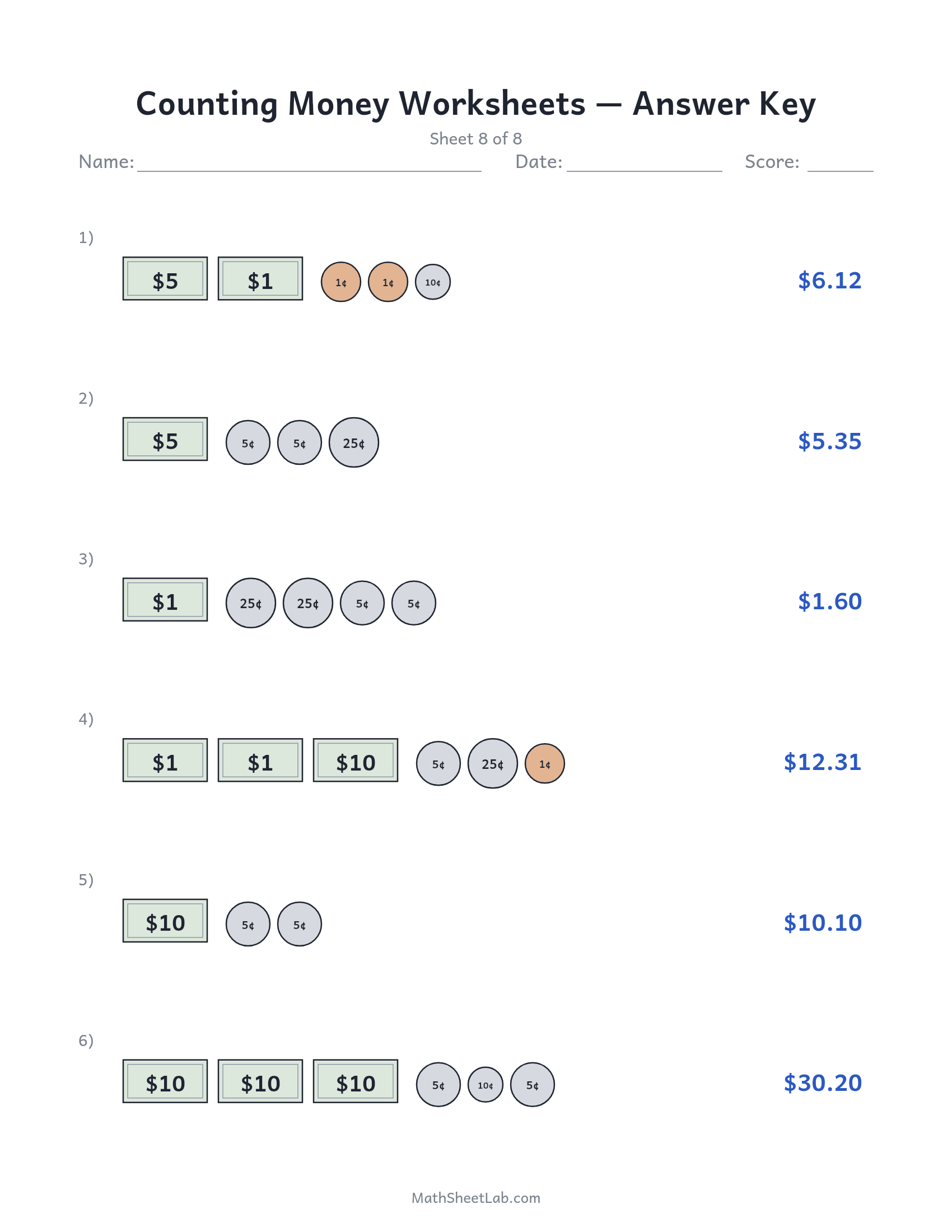
Sheet 8 answers
About these worksheets
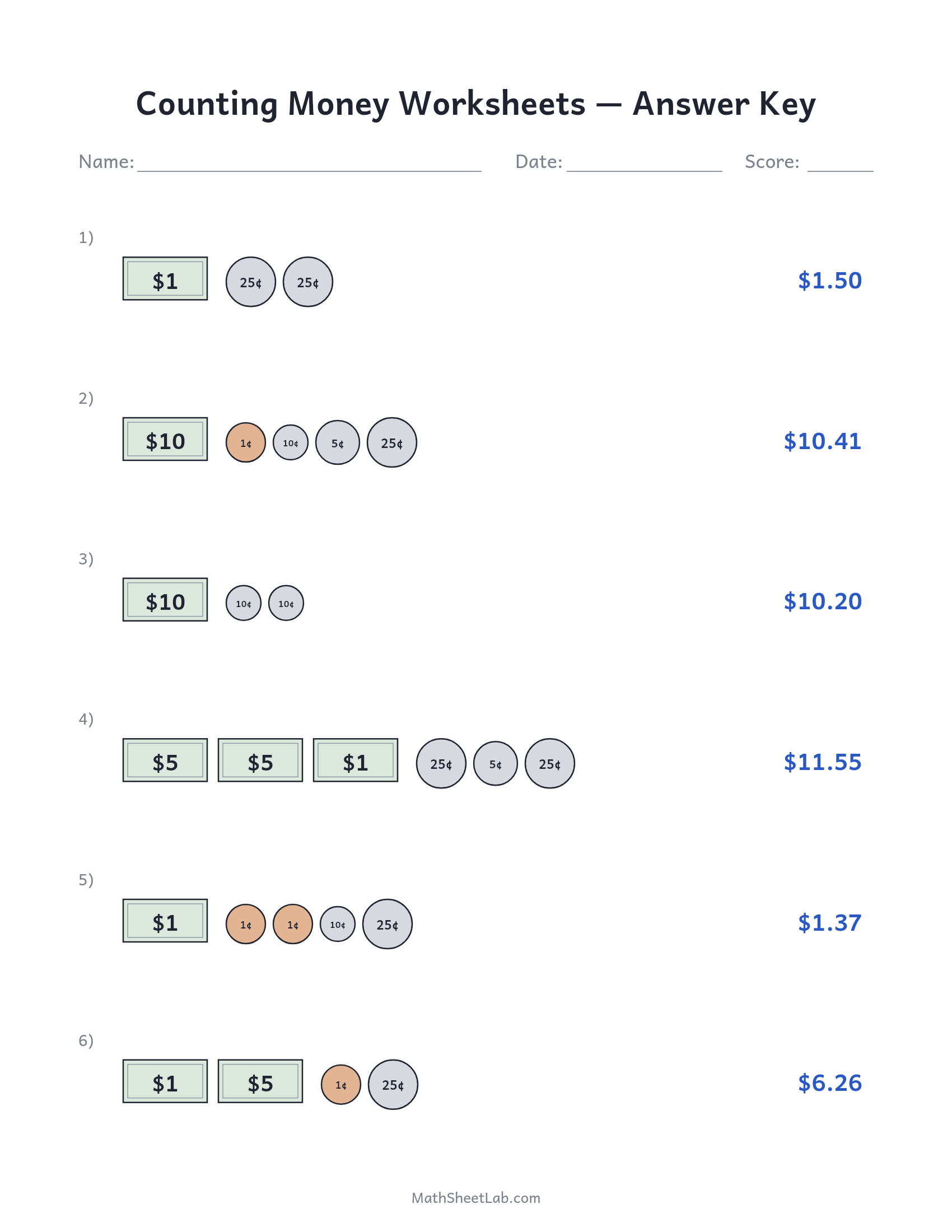
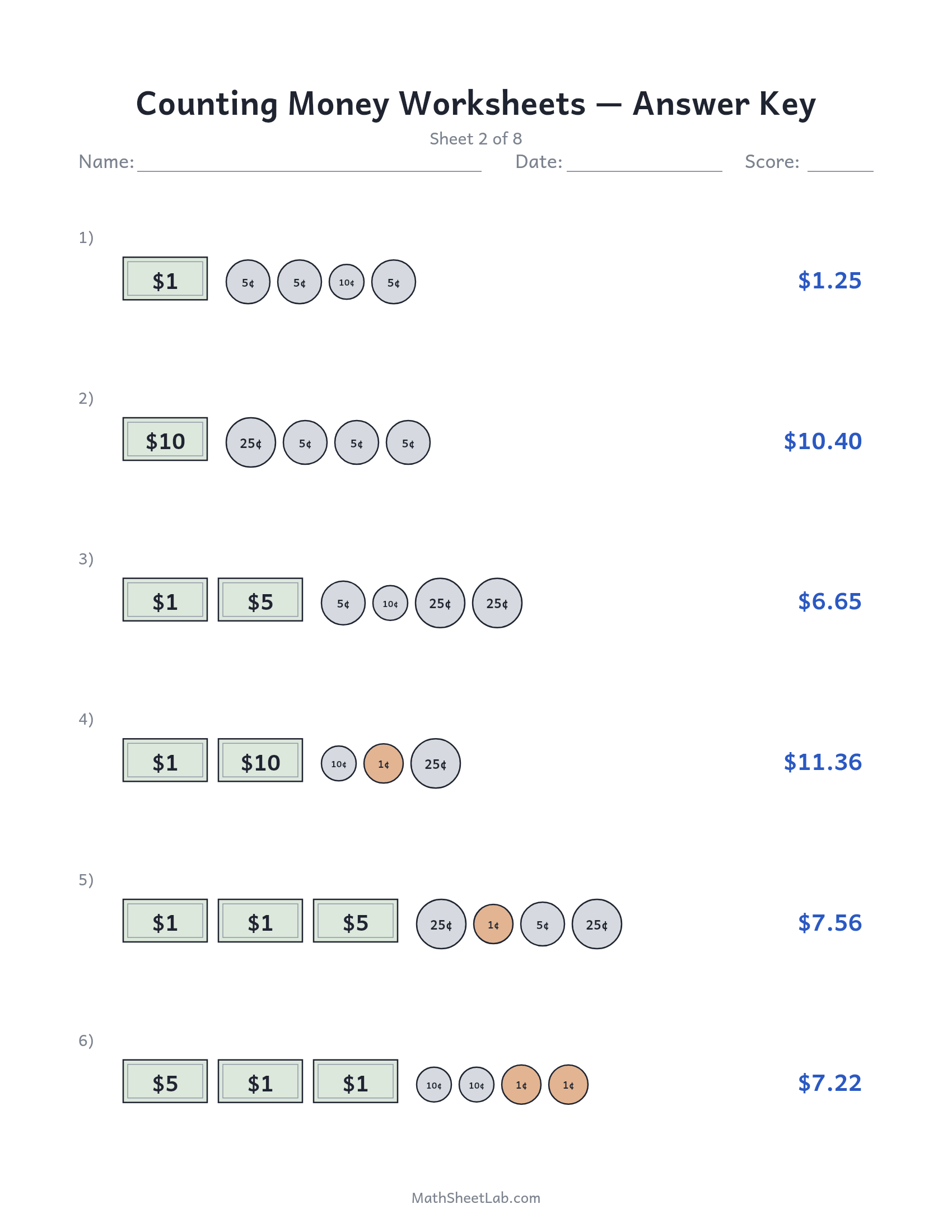
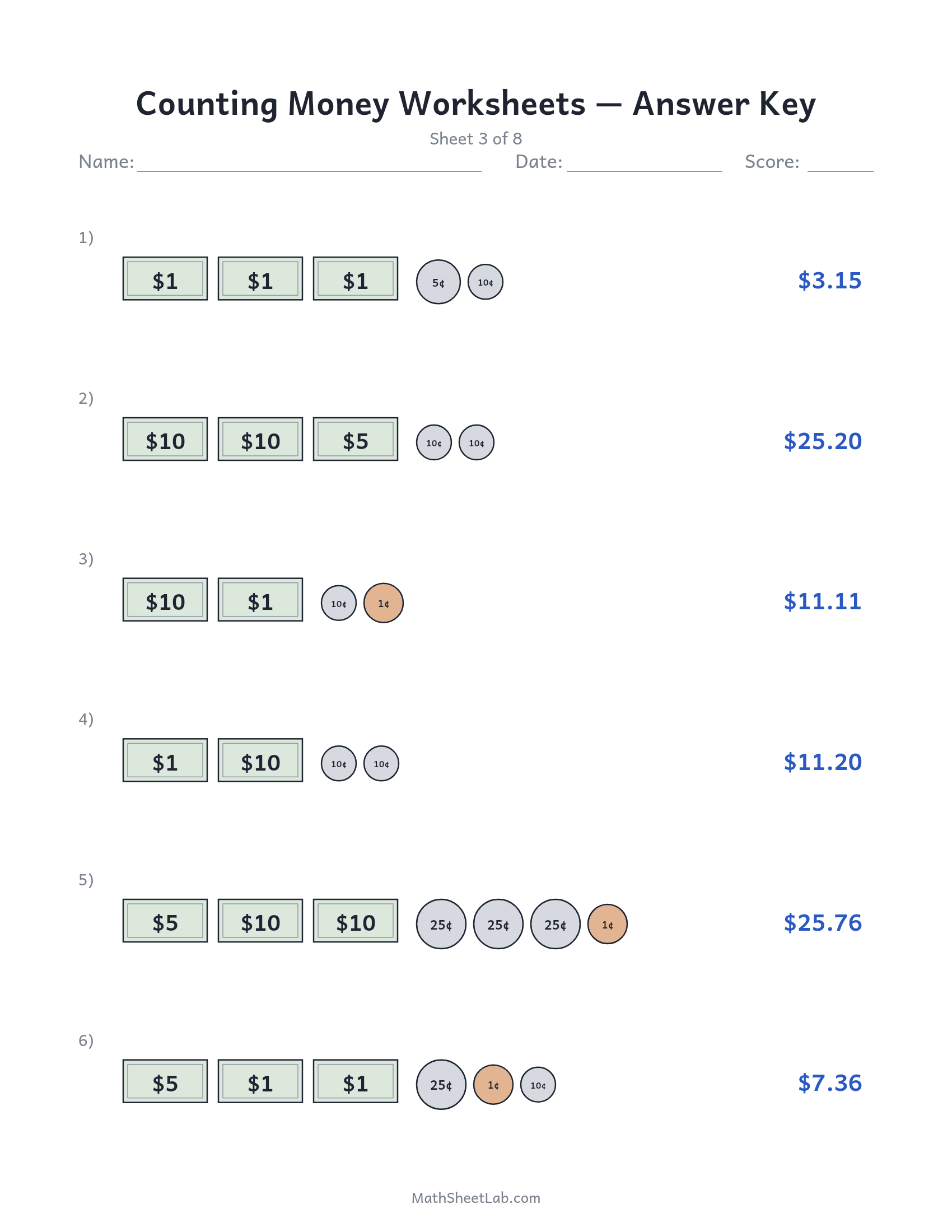
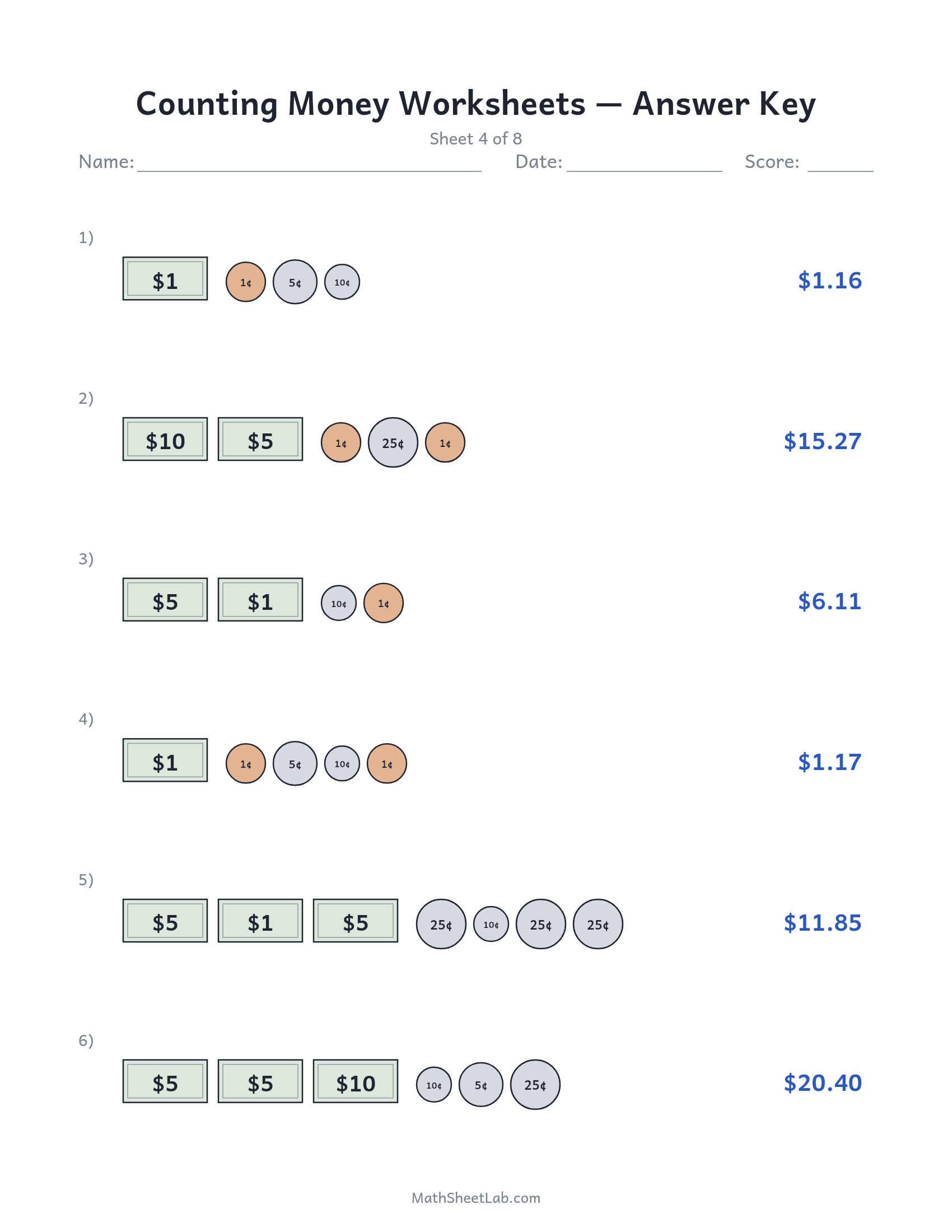
Once coin counting is comfortable, add bills, and the total moves to dollar notation: 135 cents becomes $1.35. That switch from cents to dollars is the main lesson here, and for many children it is the first decimal point they write. Each row mixes $1, $5 and $10 bills with a few coins; count the bills first, then the coins, then write the total with a dollar sign and two digits after the point.
Frequently asked questions
How do you write cents in dollar notation?
Two digits after the point, always: one dollar and five cents is $1.05, not $1.5. The zero is the classic slip.
What bills appear?
Ones, fives and tens as simple labeled bills, one to three per row, plus two to four coins.
How big do the totals get?
From just over $1 to about $30. The largest possible row is three $10 bills and four quarters, which makes $31.00.