Telling time worksheets
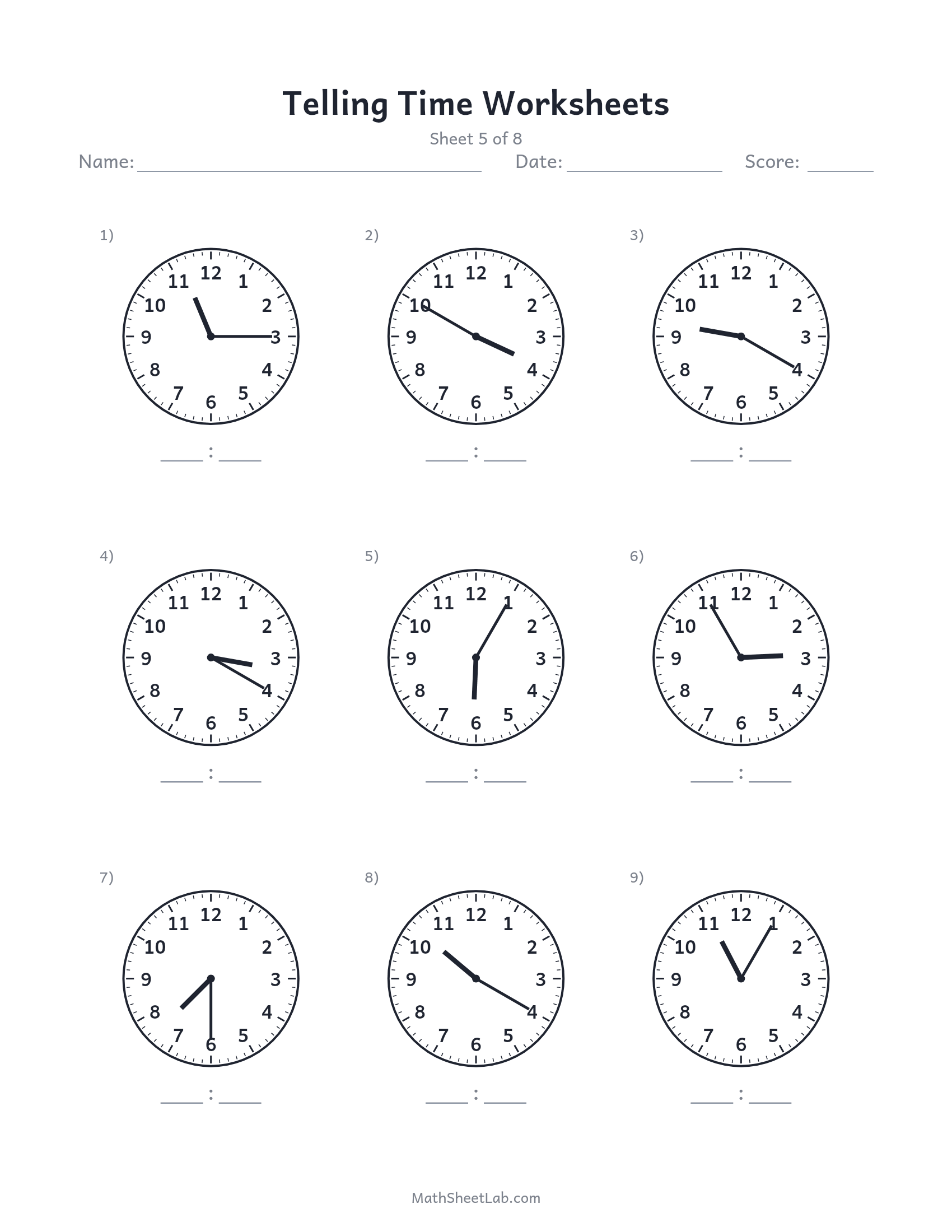
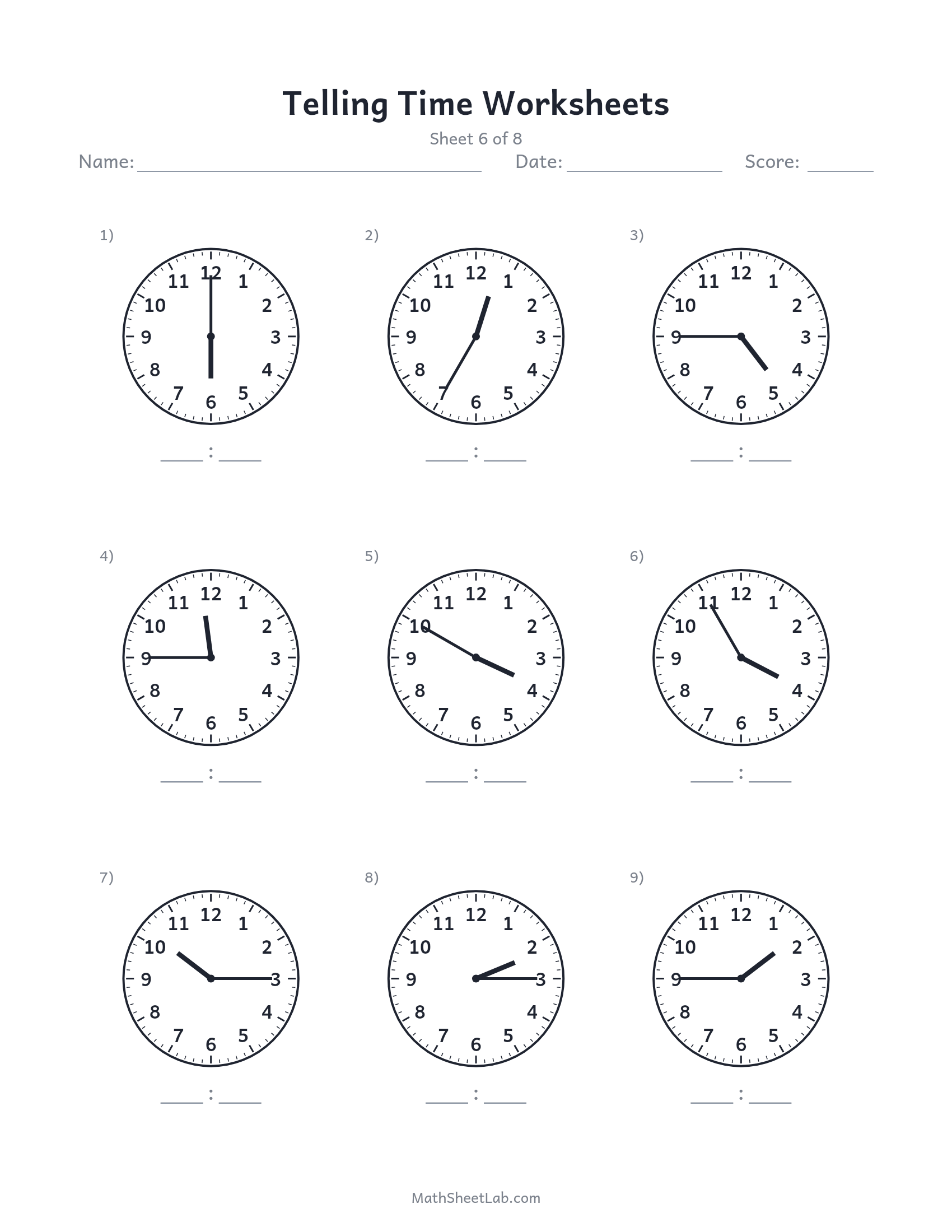
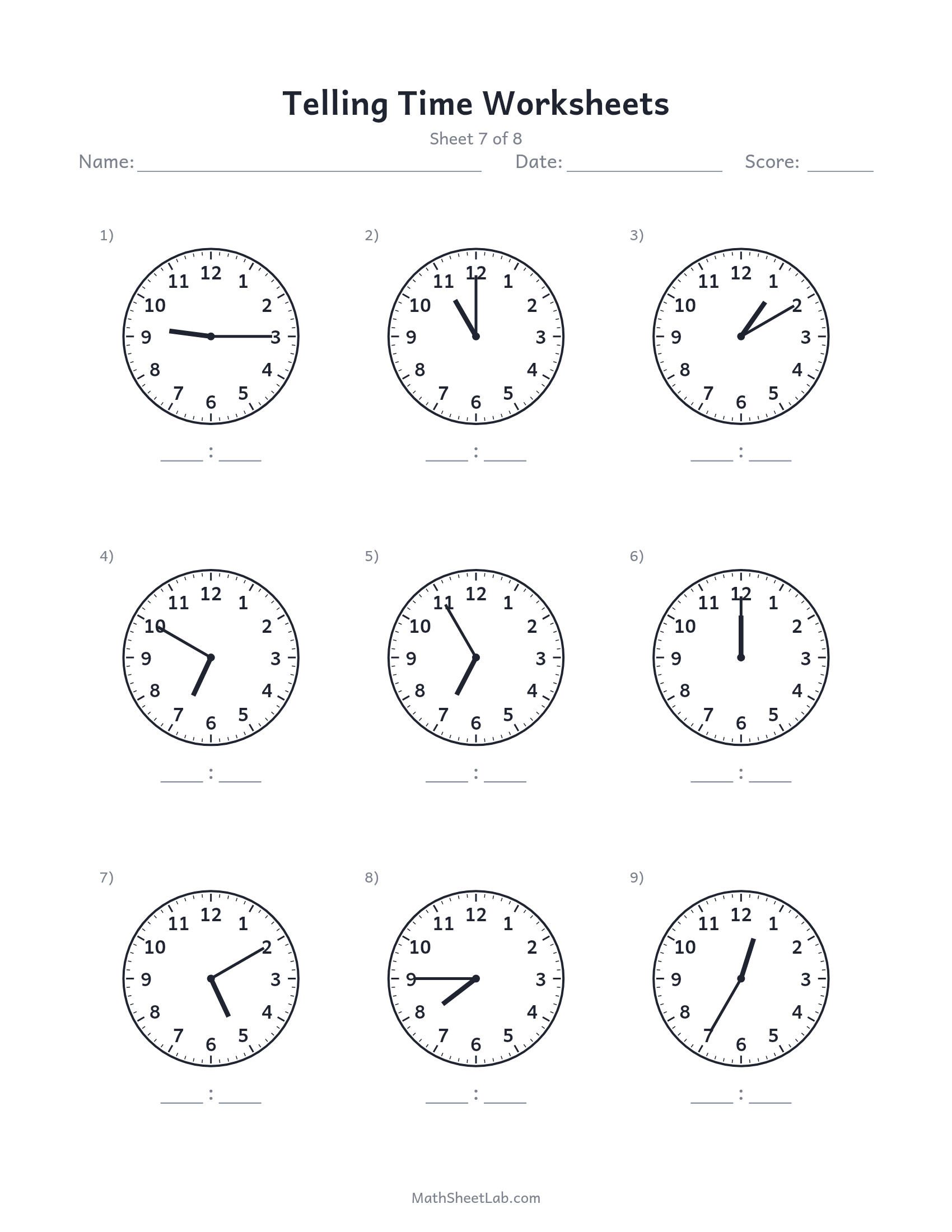
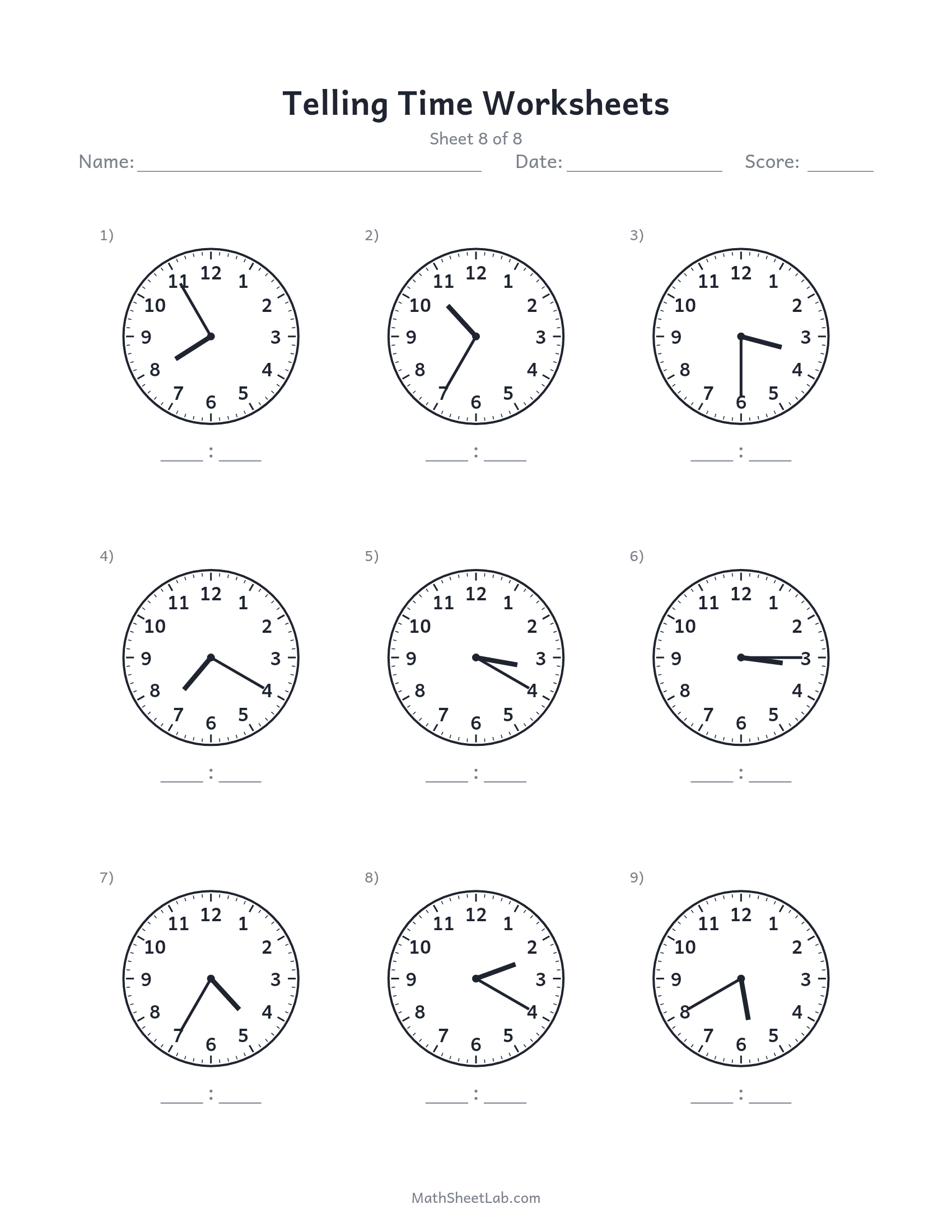
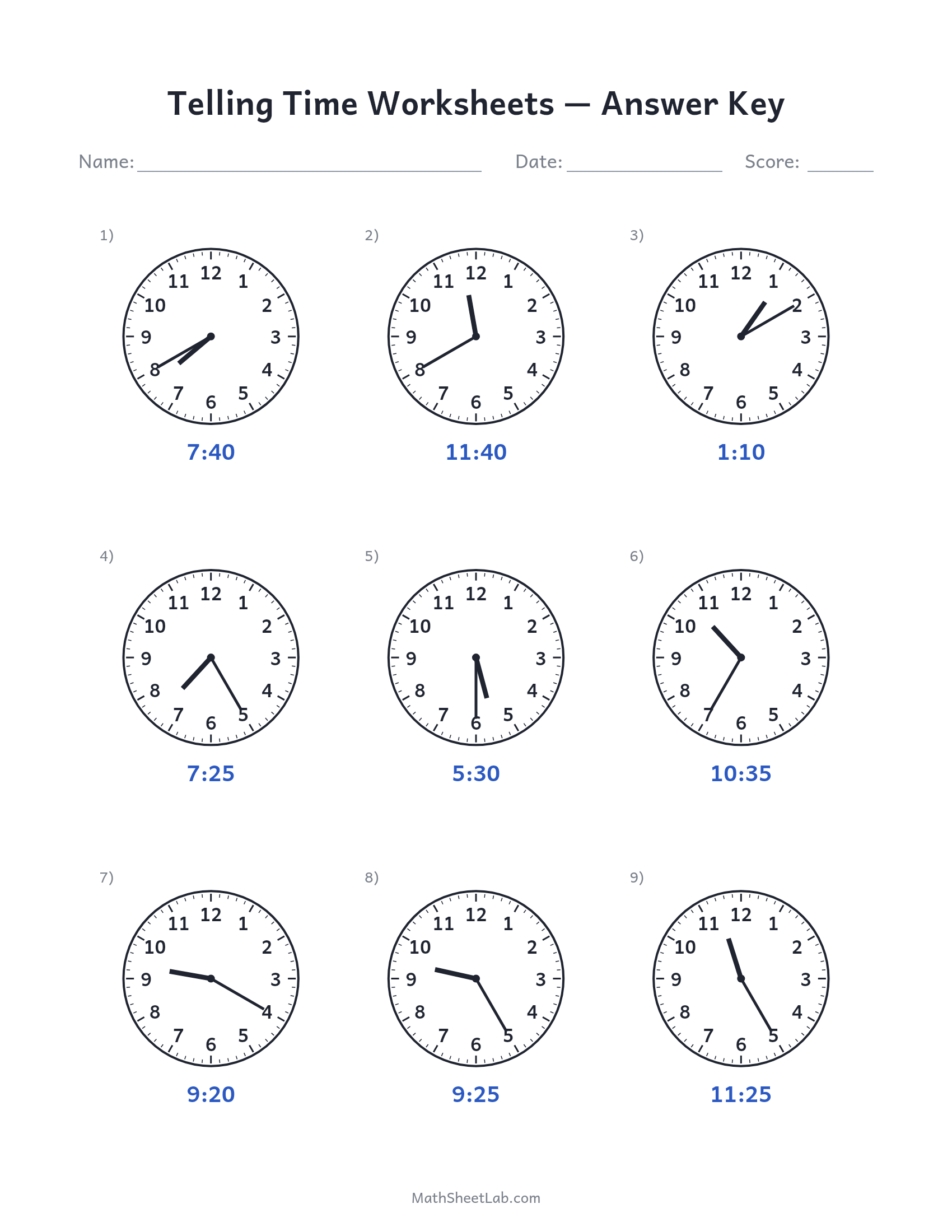
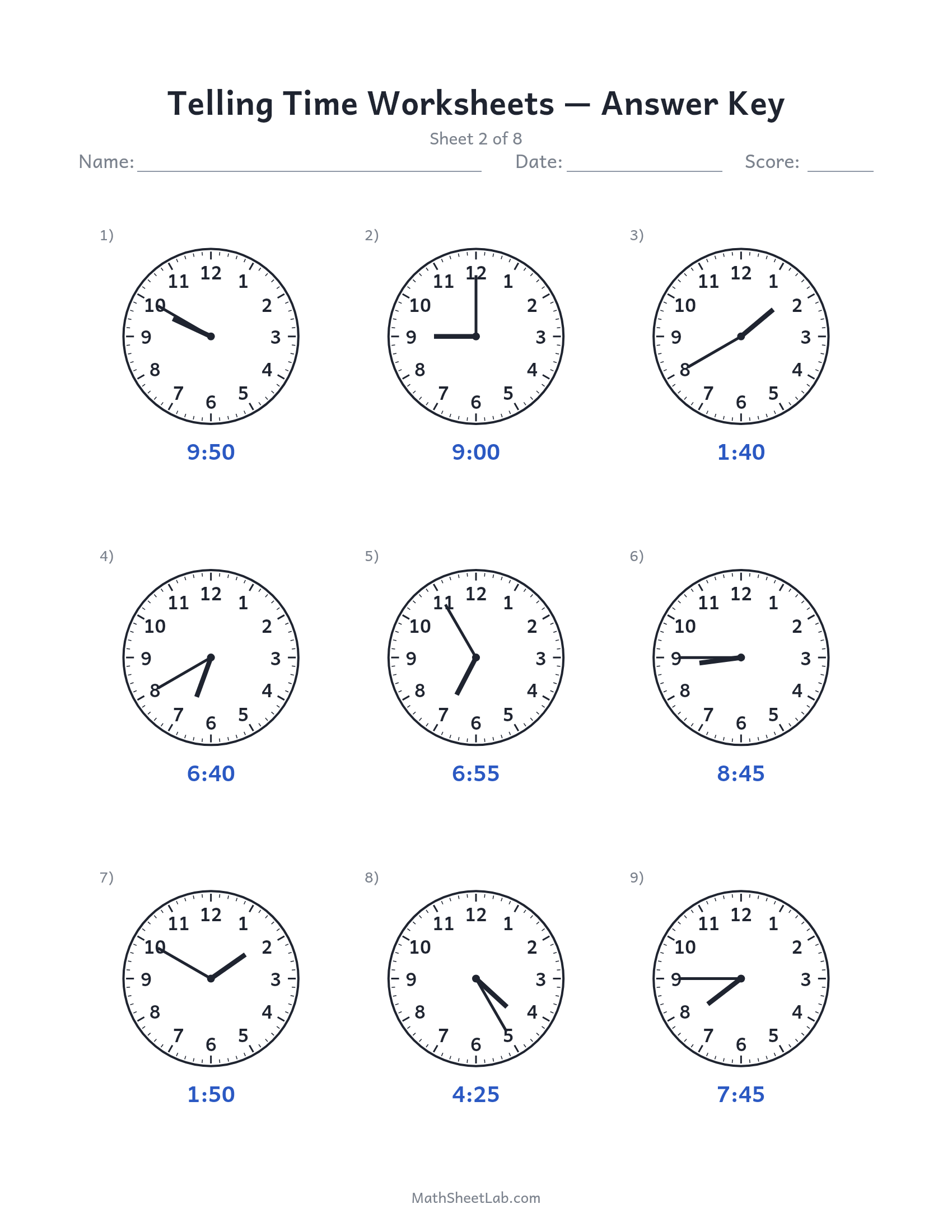
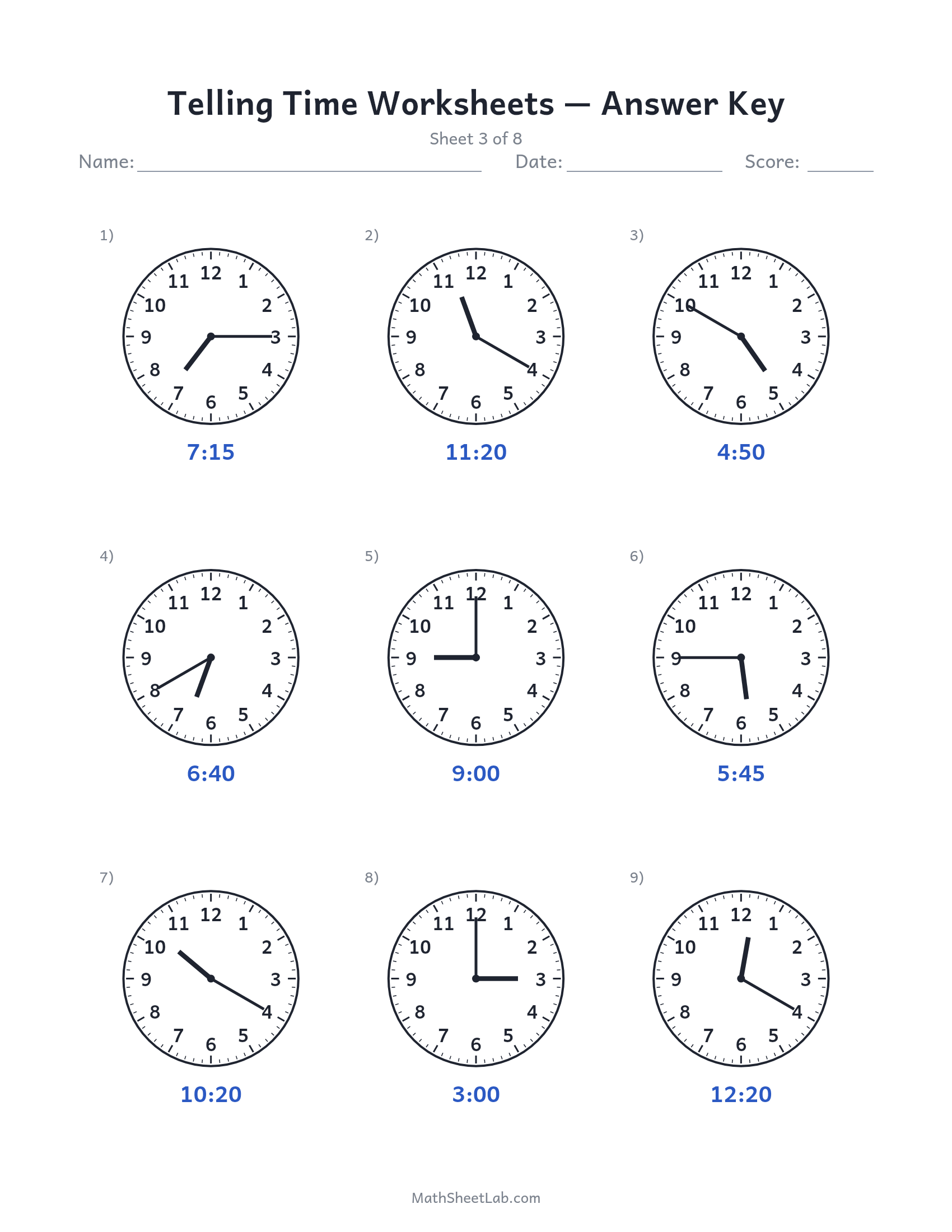
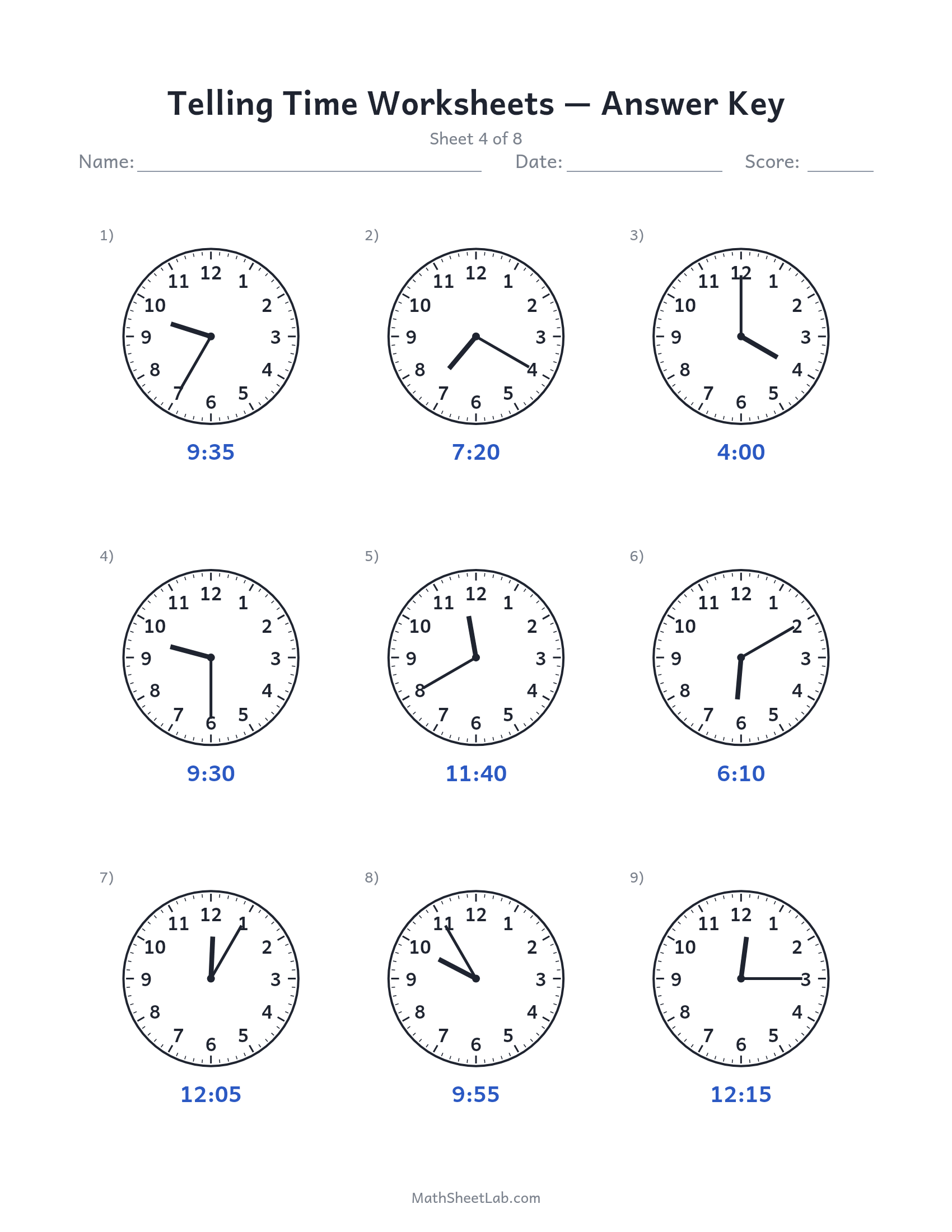
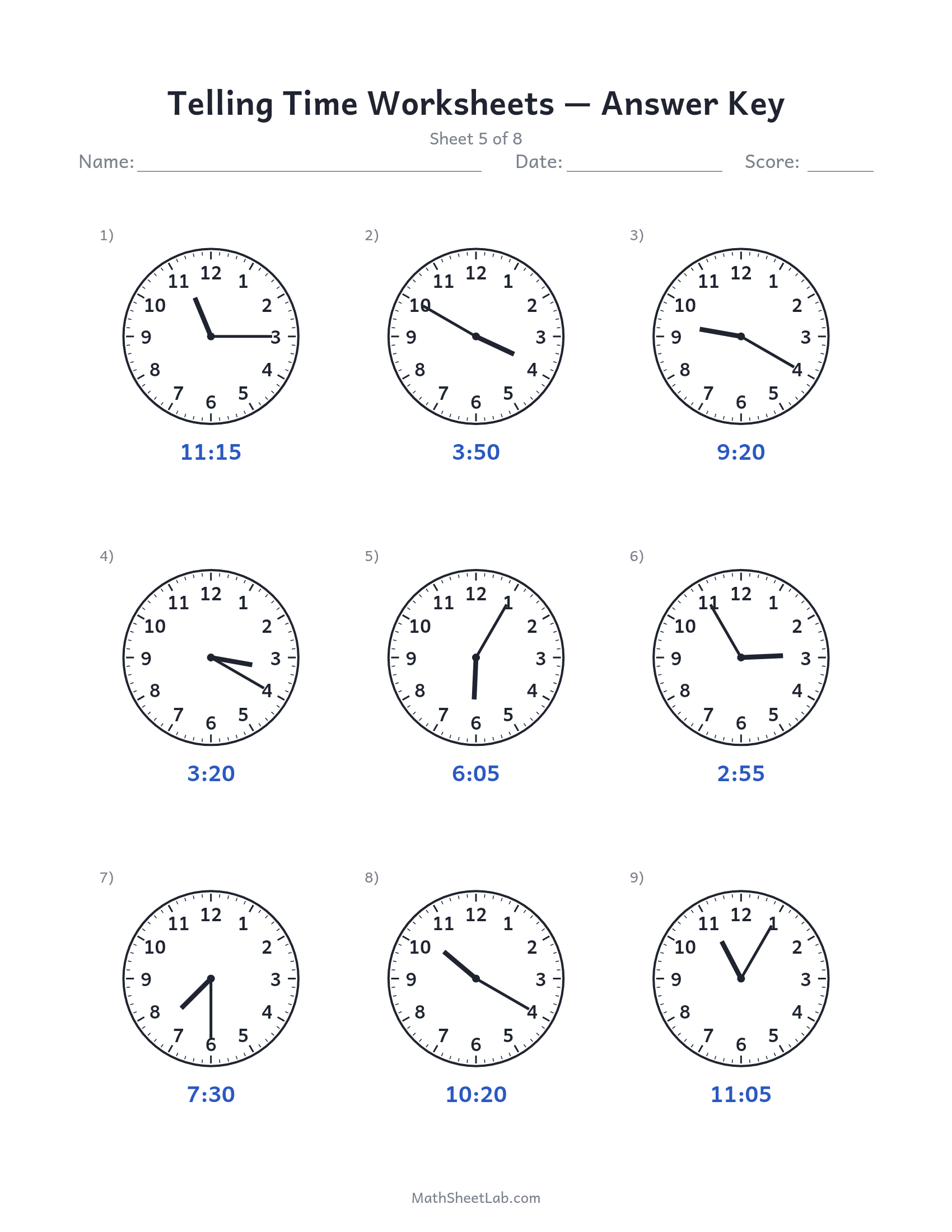
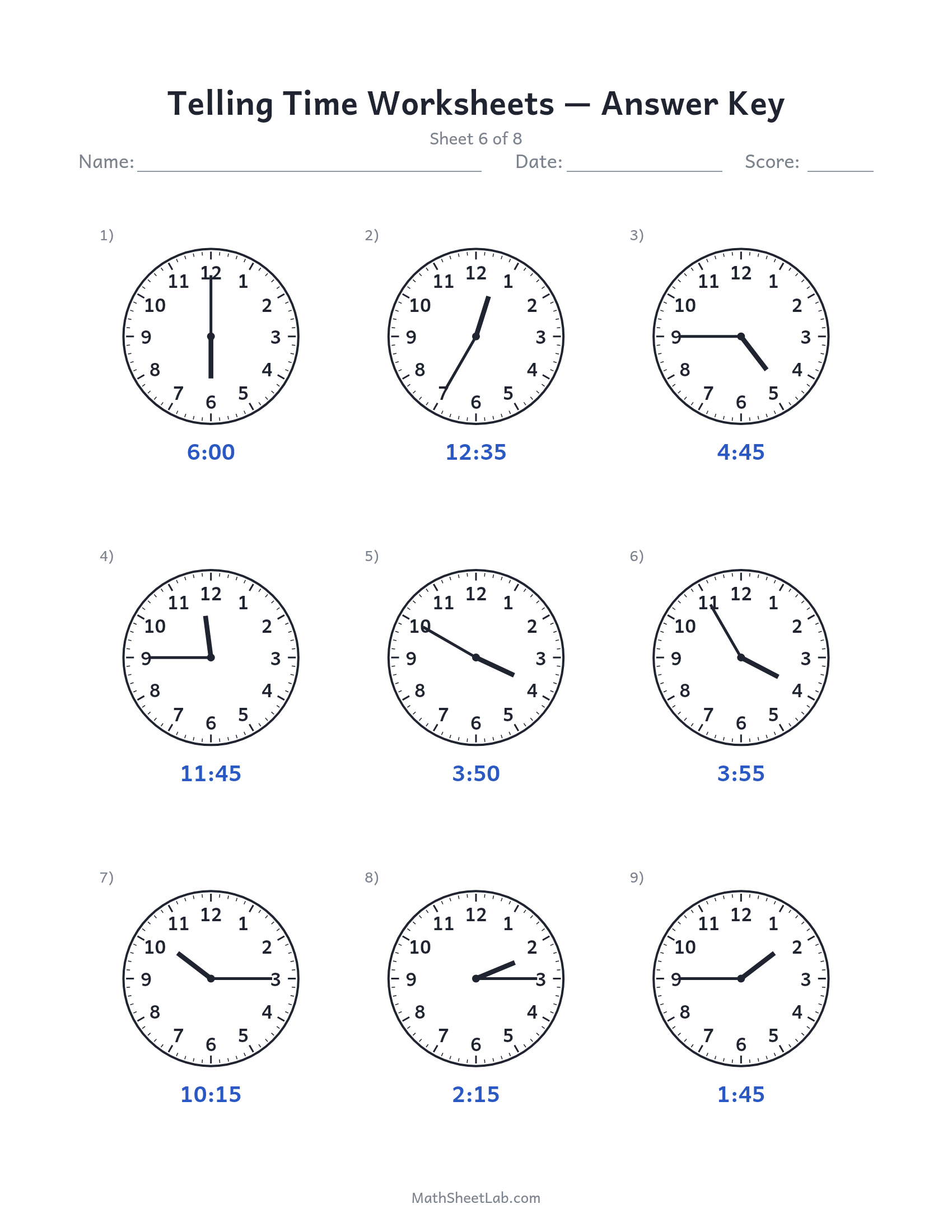
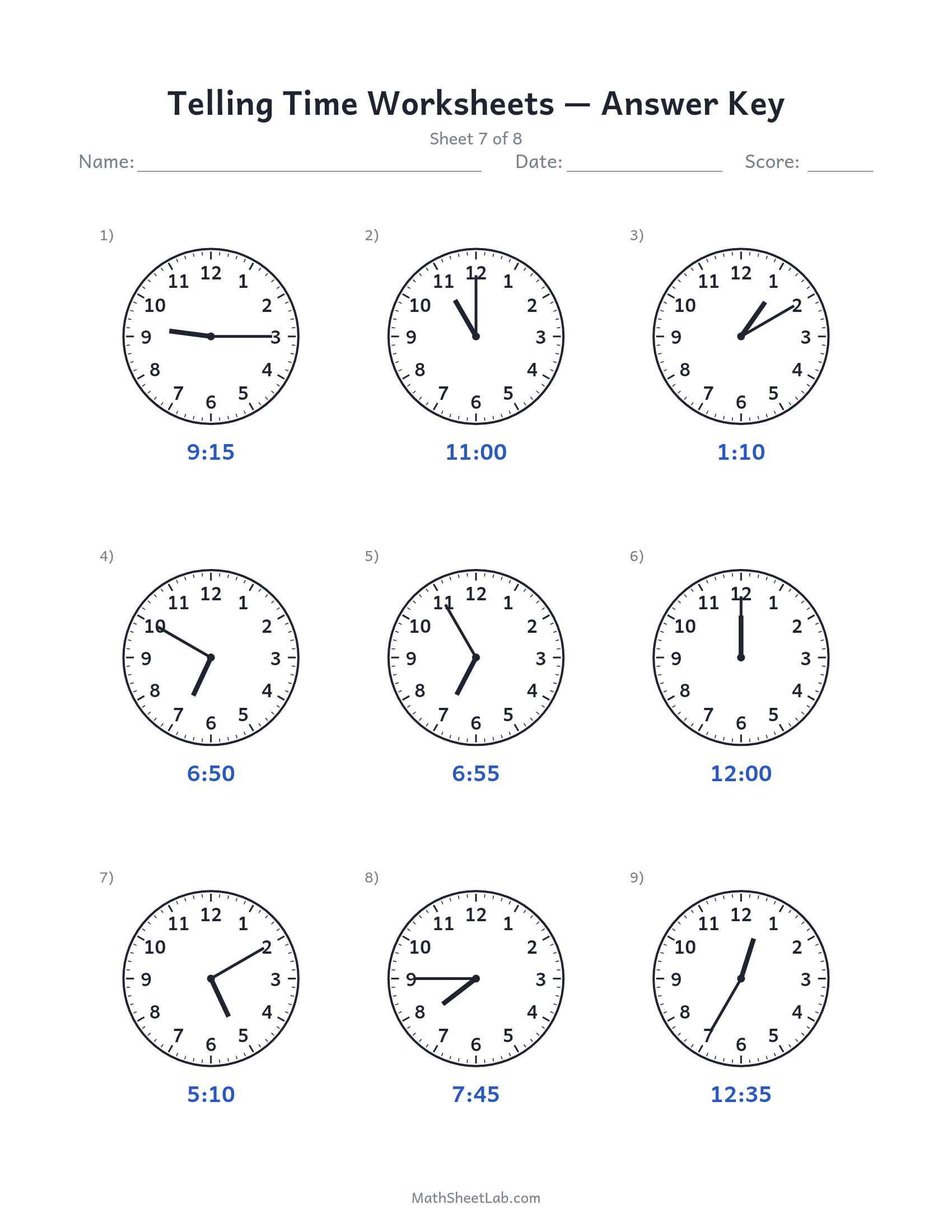
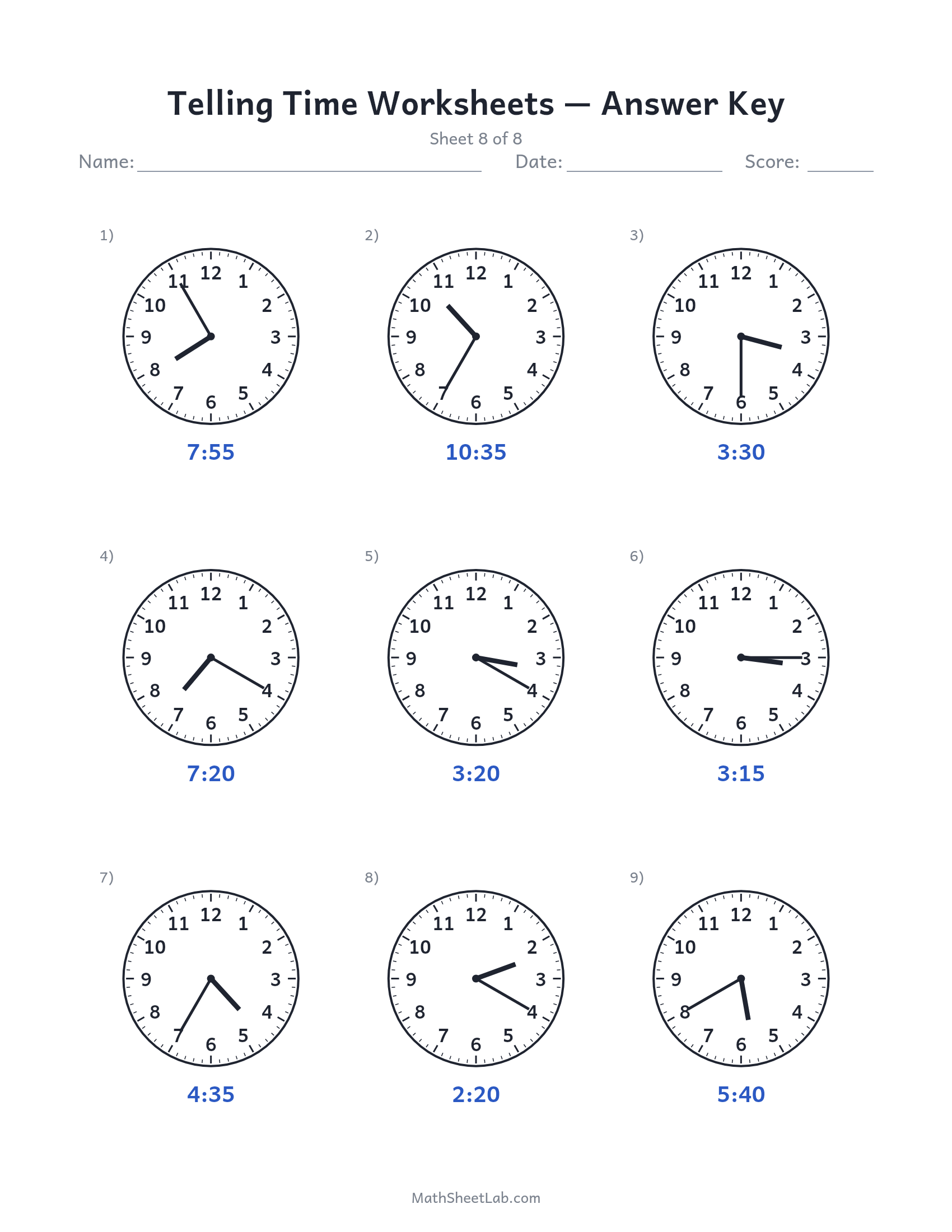
Nine analog clocks showing different times — read each one and write it down.
Best fit: 1st–3rd grade · 8 sheets, answer keys included · Free, no sign-up
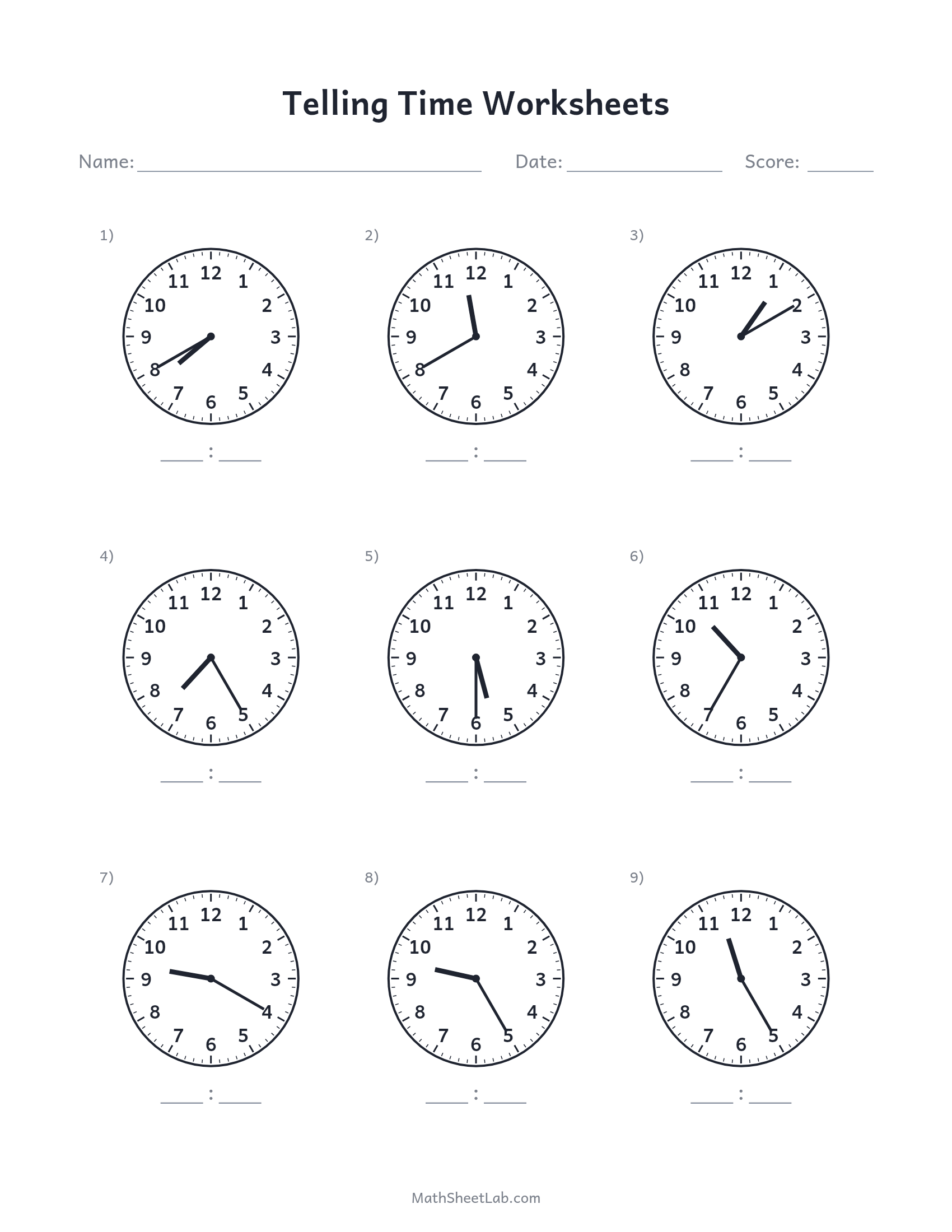
The full set: 8 worksheets with answer keys
Eight sheets in the same layout with different problems: download them as one PDF or print one at a time.
Worksheets
-
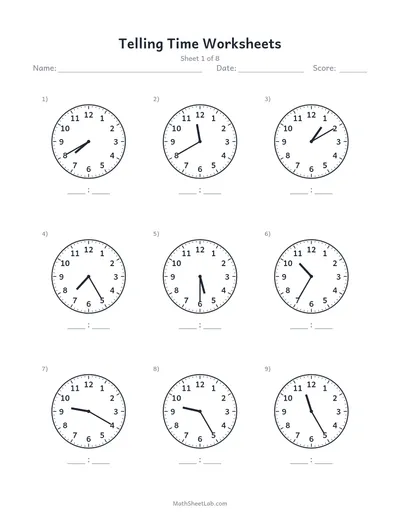
Sheet 1
-
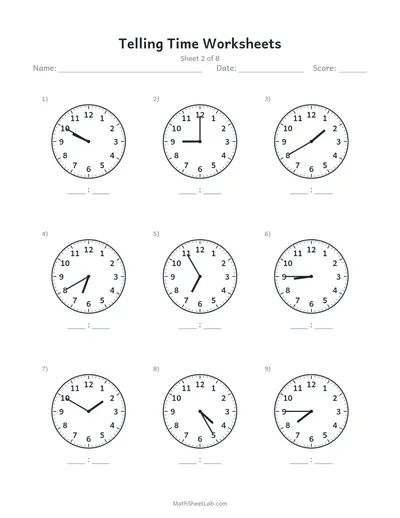
Sheet 2
-
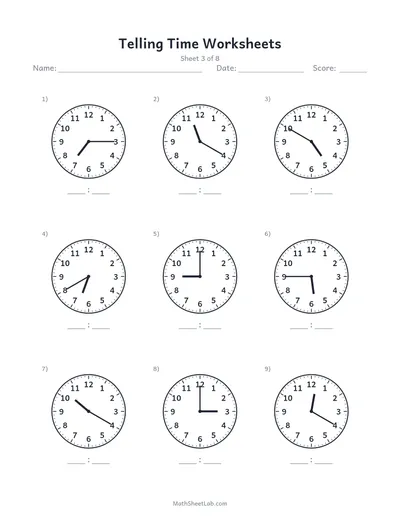
Sheet 3
-
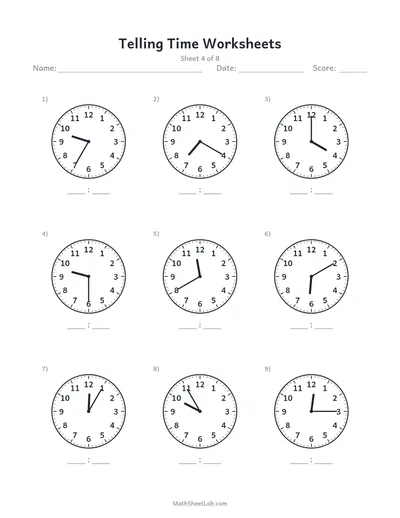
Sheet 4
-
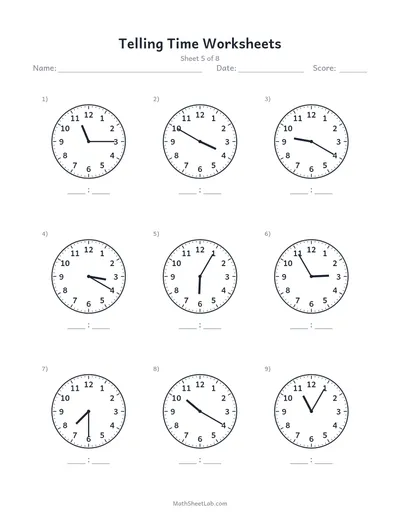
Sheet 5
-
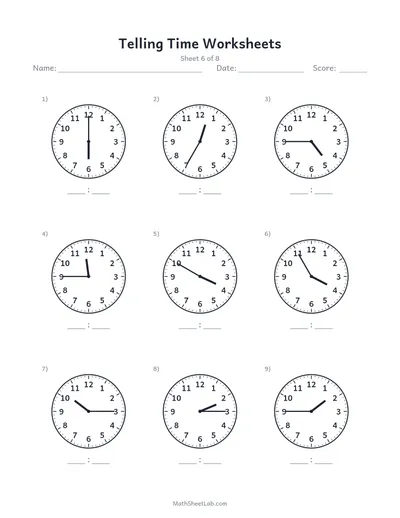
Sheet 6
-
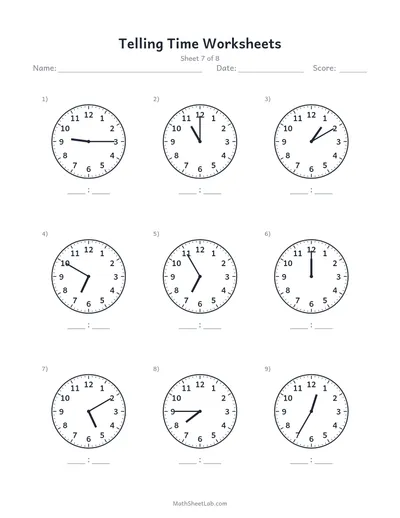
Sheet 7
-
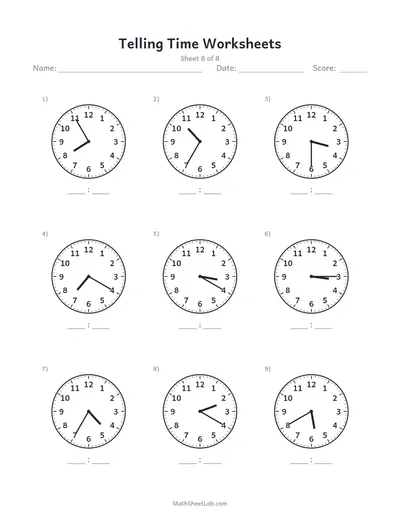
Sheet 8
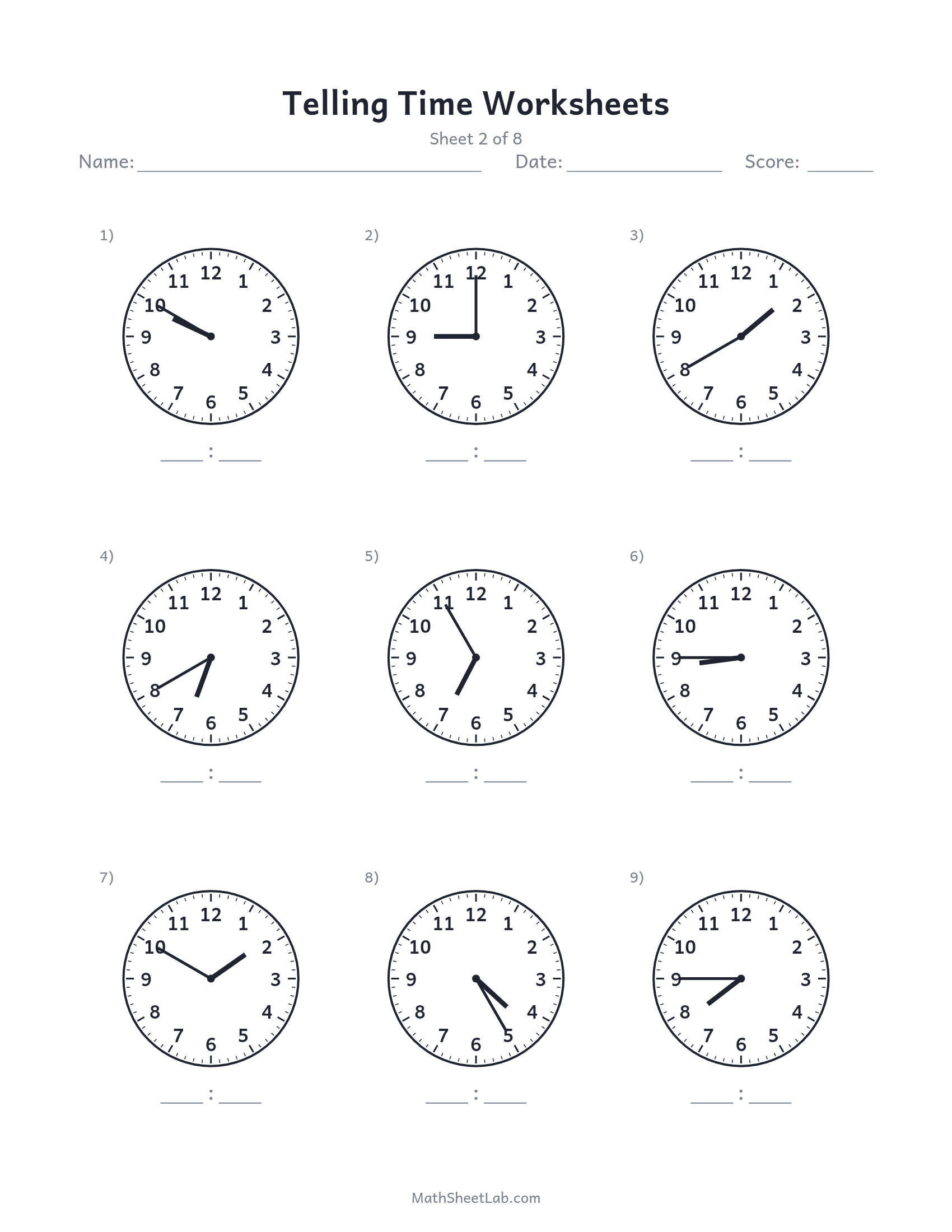
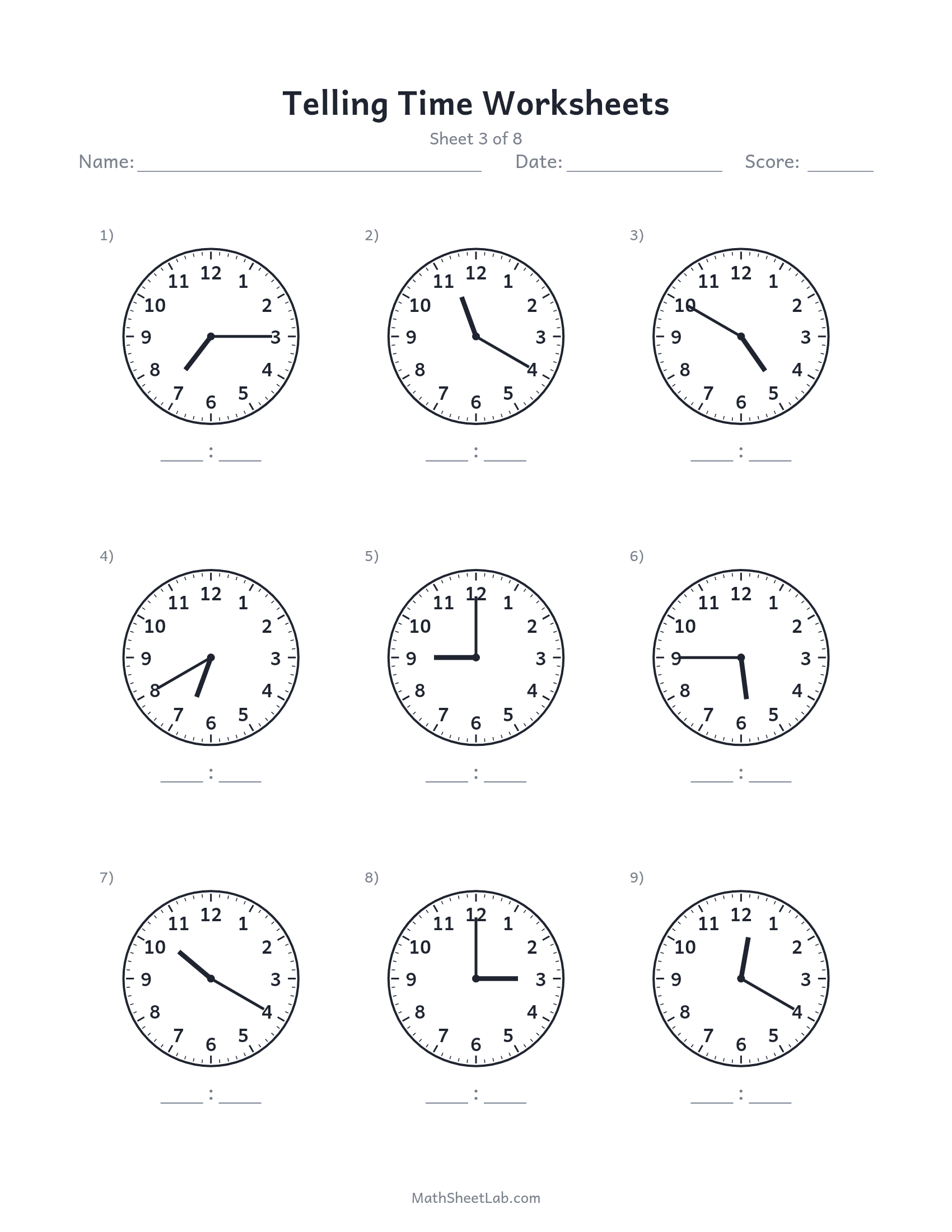
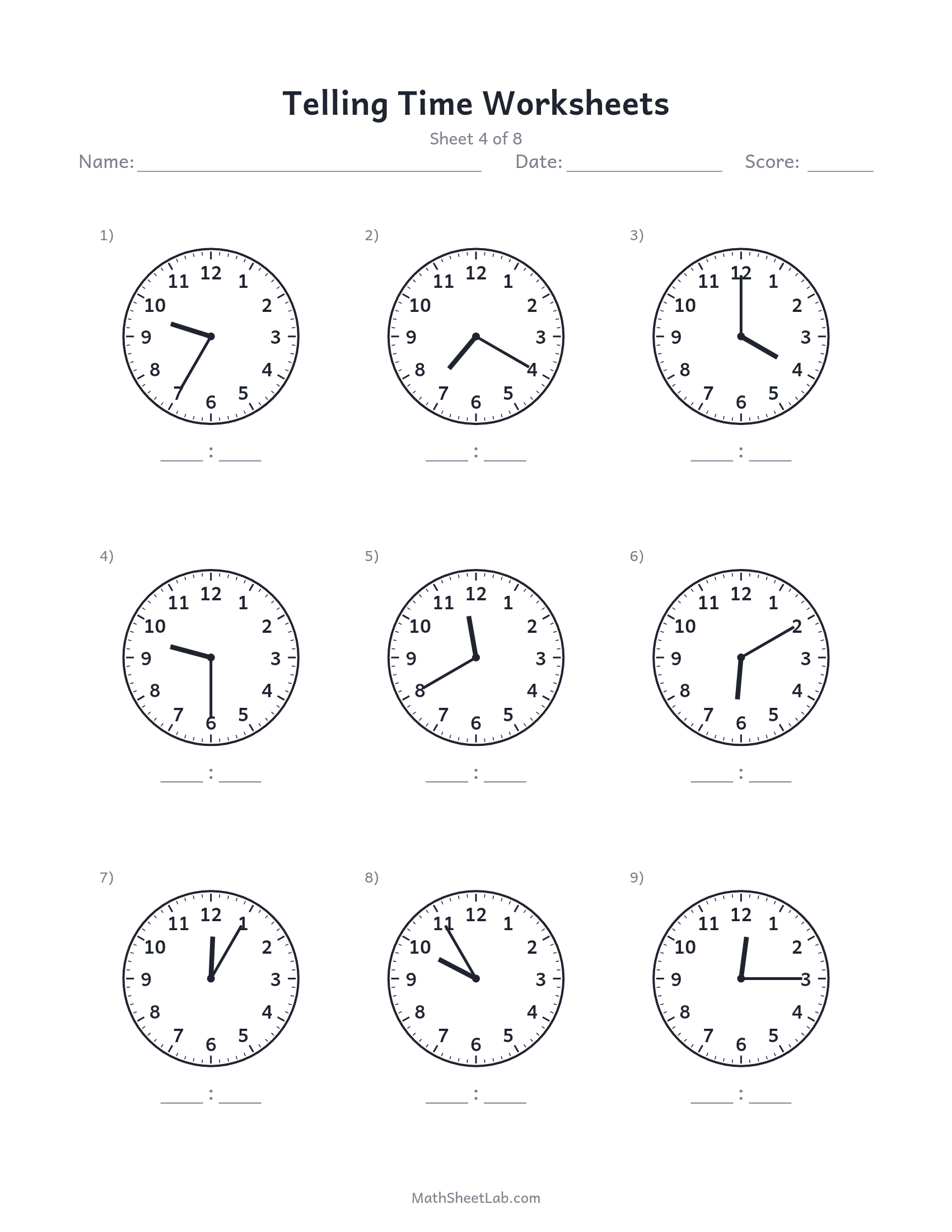
Answer keys
-
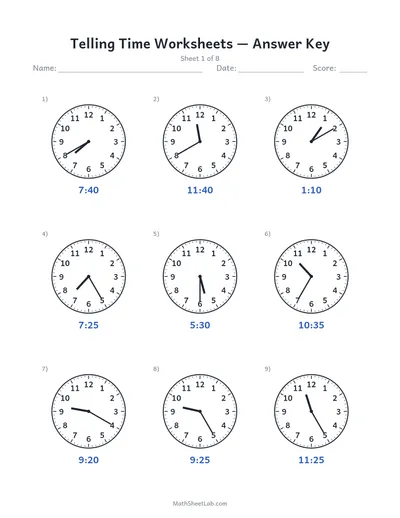
Sheet 1 answers
-
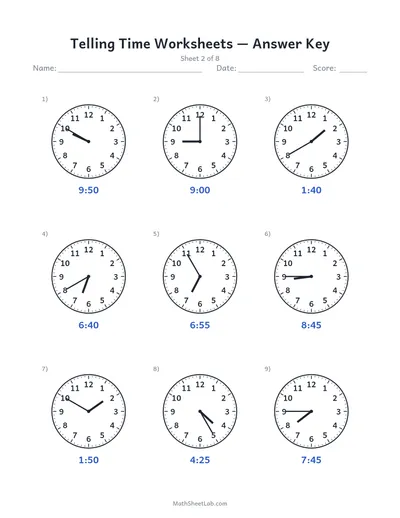
Sheet 2 answers
-
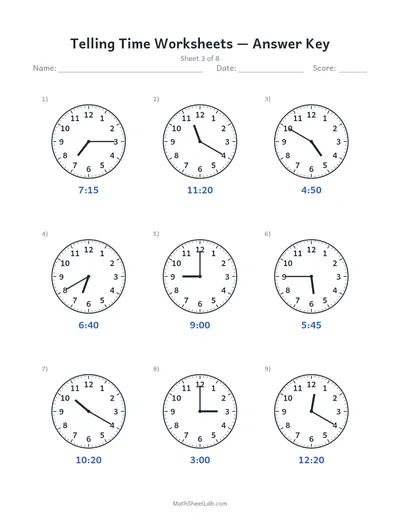
Sheet 3 answers
-
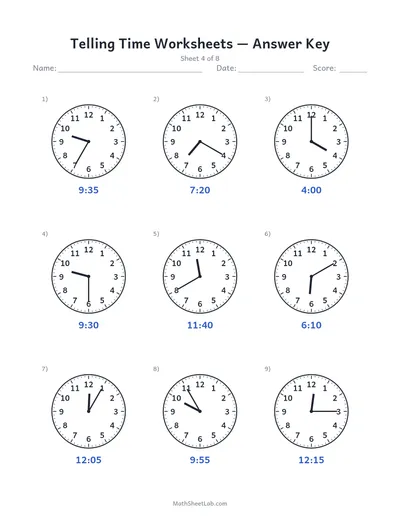
Sheet 4 answers
-
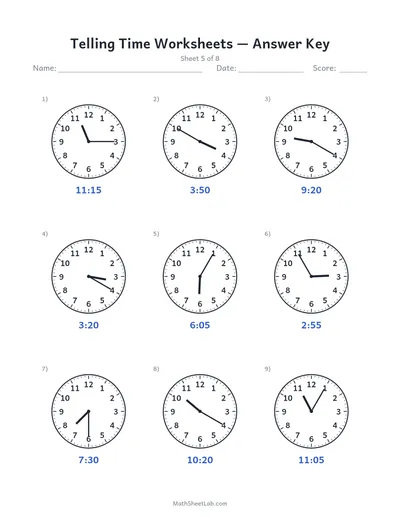
Sheet 5 answers
-
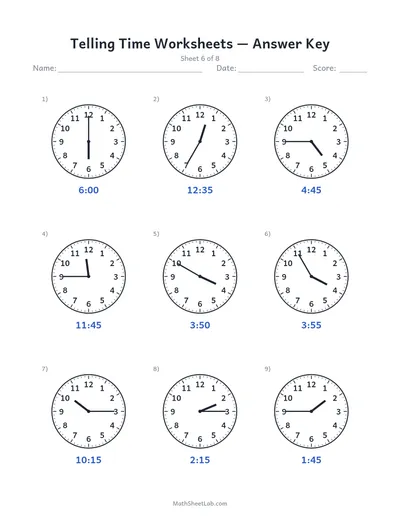
Sheet 6 answers
-
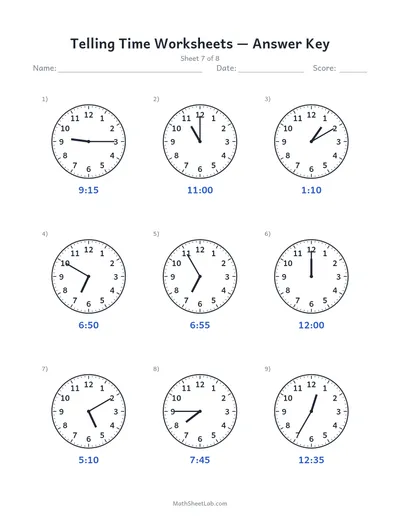
Sheet 7 answers
-
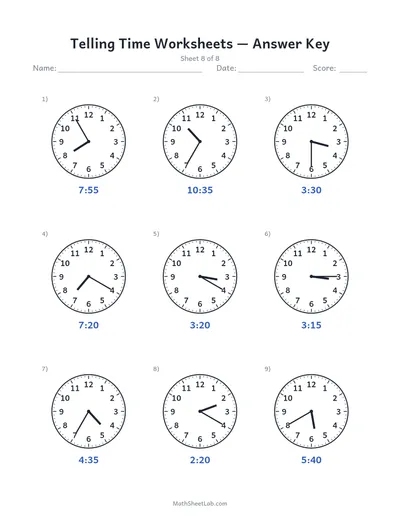
Sheet 8 answers
About these worksheets
Reading an analog clock is two skills at once: the short hand tells the hour (even when it has drifted toward the next number), and the long hand counts minutes by fives. Every sheet’s nine clocks are set to the nearest five minutes, and most include a time like 6:55 or 3:50, where the hour hand has nearly reached the next number. For an easier start, practice hours and half-hours on blank clock faces first. The draw-the-hands clock worksheets use only those times, but ask the child to draw them rather than read them.
Grade level: these worksheets are part of our 2nd grade math worksheets collection.
Frequently asked questions
What times do these clocks show?
Times to the nearest five minutes, the 2nd-grade standard (3rd grade moves on to the nearest minute). The hours run from 1 to 12 and the minutes from :00 to :55.
What order should telling-time skills come in?
Hour, then half-hour (1st grade), then five minutes (2nd) and one minute (3rd). These sheets sit at the five-minute stage.
Why is 6:55 harder than 6:05?
At 6:55 the hour hand is almost on the 7, so many children read it as 7:55. The hour is the last number the short hand has passed, not the one it is nearest. At 6:05 the hand has only just left the 6, so the hour is easy to read.