Clock worksheets (draw the hands)
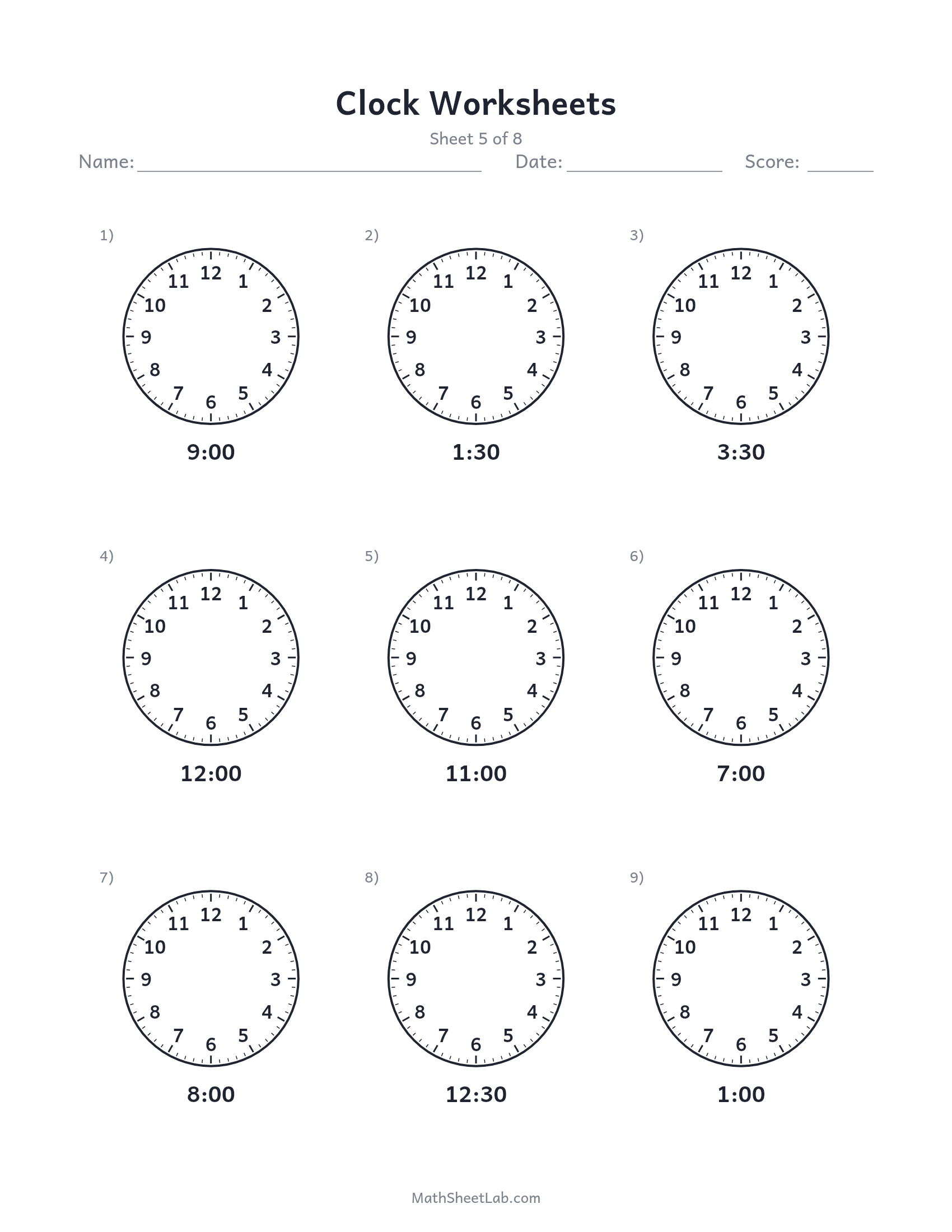
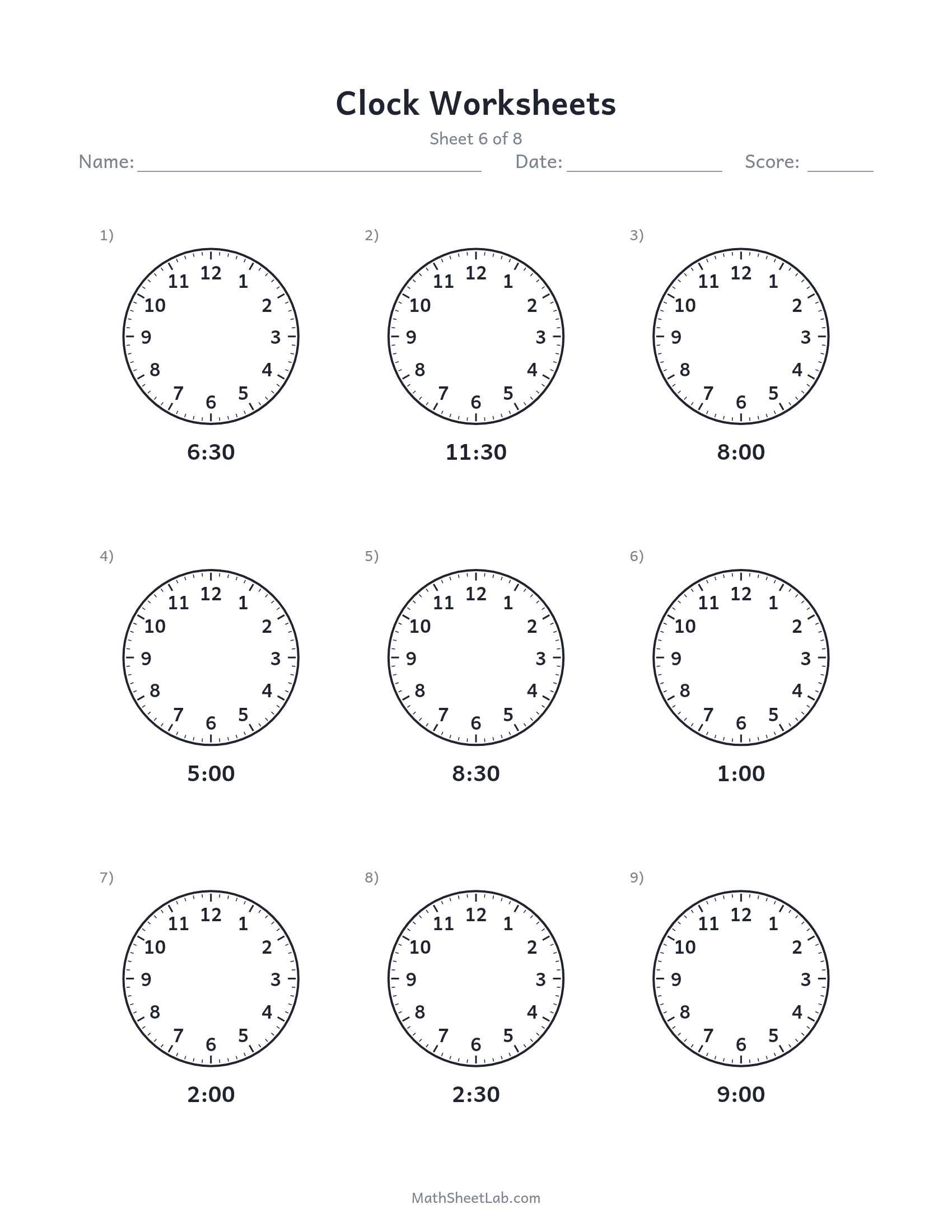
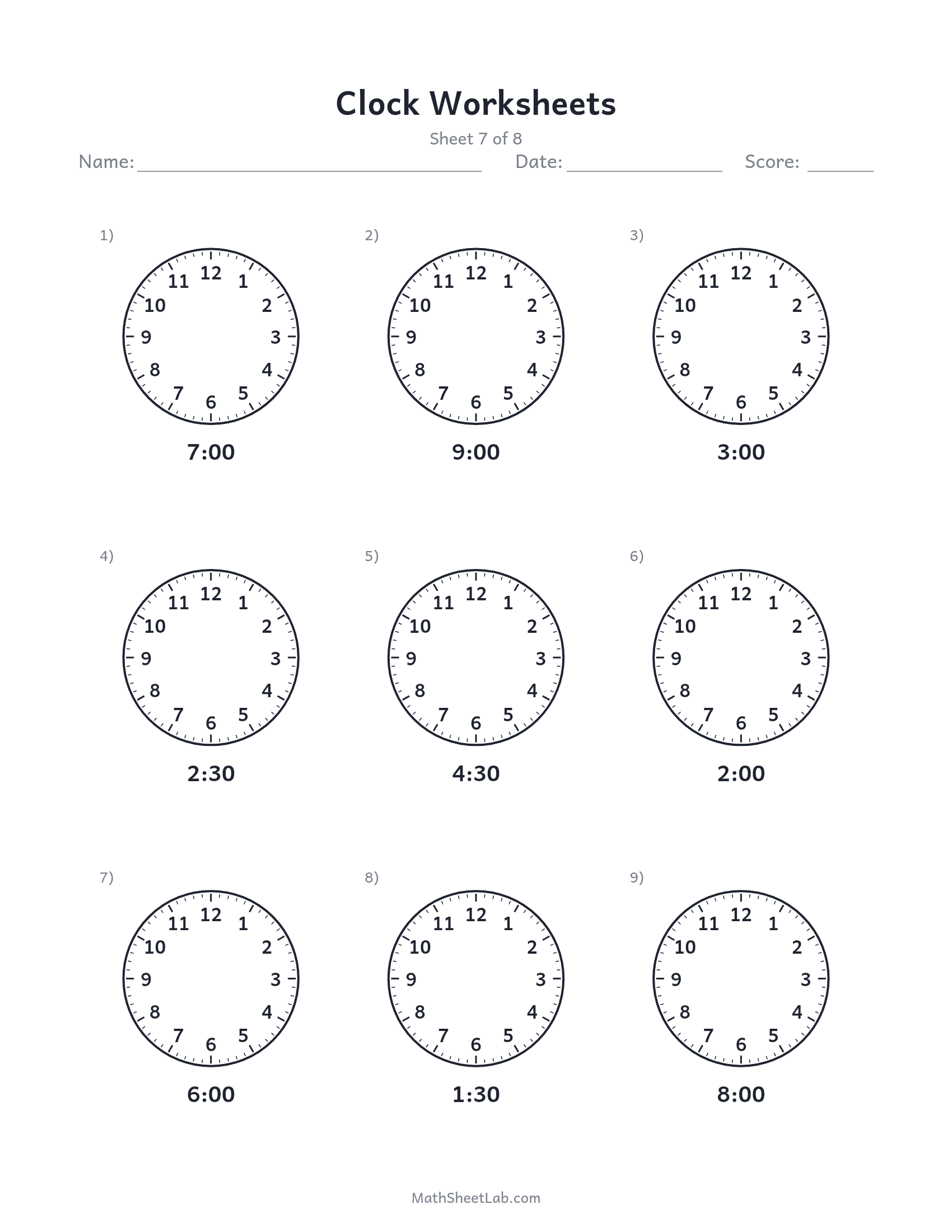
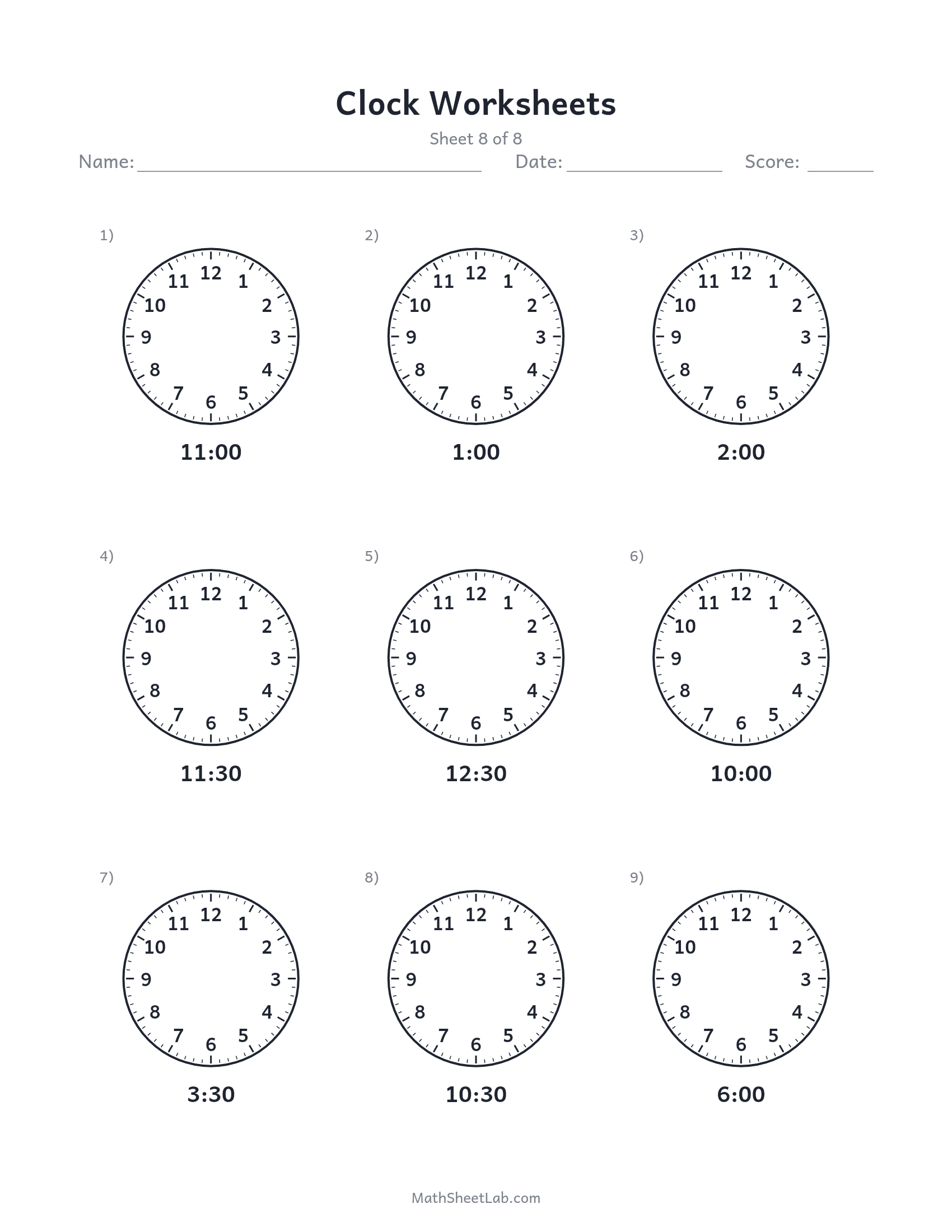
The reverse of telling time: the time is given, the clock is empty — draw the hands. Eight sheets, nine clocks on each.
Best fit: 1st–2nd grade · 8 sheets, answer keys included · Free, no sign-up
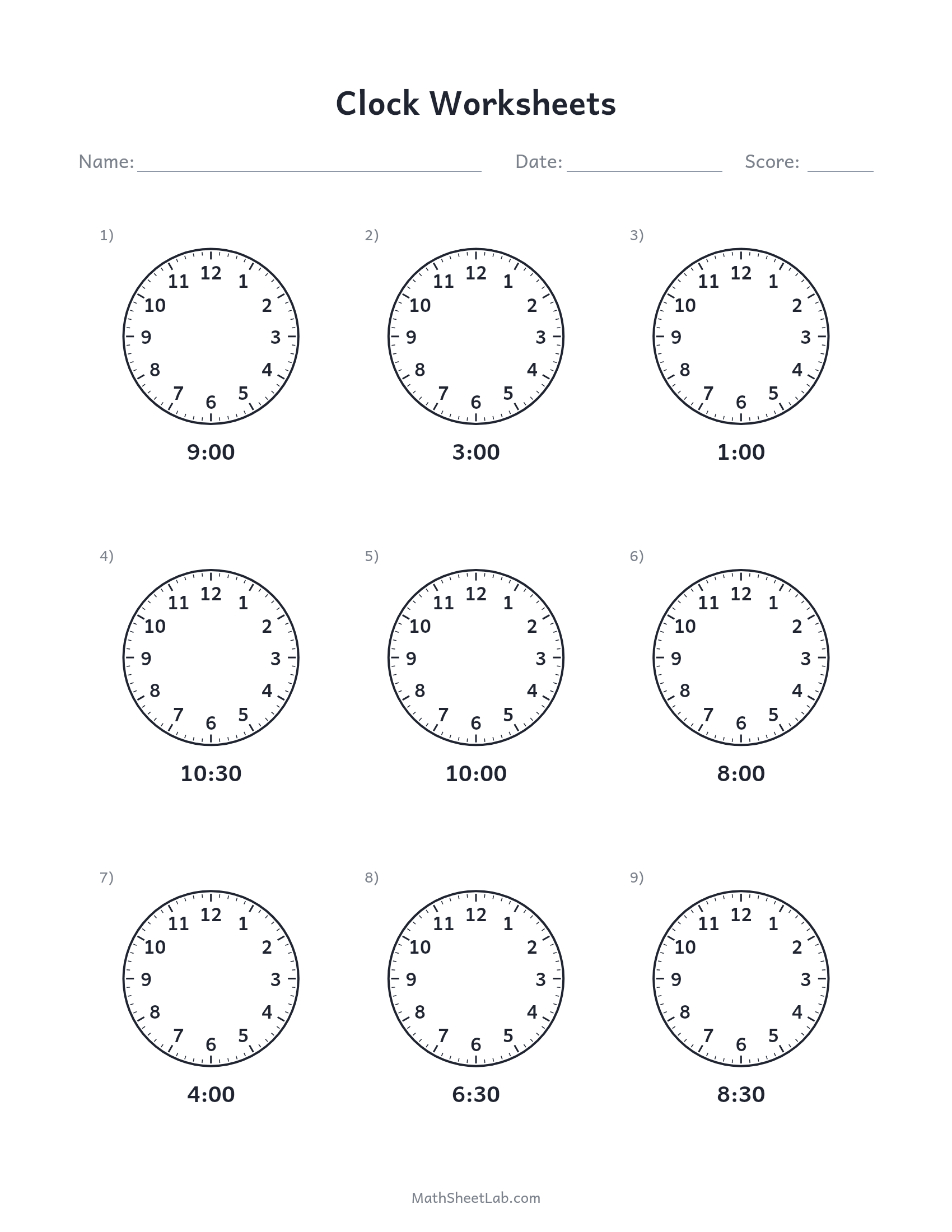
The full set: 8 worksheets with answer keys
Eight sheets in the same layout with different problems: download them as one PDF or print one at a time.
Worksheets
-
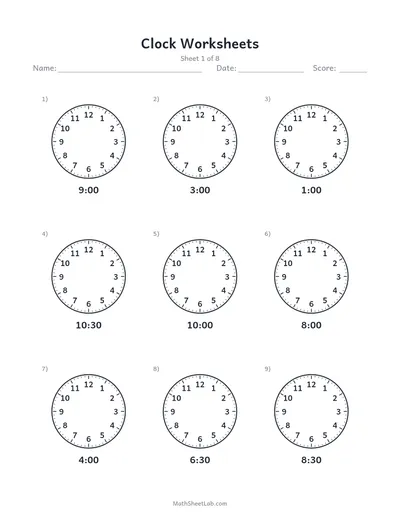
Sheet 1
-
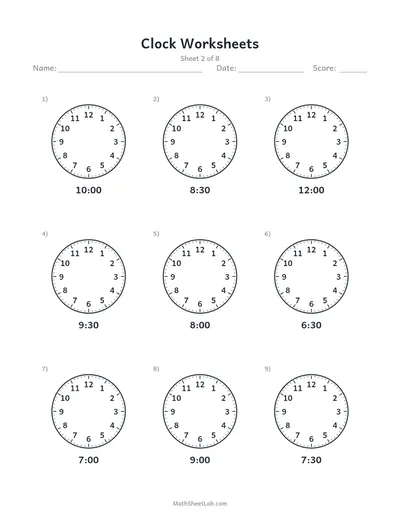
Sheet 2
-
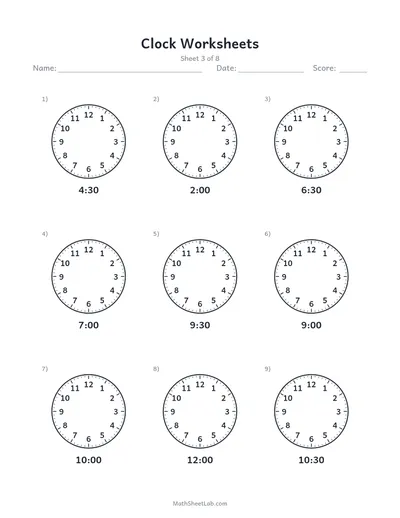
Sheet 3
-
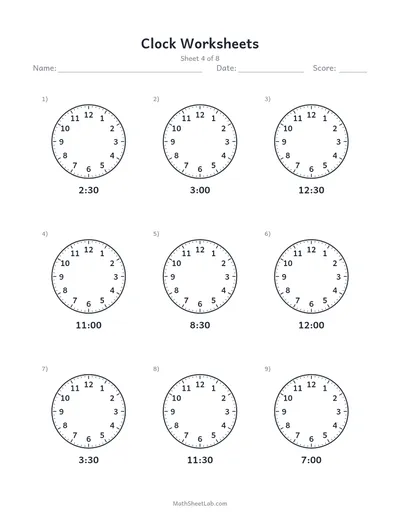
Sheet 4
-
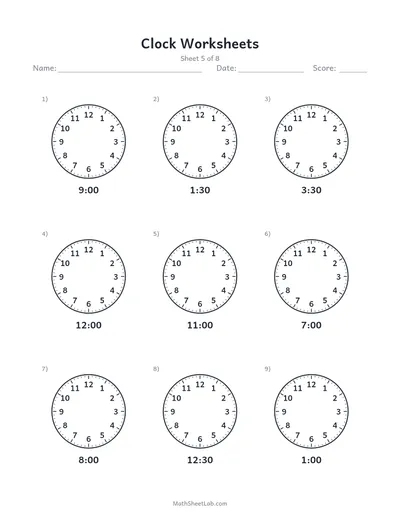
Sheet 5
-
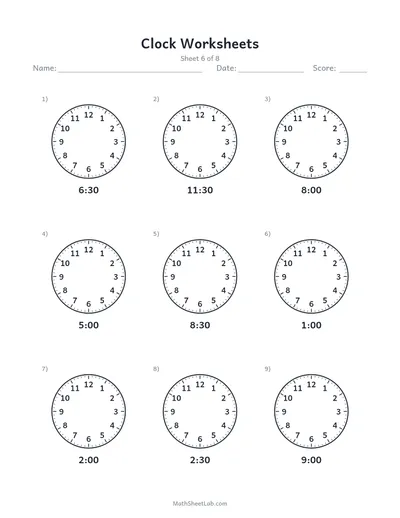
Sheet 6
-
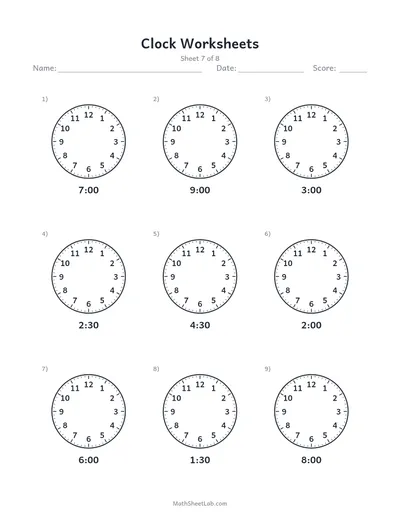
Sheet 7
-
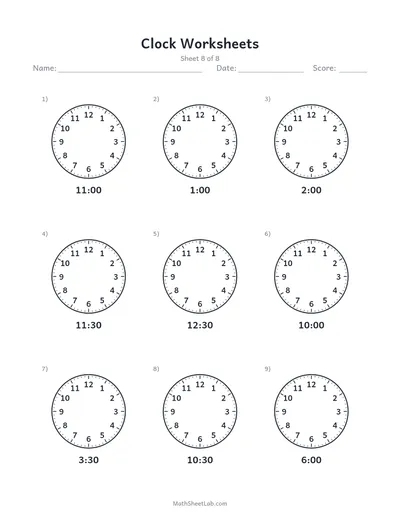
Sheet 8
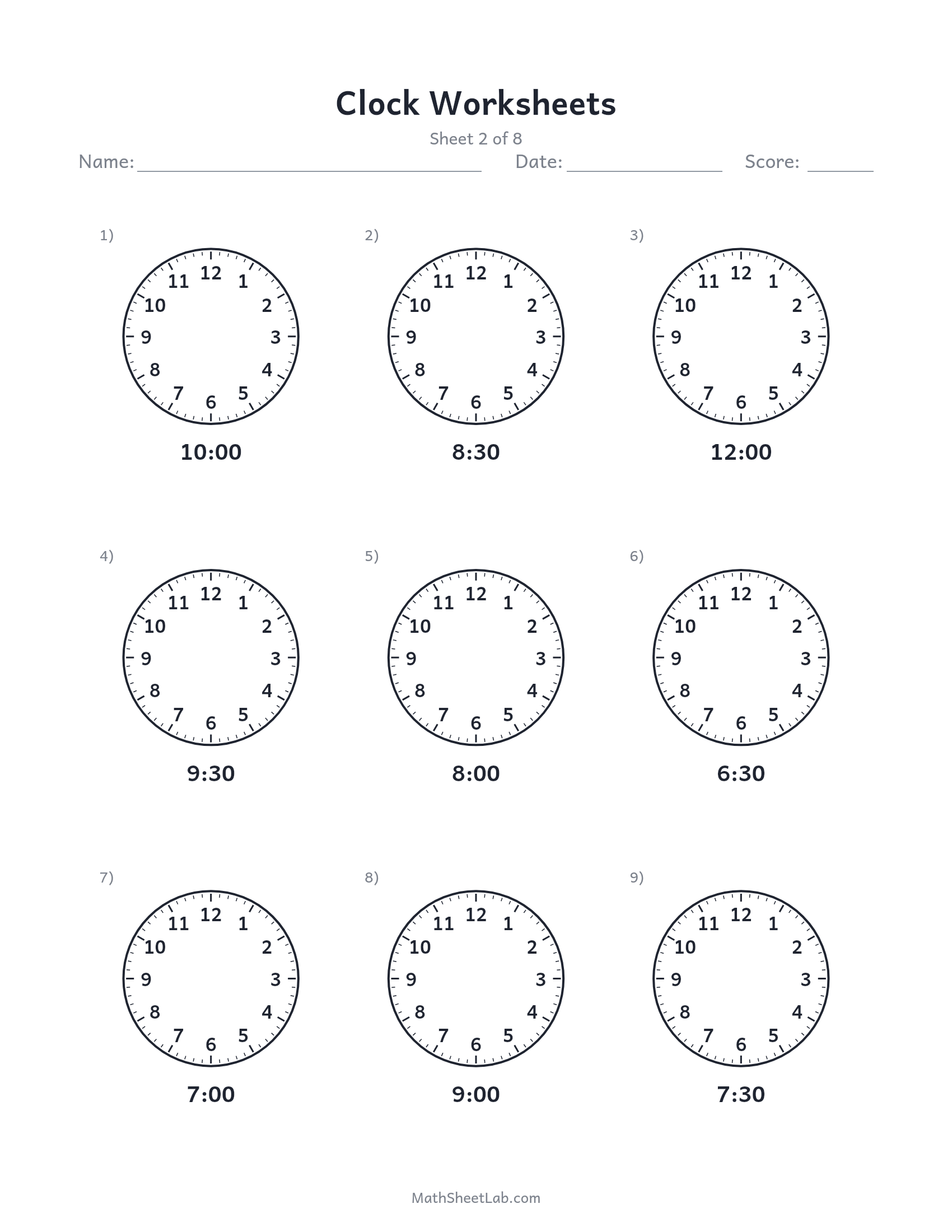
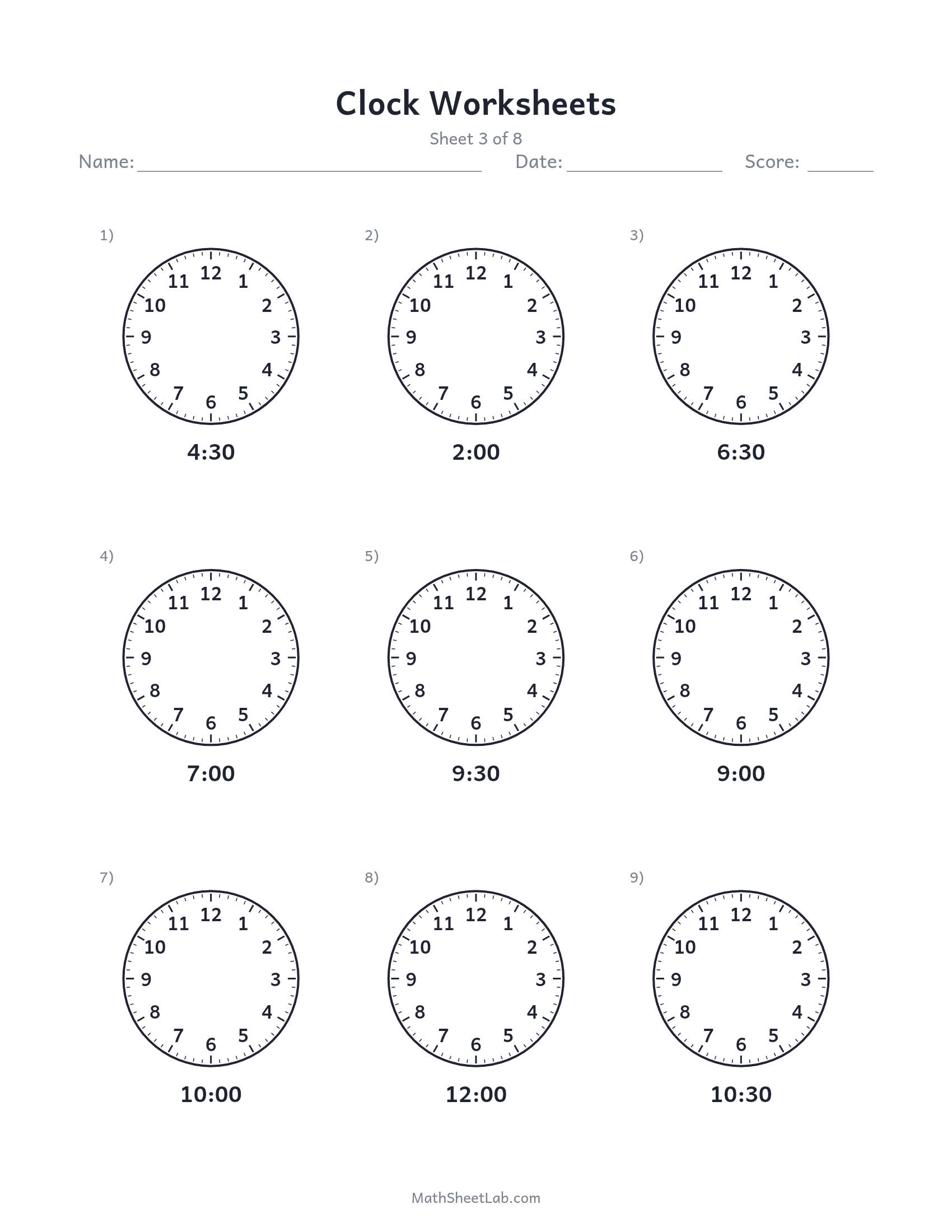
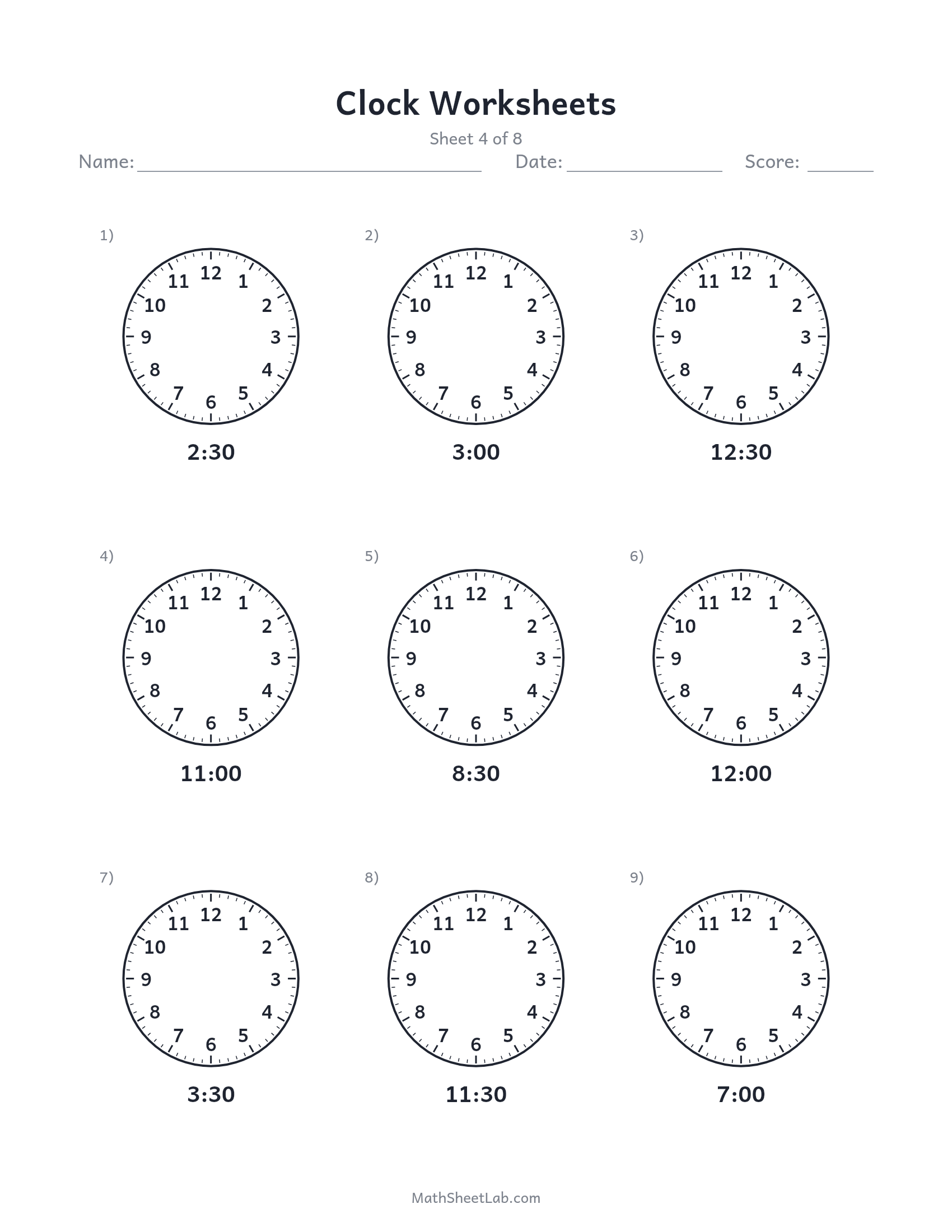
Answer keys
-
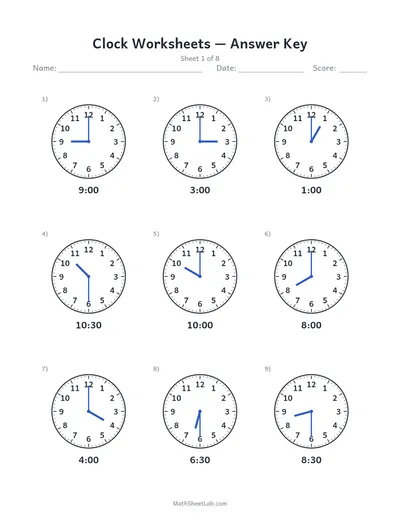
Sheet 1 answers
-
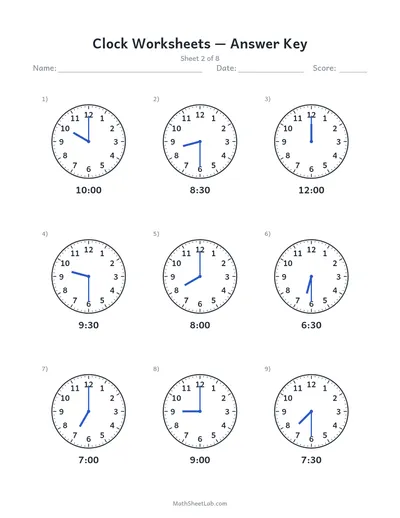
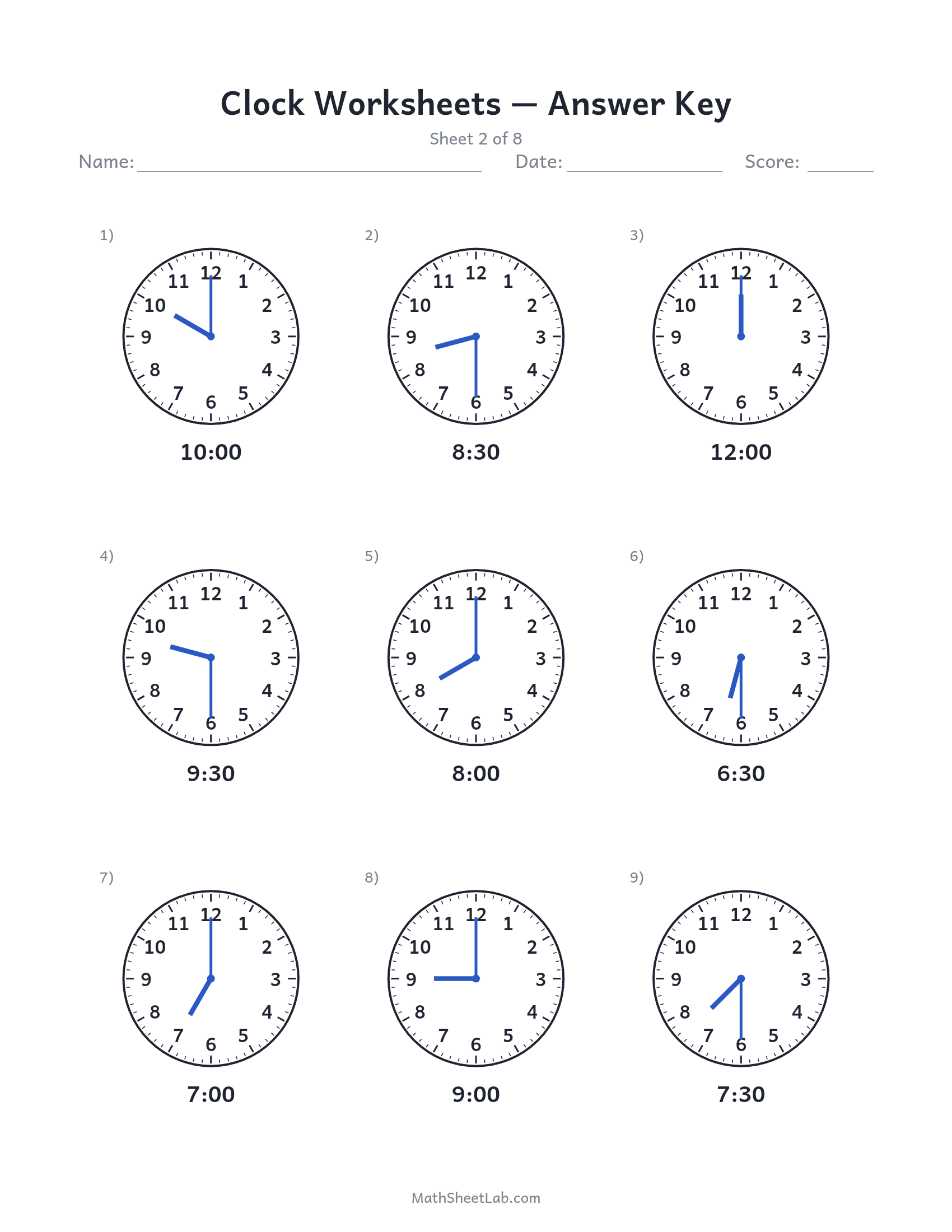
Sheet 2 answers
-
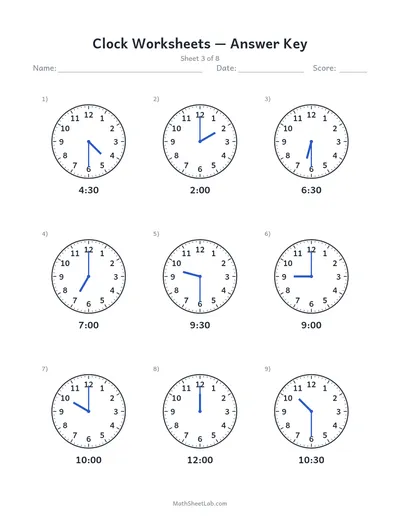
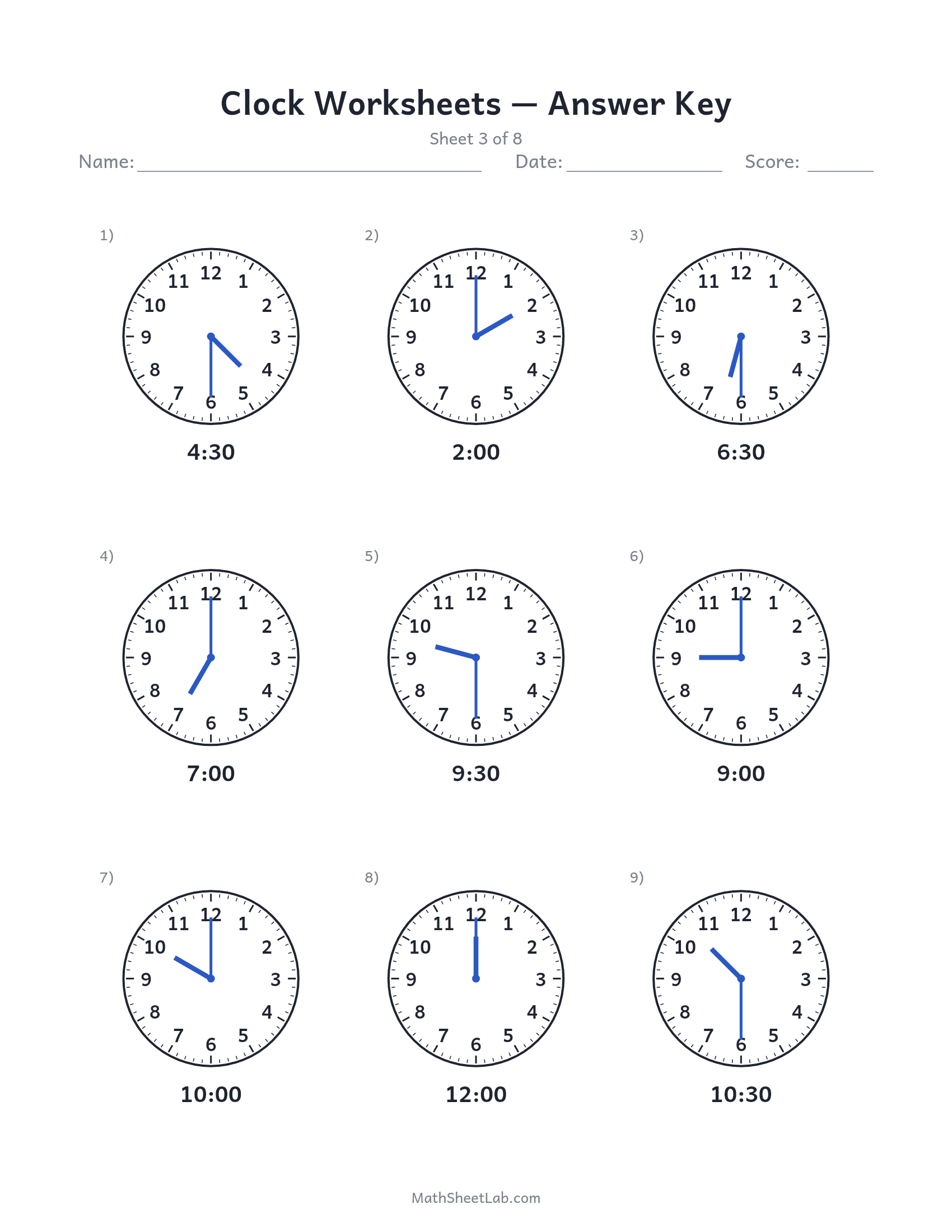
Sheet 3 answers
-
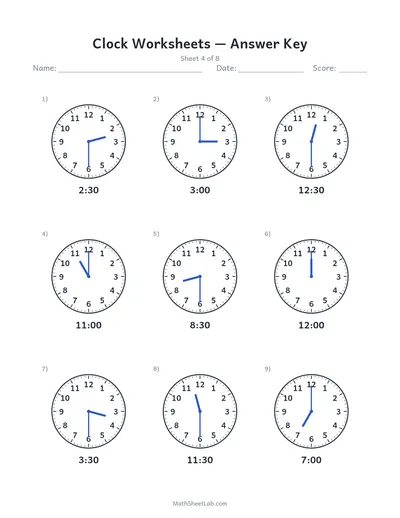
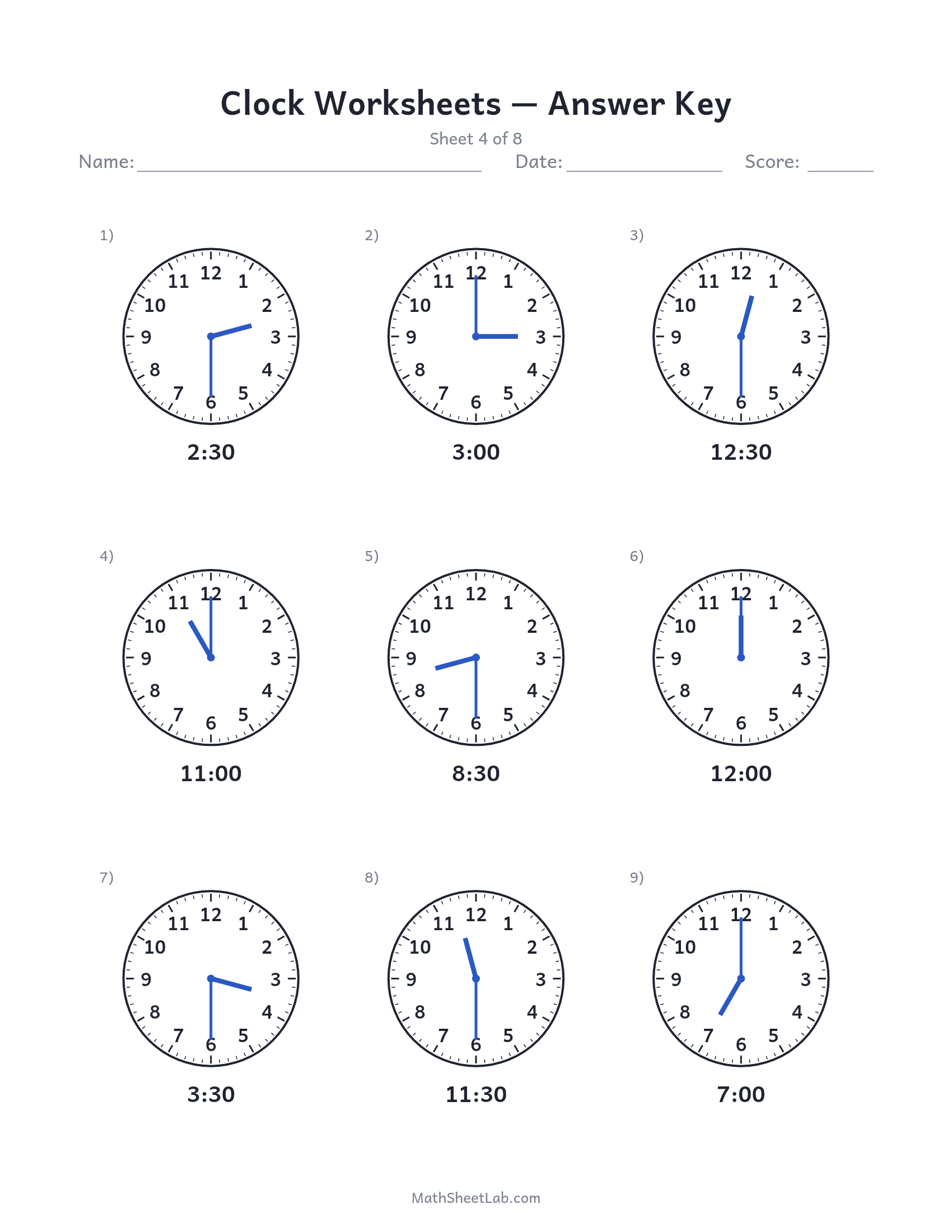
Sheet 4 answers
-
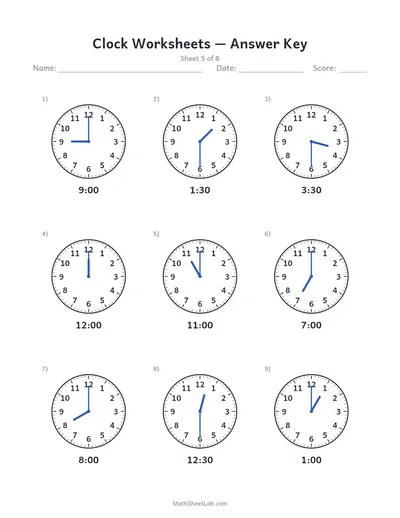
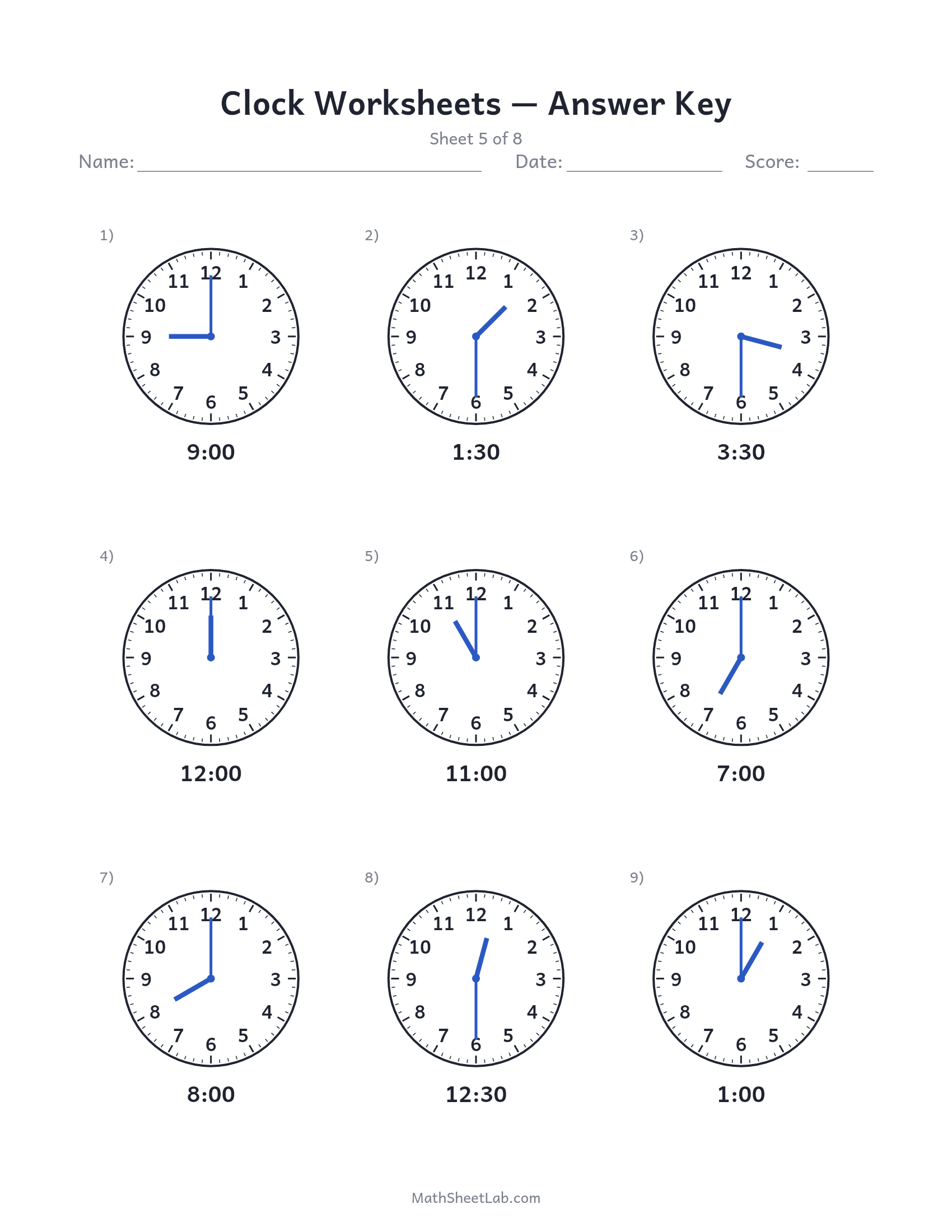
Sheet 5 answers
-
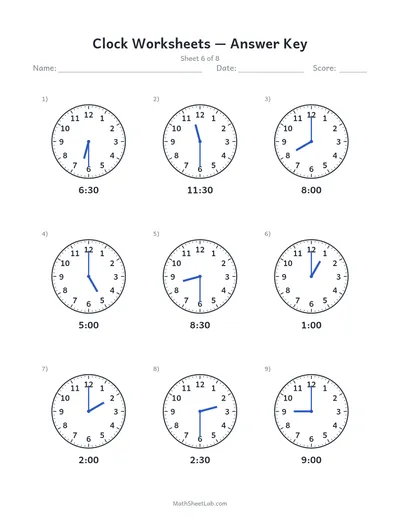
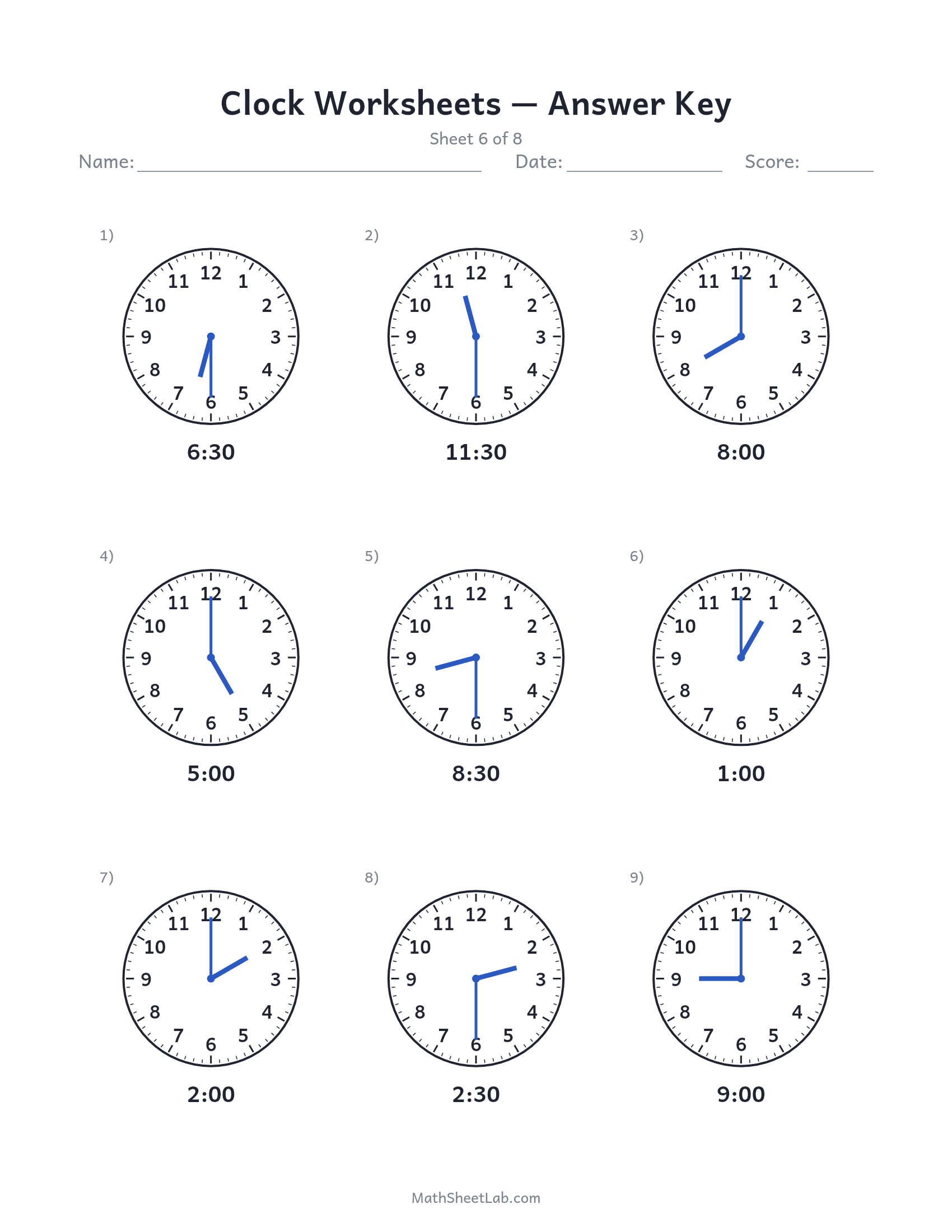
Sheet 6 answers
-
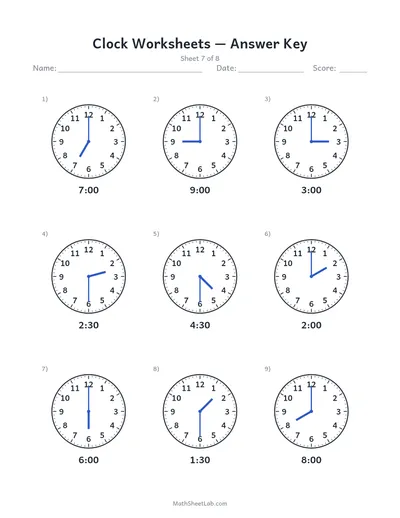
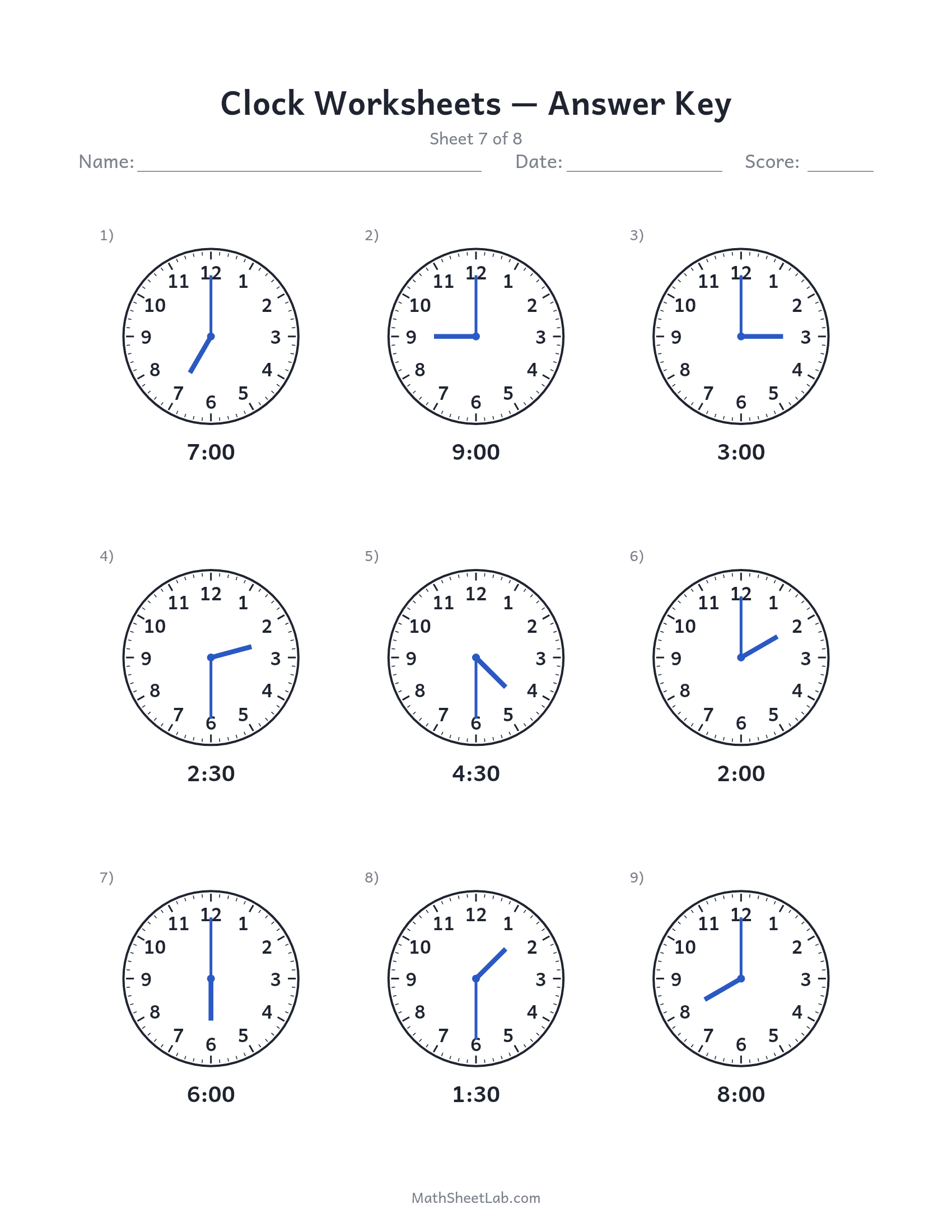
Sheet 7 answers
-
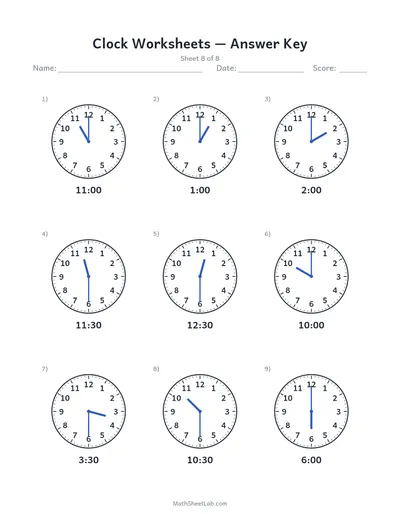
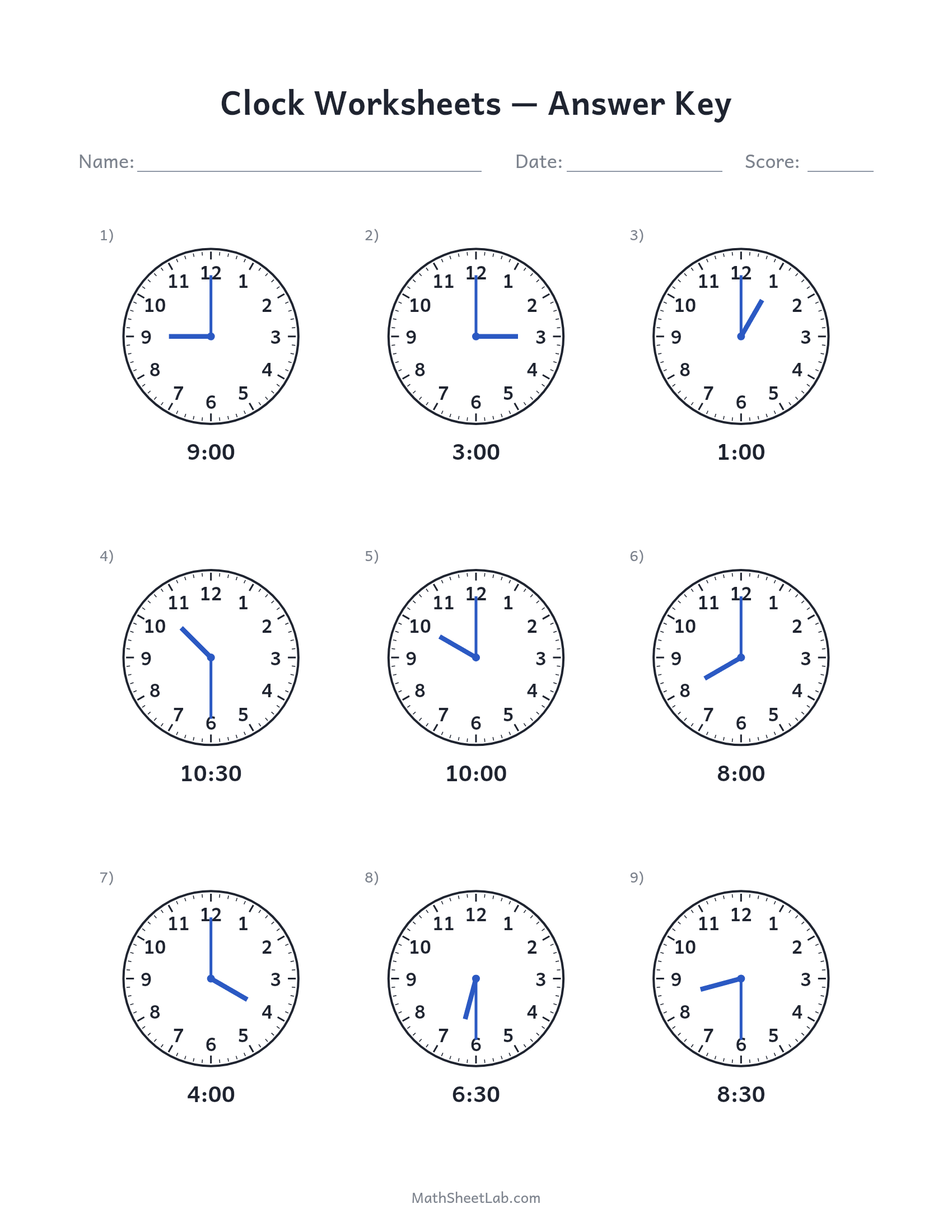
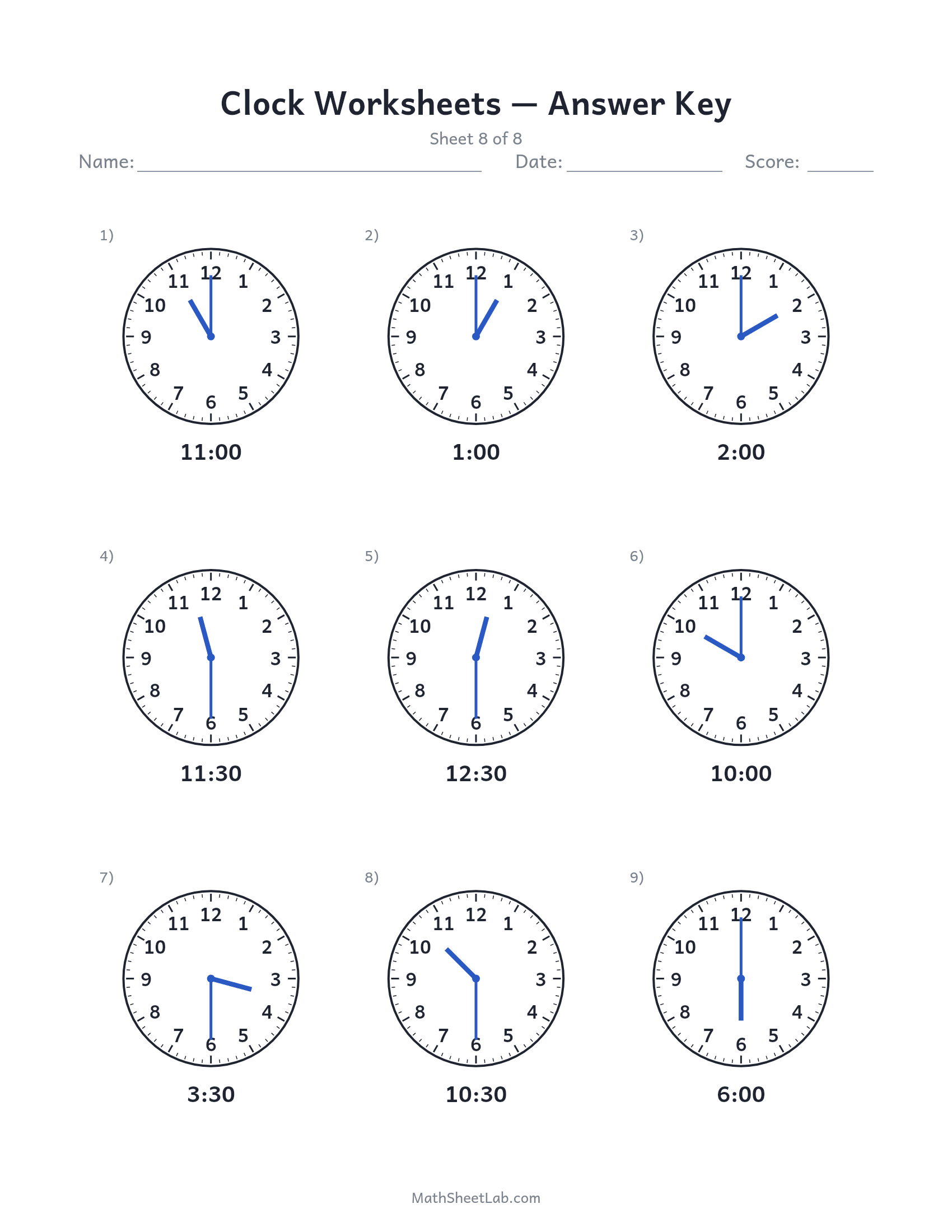
Sheet 8 answers
About these worksheets
Drawing hands on an empty clock is harder than reading one, because the child has to produce both positions from scratch — including the subtle rule that at 4:30 the hour hand sits halfway between 4 and 5, not on the 4. Every sheet’s nine clocks use hours and half-hours, the 1st-grade range where that rule is first learned. The answer keys show the correctly drawn hands in blue.
Grade level: these worksheets are part of our 1st grade math worksheets collection.
Frequently asked questions
Why is drawing hands harder than reading them?
Reading lets you decode what’s there; drawing makes you produce it — especially the half-past hour hand, which belongs halfway between two numbers. Producing a skill is always a level above recognizing it.
What times are used?
Hours and half-hours (like 4:00 and 7:30) — the 1st-grade standard. For five-minute times, use the telling time worksheets the other way around.
How do I grade it?
Against that sheet’s answer key: hour hand pointing correctly (including halfway positions) and minute hand on the 12 or 6.