Multiplication chart 1–100
Every product from 1×1 to 100×100: 10,000 cells on 16 letter-size pages that tape together into a poster more than two feet square. For the 10×10 chart, where the biggest answer is 100, print the multiplication chart 1–10.
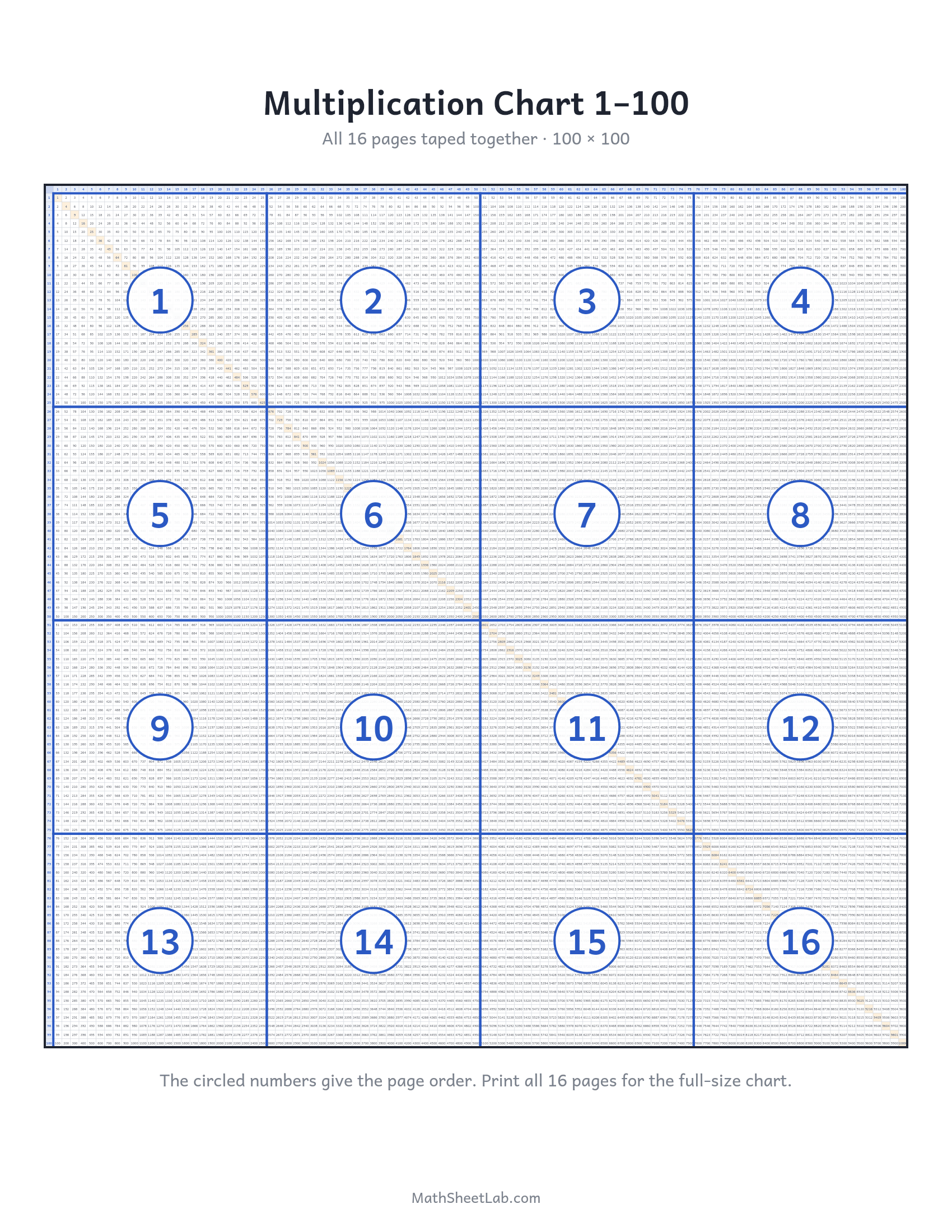
All 16 pages
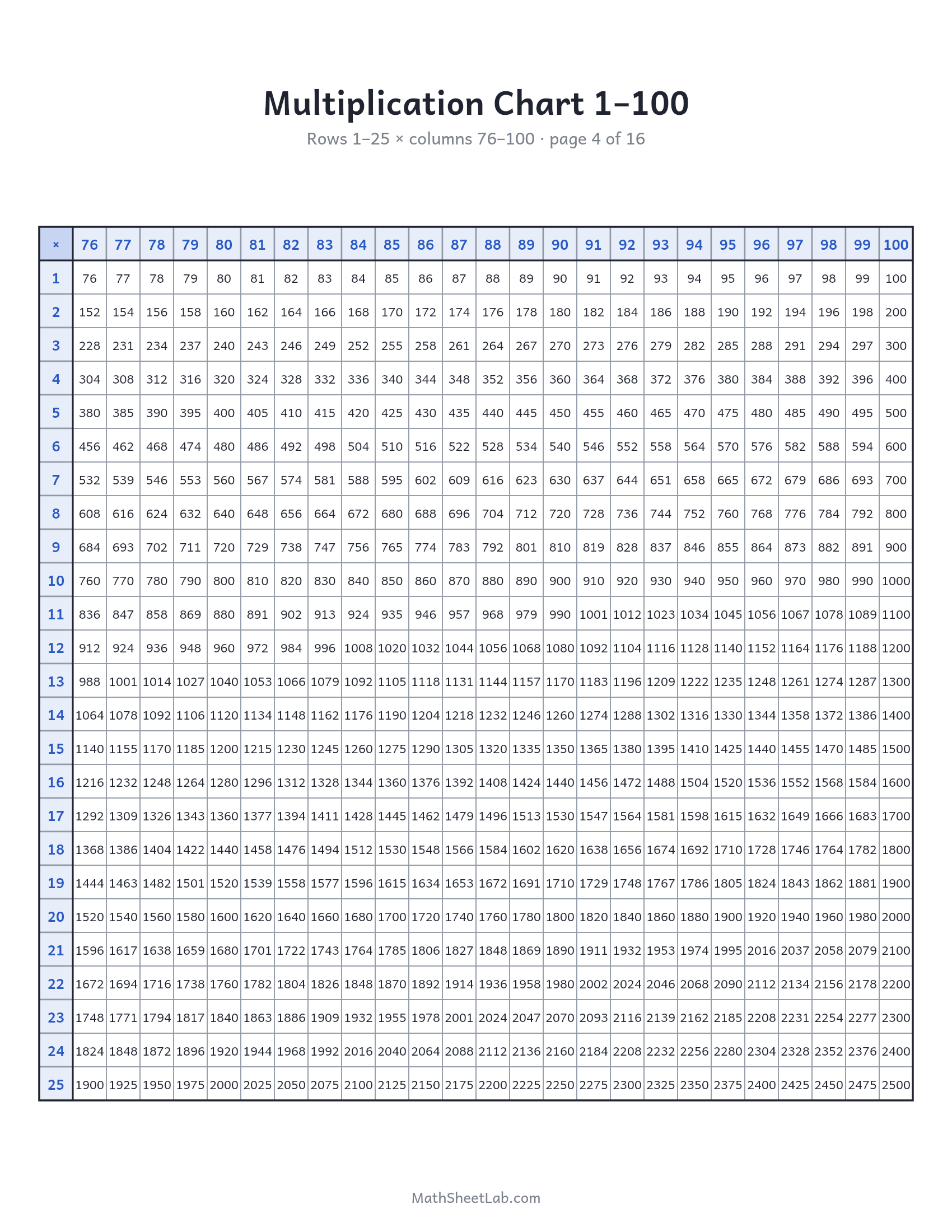
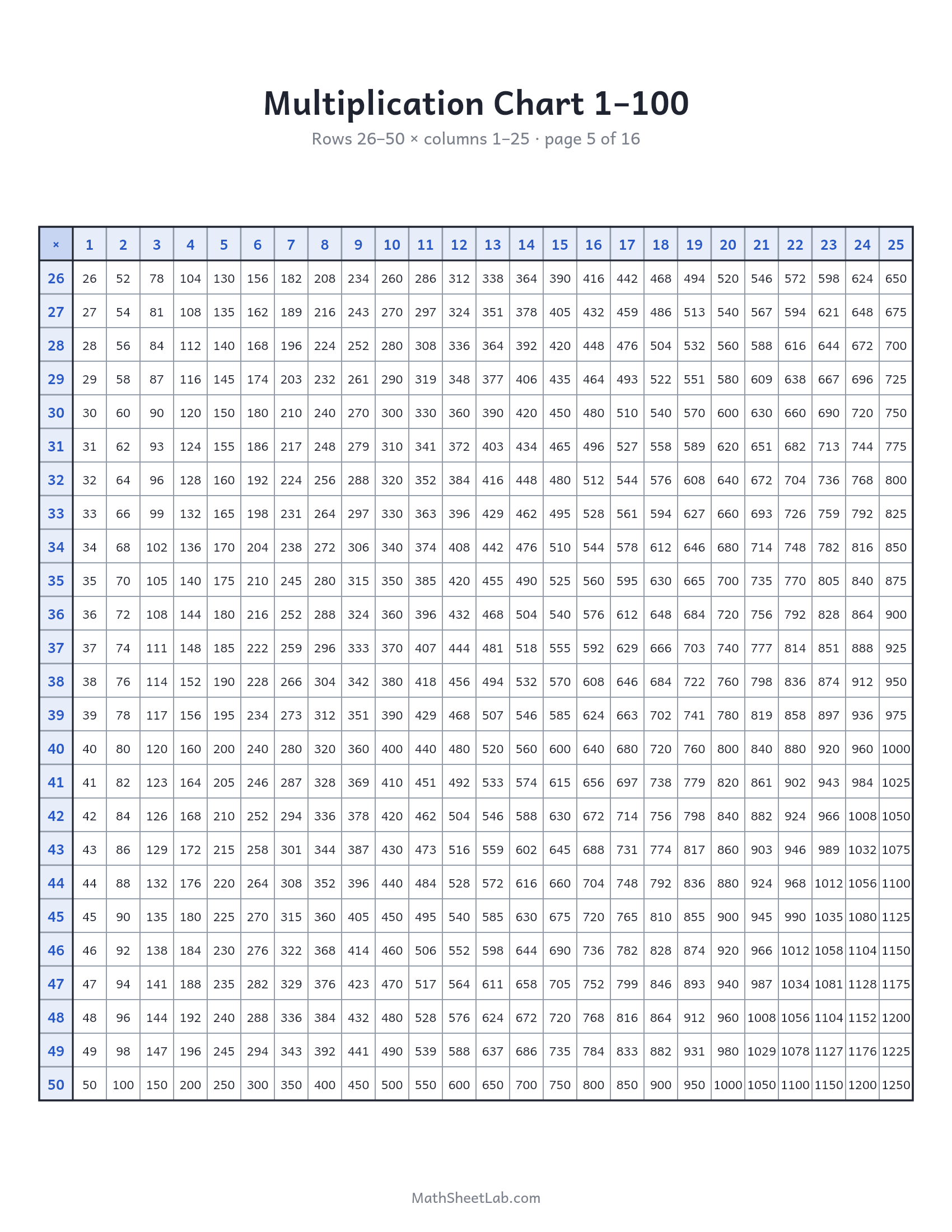
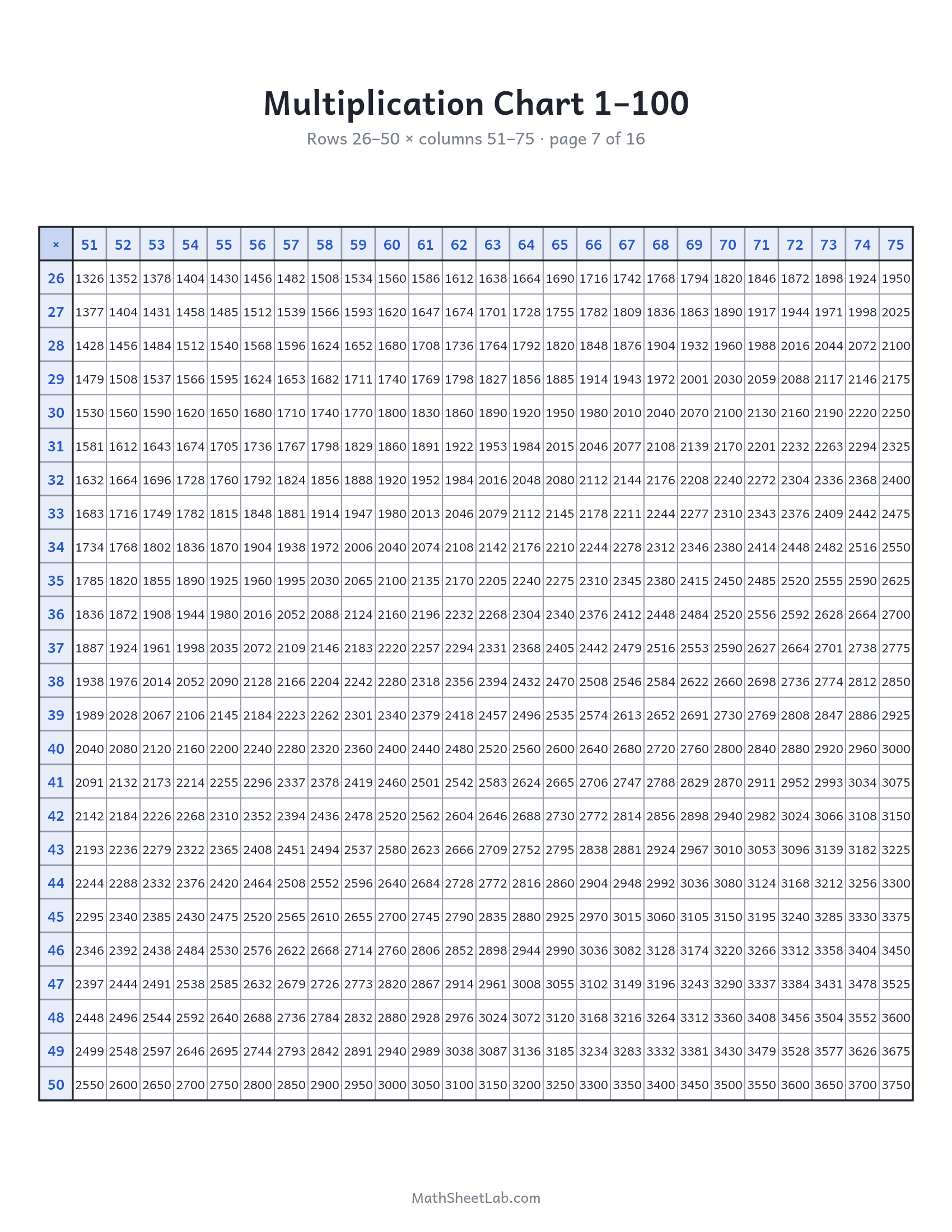
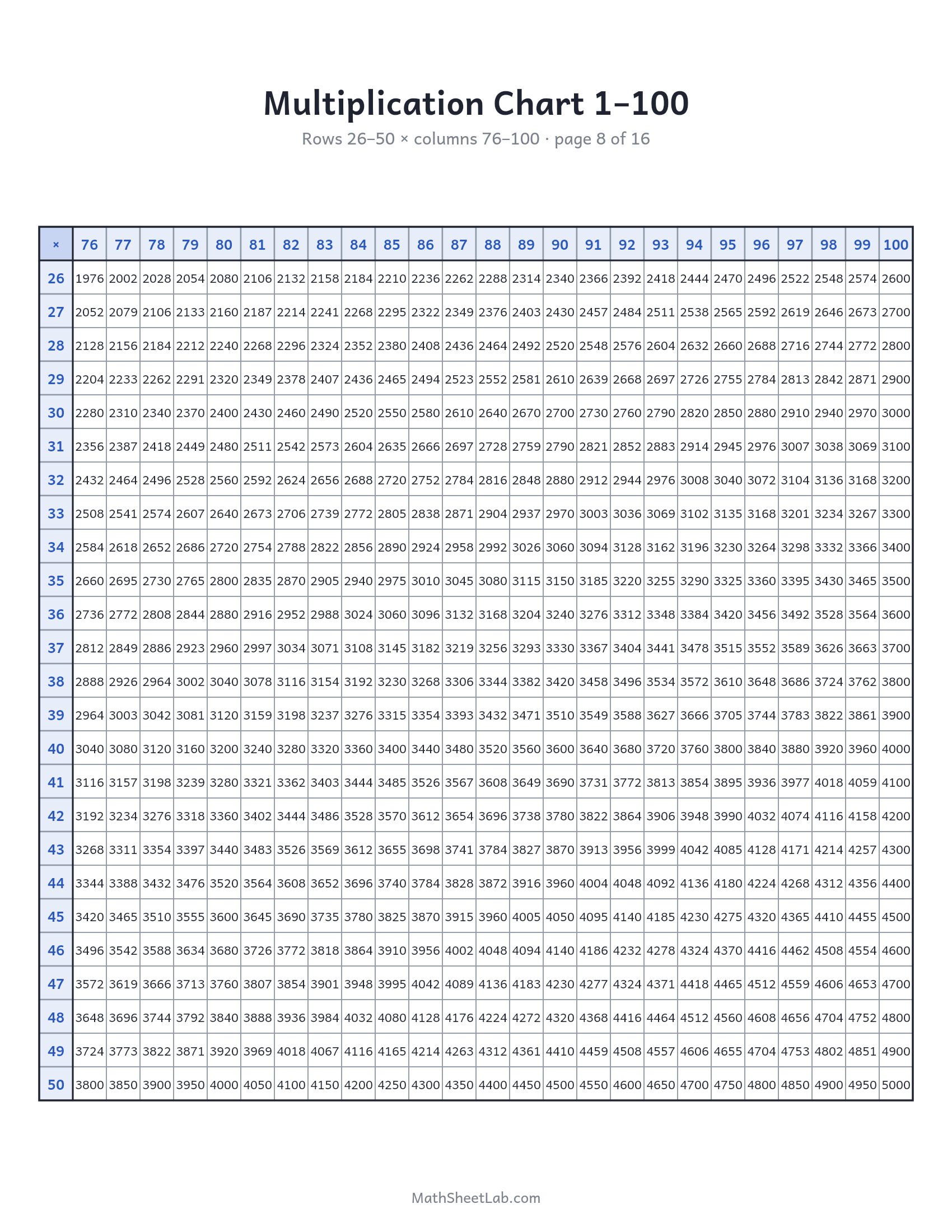
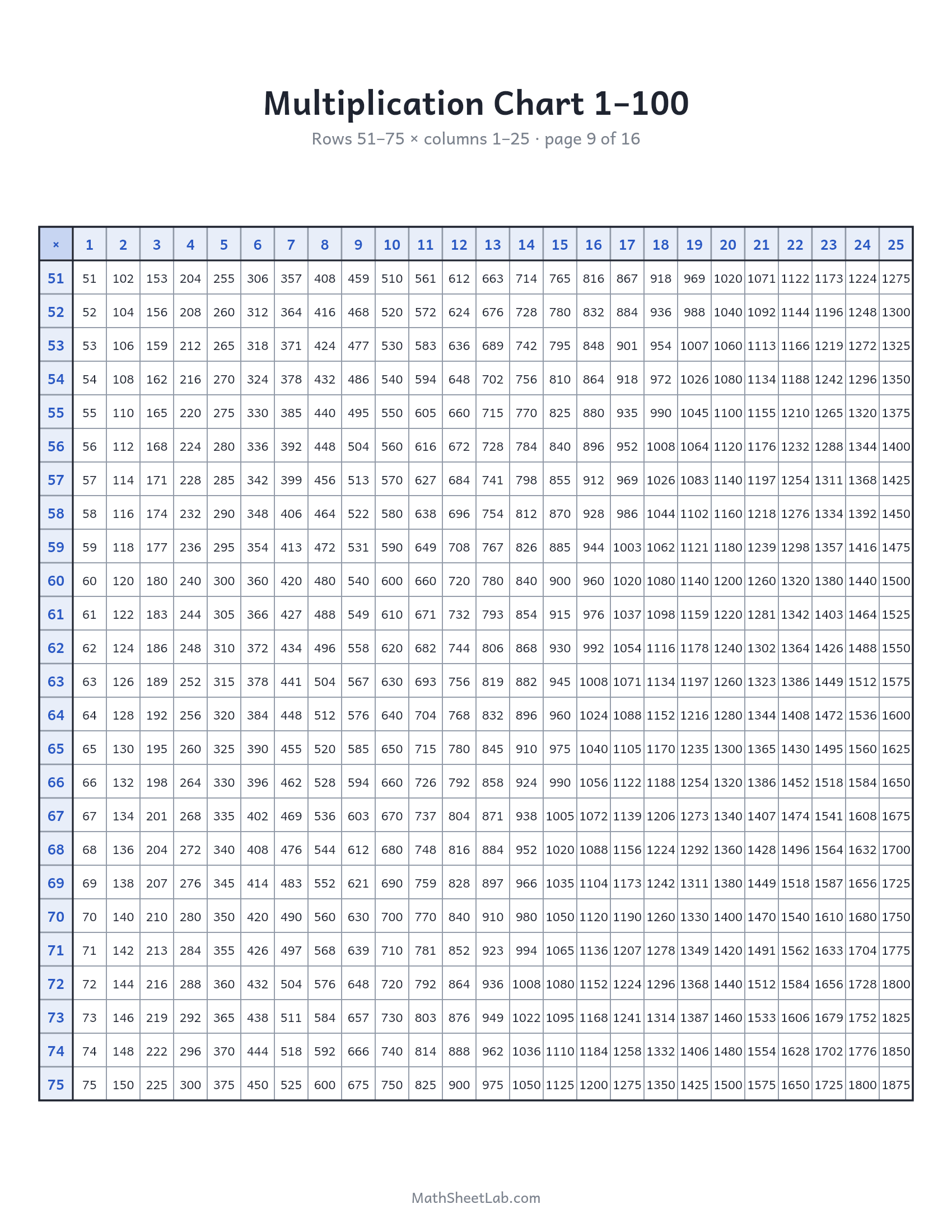
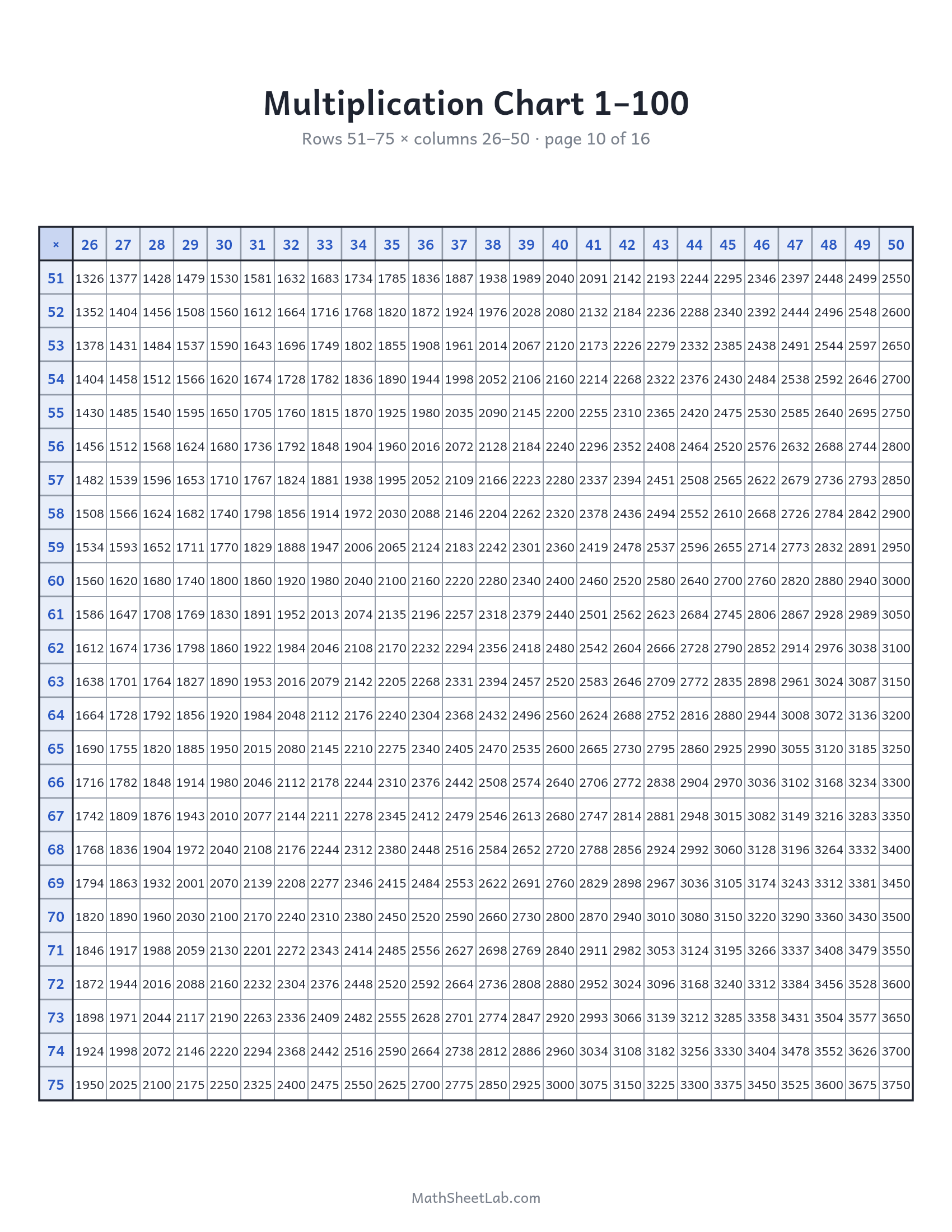
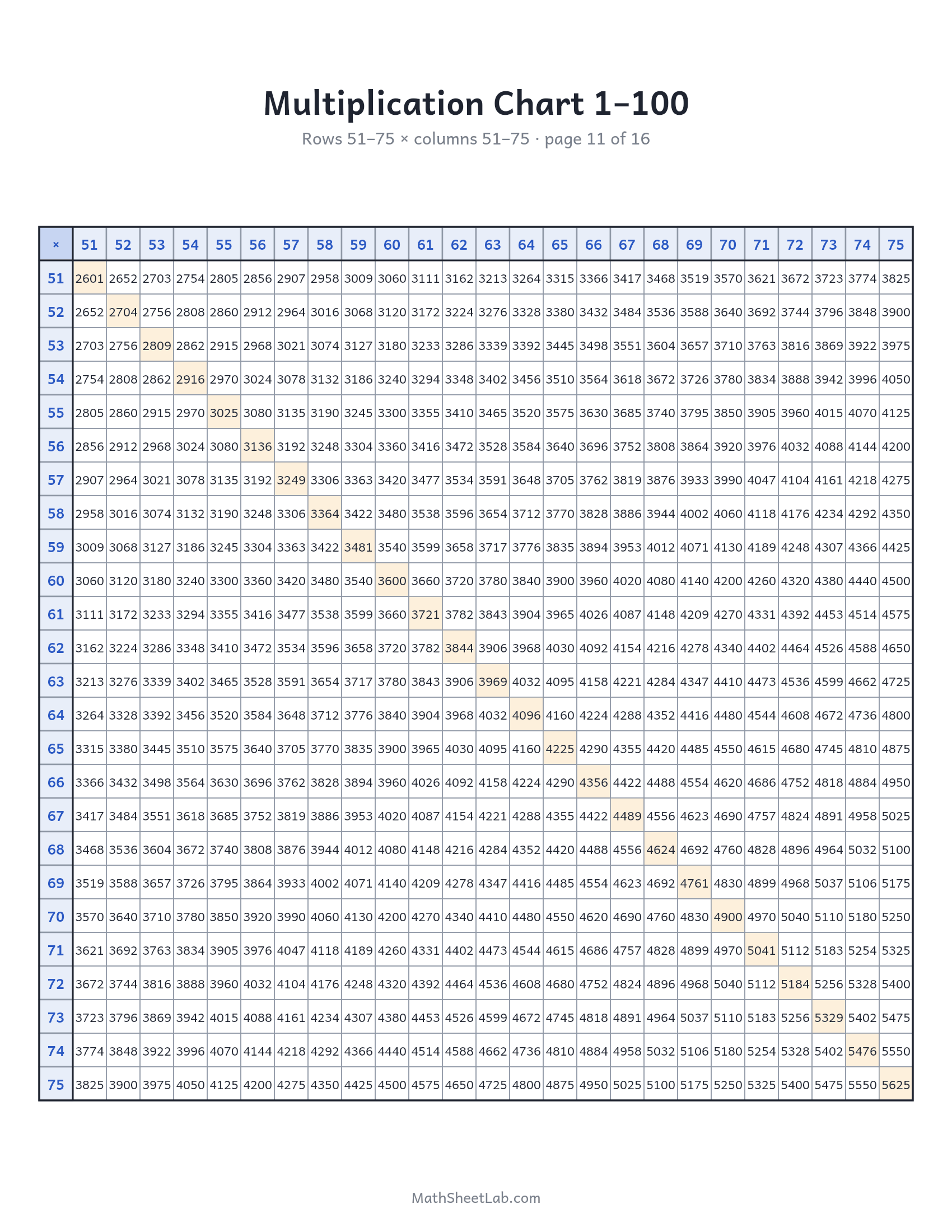
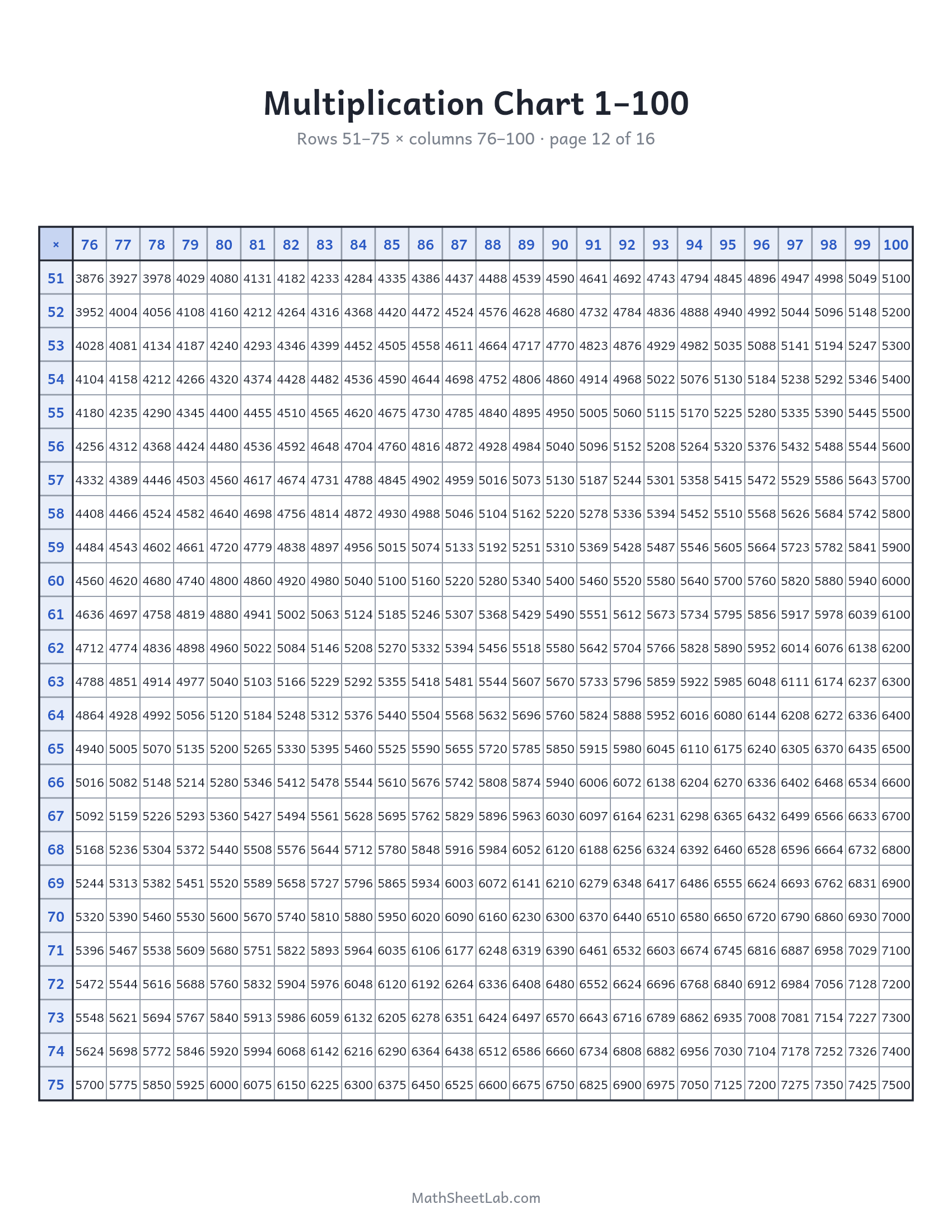
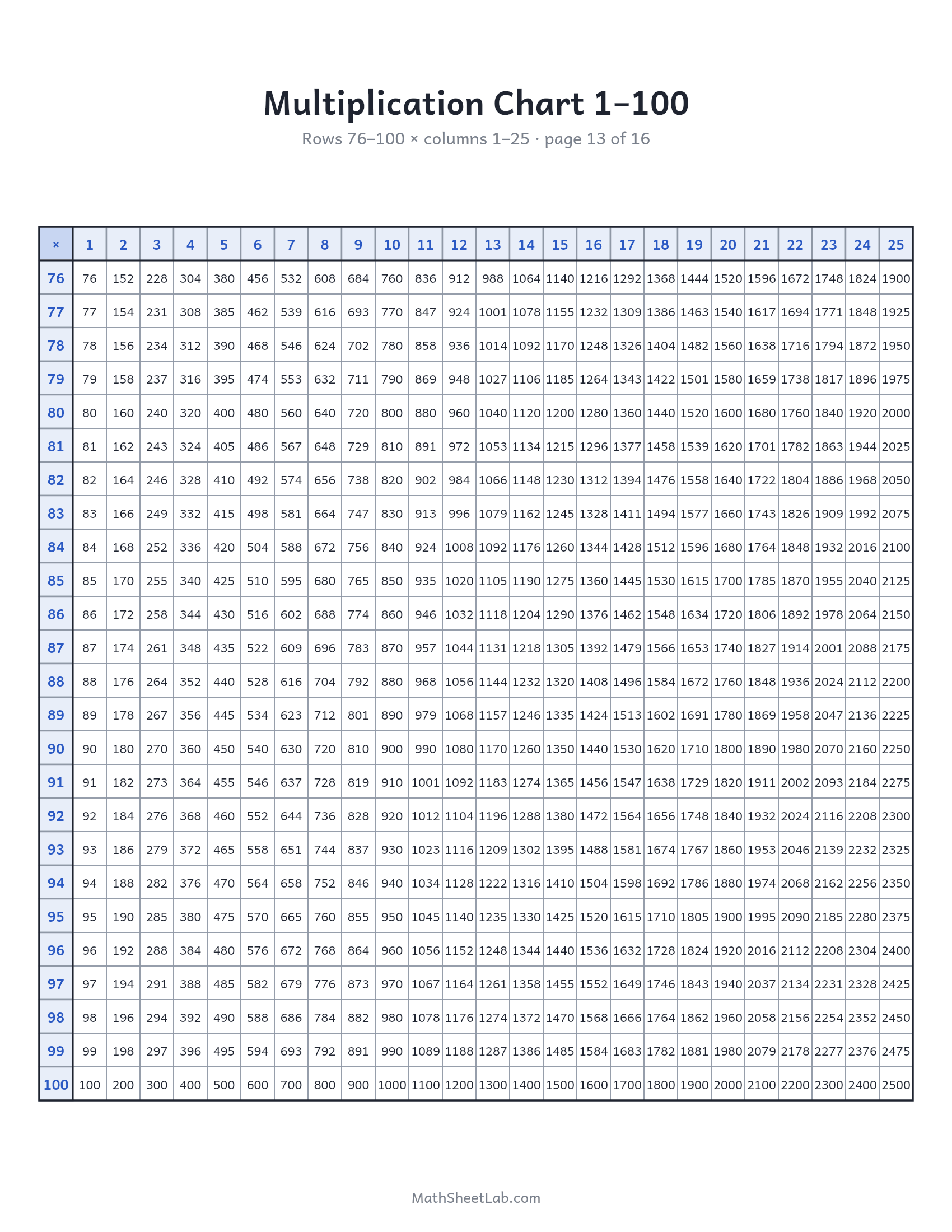
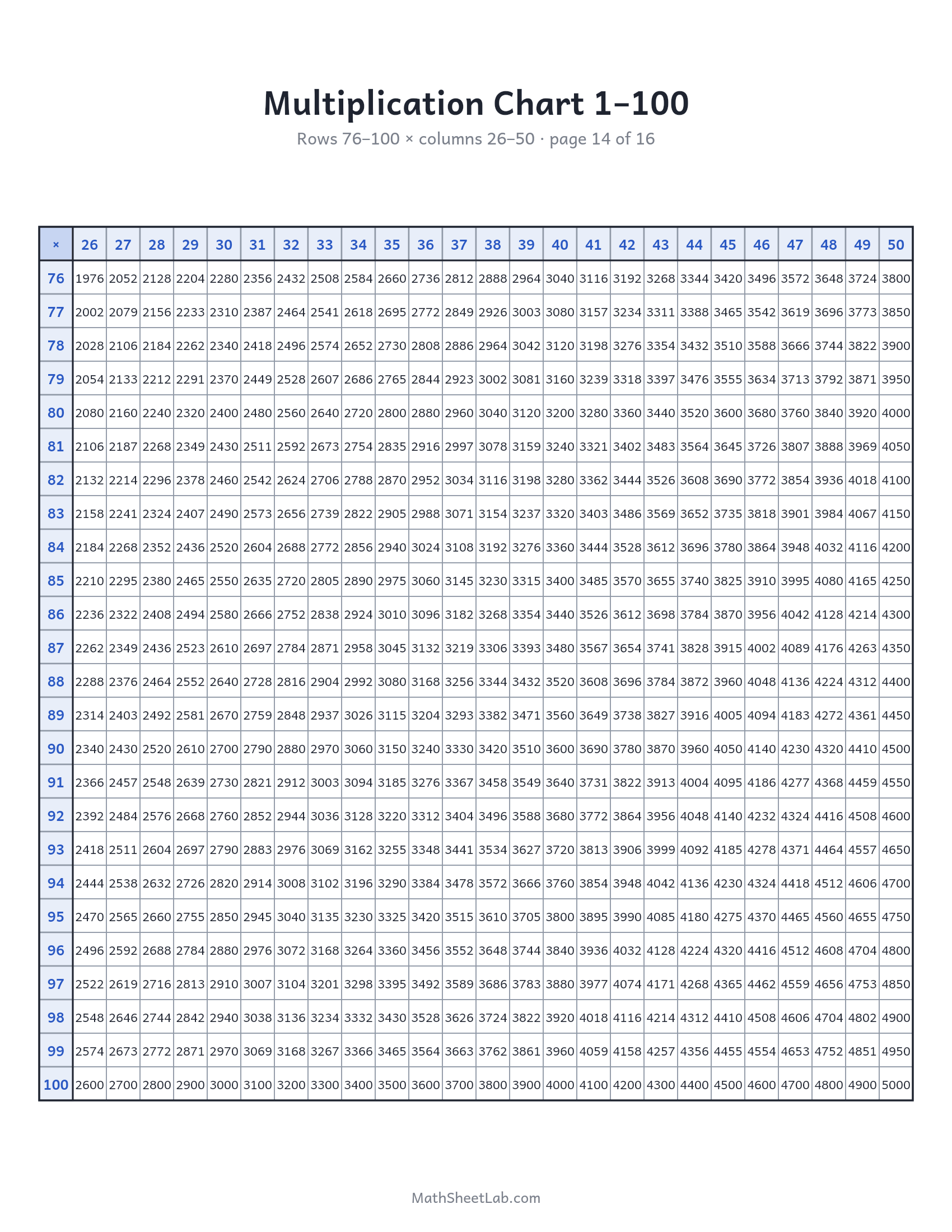
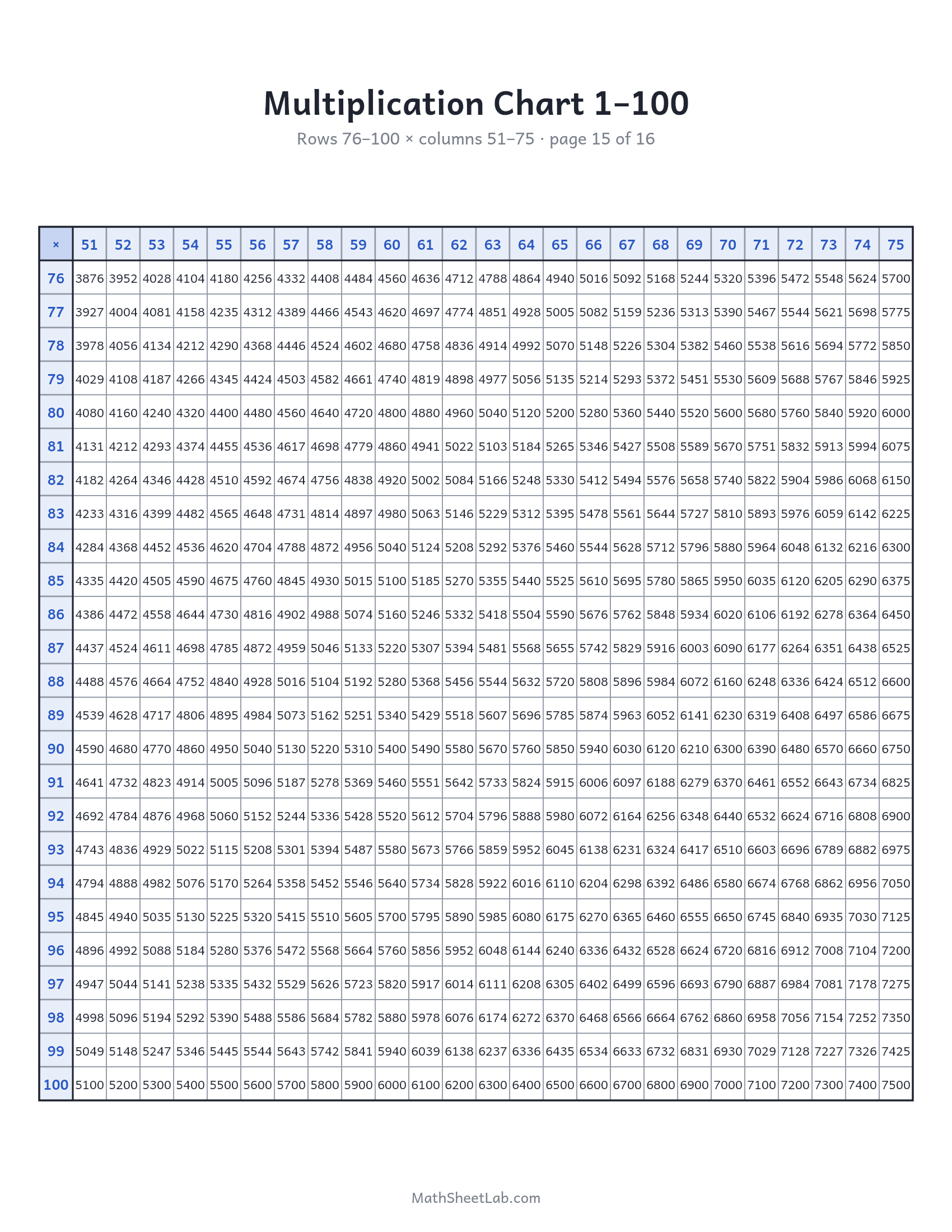
The pages tile into a four-by-four poster in reading order: pages 1–4 run across the top (rows 1–25 of the chart), pages 5–8 sit below them (rows 26–50), and so on down to page 16 in the bottom-right corner.
-
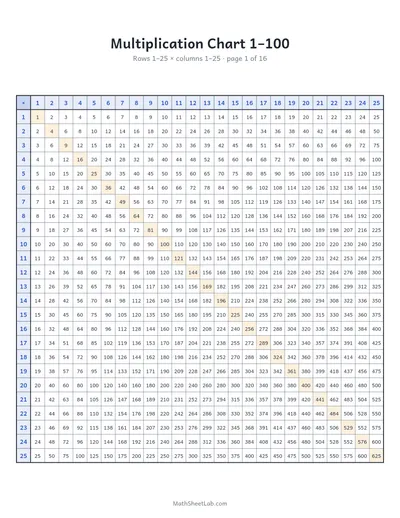
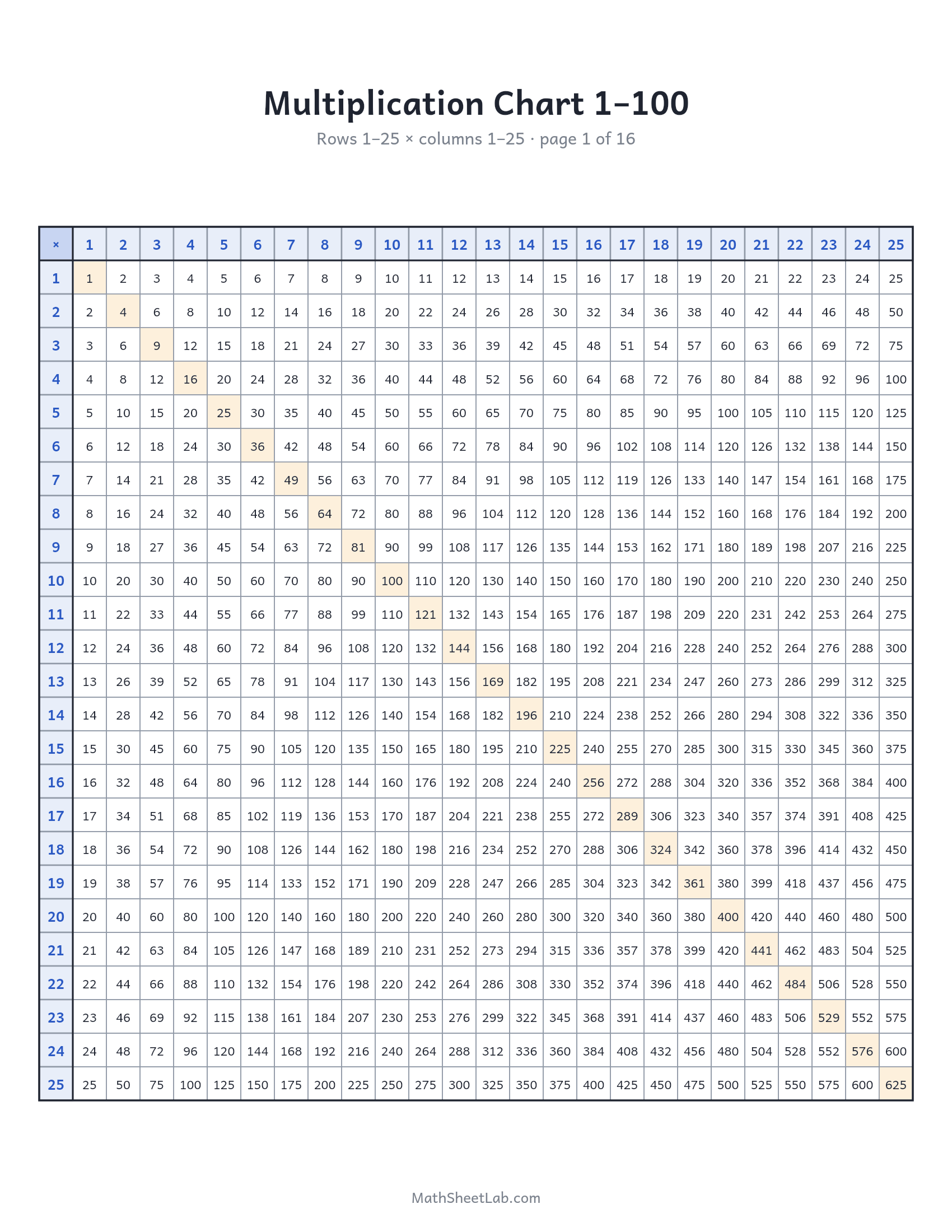
Page 1: rows 1–25 × columns 1–25
-
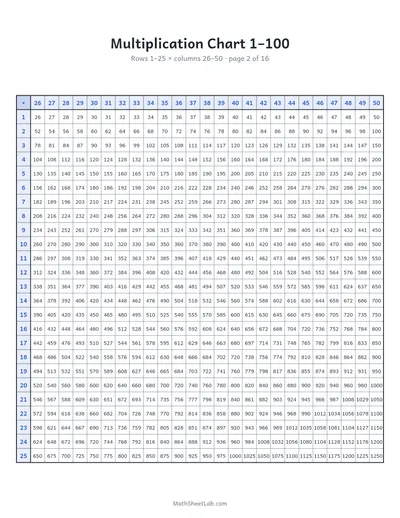
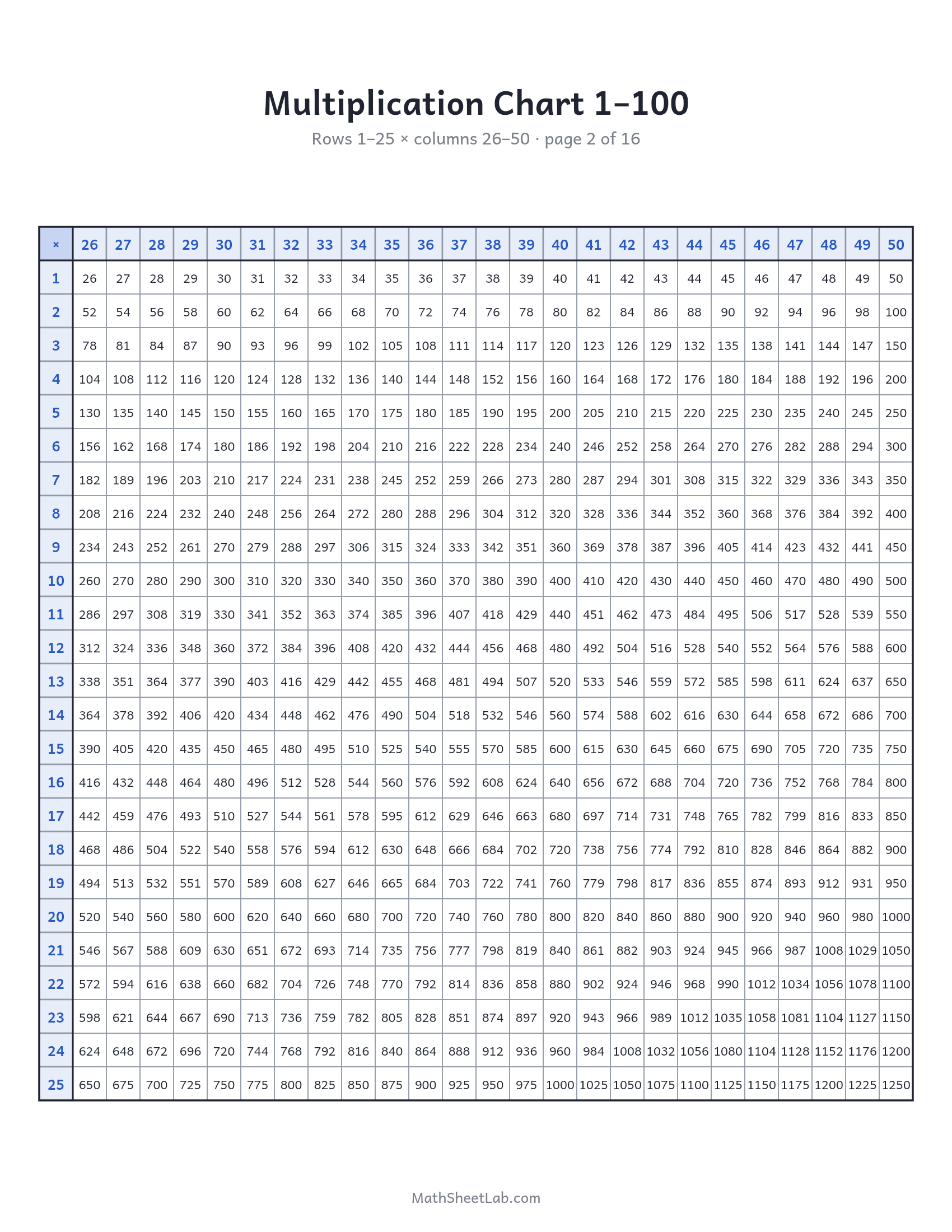
Page 2: rows 1–25 × columns 26–50
-
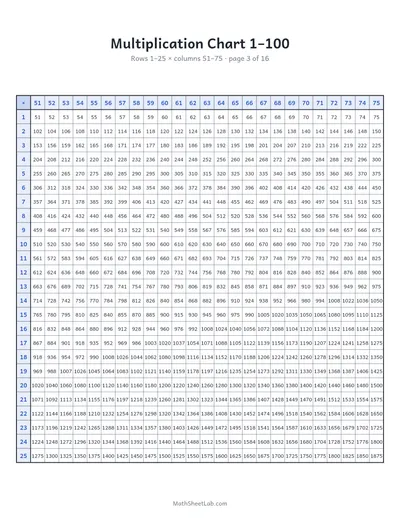
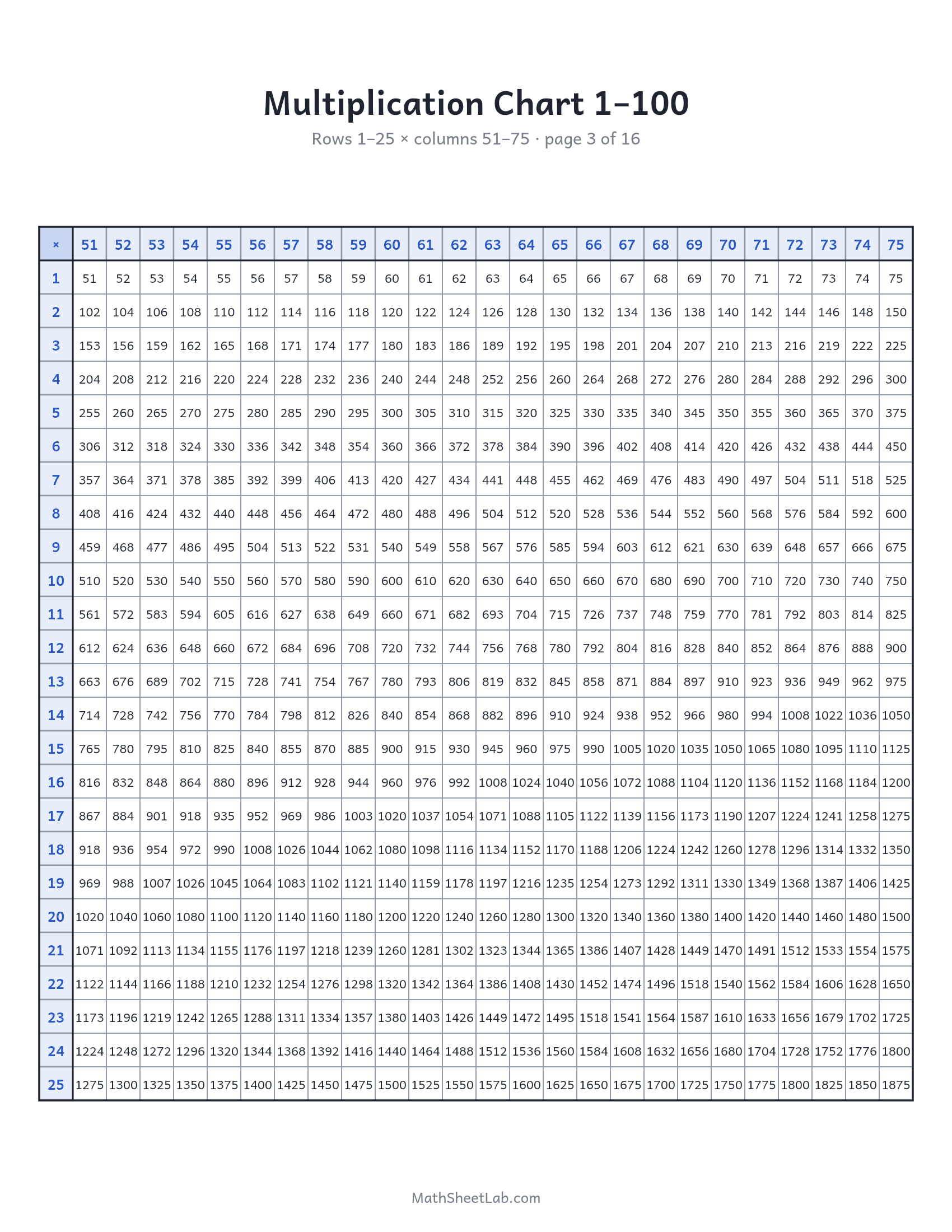
Page 3: rows 1–25 × columns 51–75
-
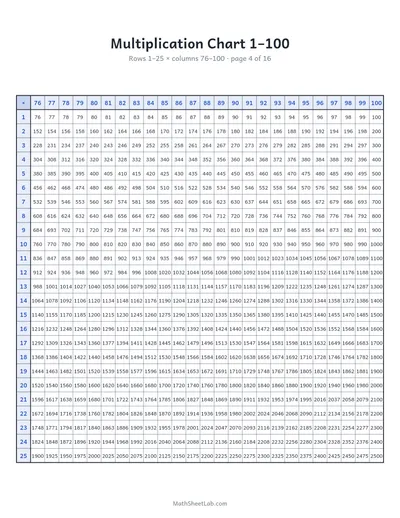
Page 4: rows 1–25 × columns 76–100
-
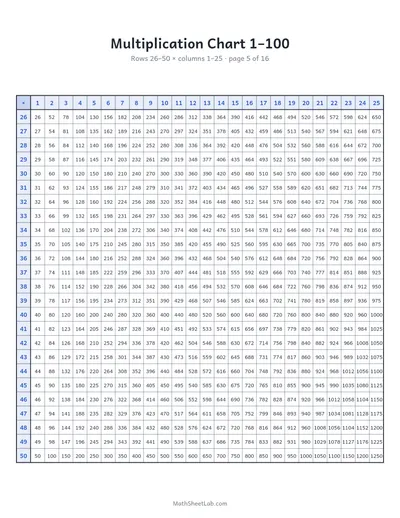
Page 5: rows 26–50 × columns 1–25
-
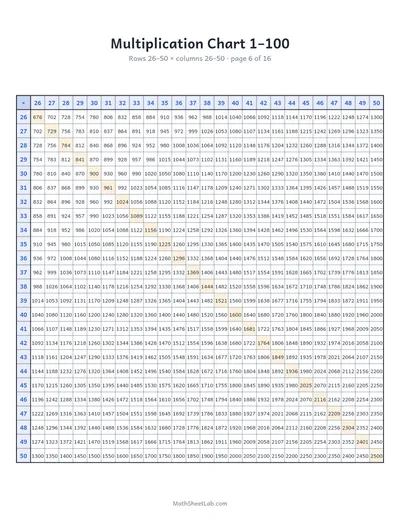
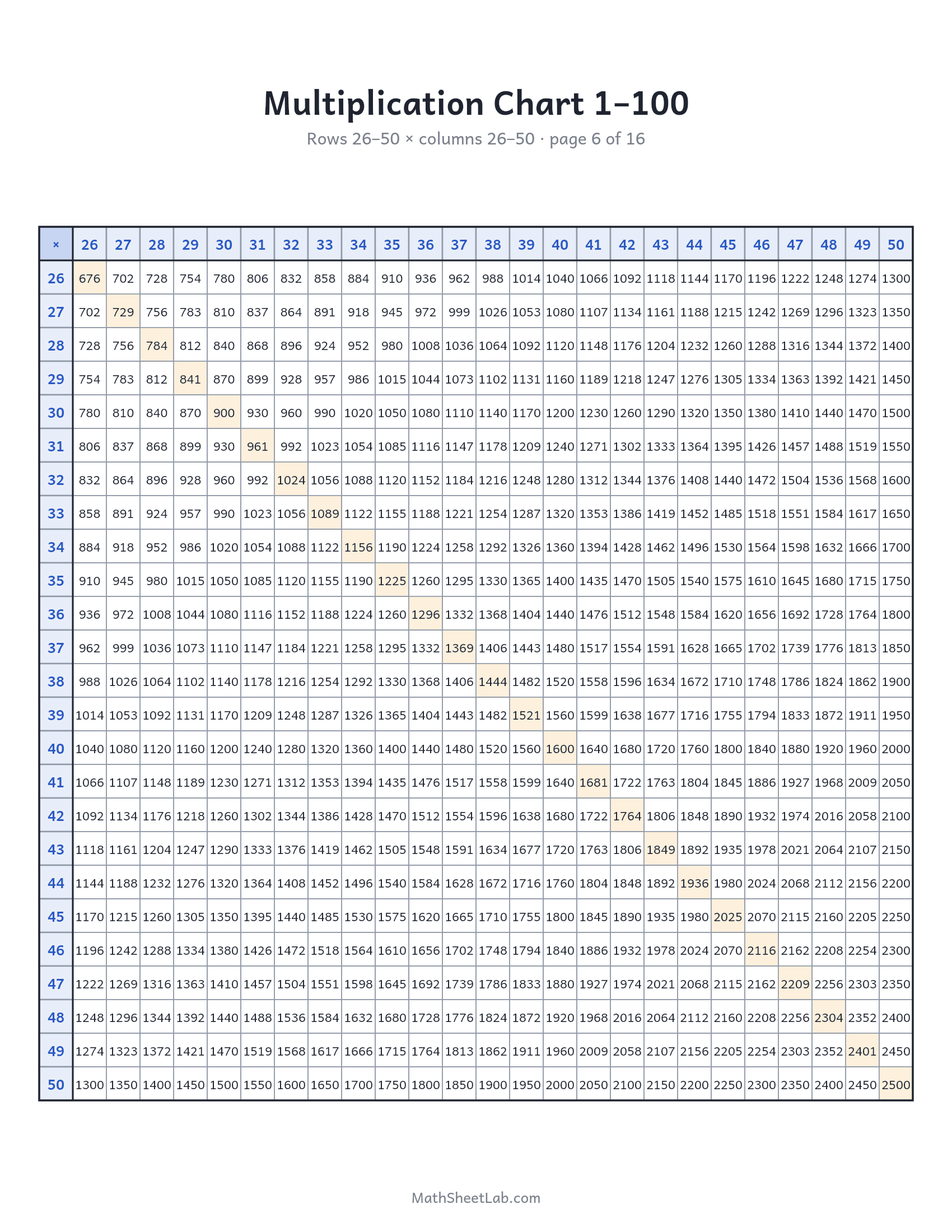
Page 6: rows 26–50 × columns 26–50
-
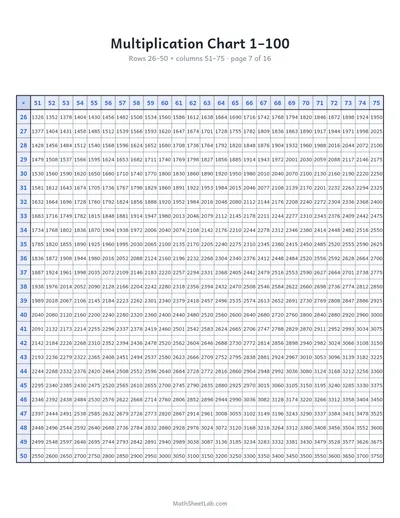
Page 7: rows 26–50 × columns 51–75
-
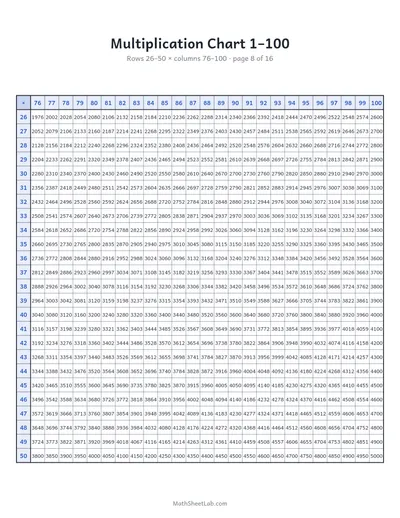
Page 8: rows 26–50 × columns 76–100
-
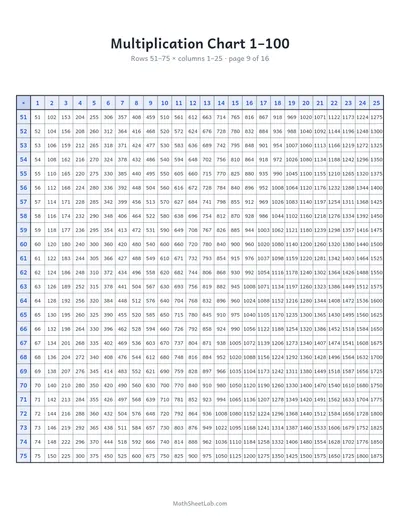
Page 9: rows 51–75 × columns 1–25
-
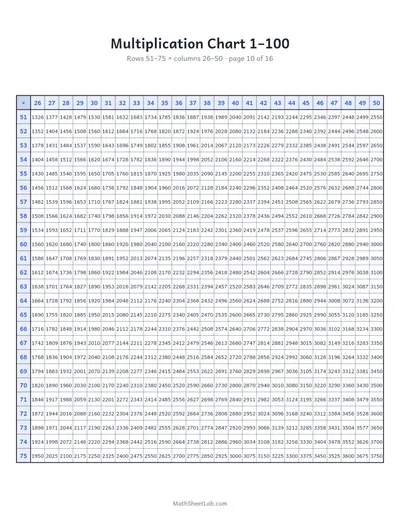
Page 10: rows 51–75 × columns 26–50
-
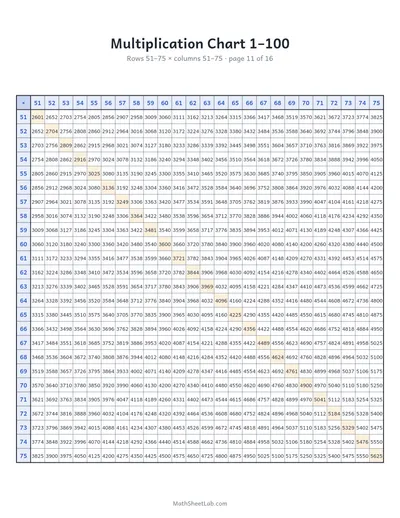
Page 11: rows 51–75 × columns 51–75
-
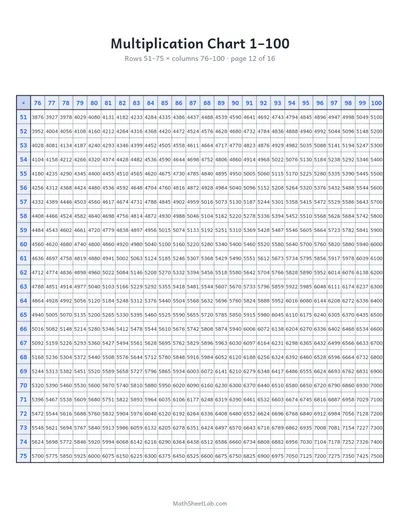
Page 12: rows 51–75 × columns 76–100
-
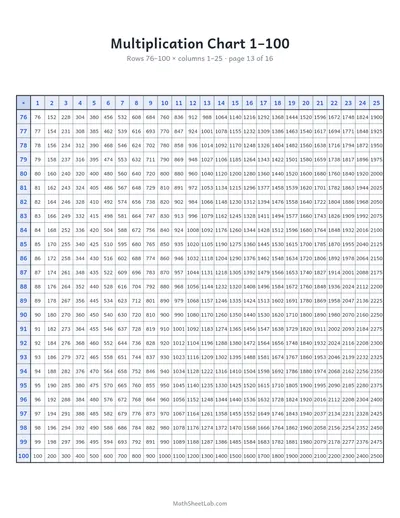
Page 13: rows 76–100 × columns 1–25
-
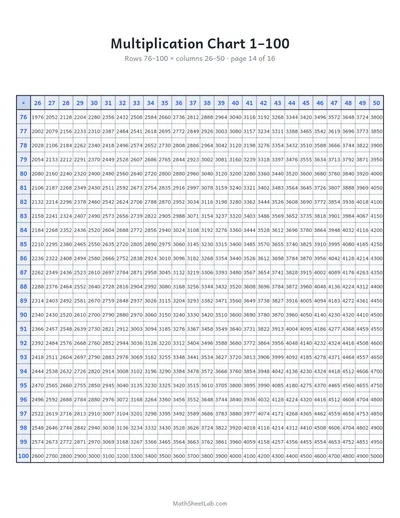
Page 14: rows 76–100 × columns 26–50
-
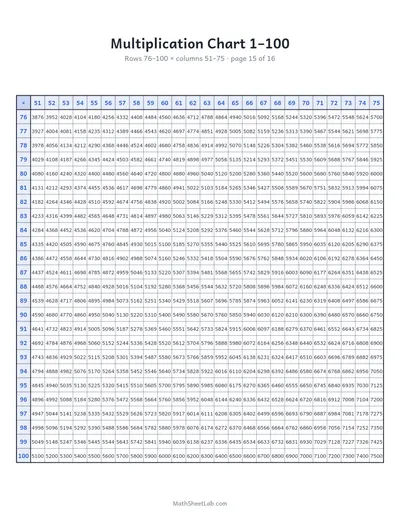
Page 15: rows 76–100 × columns 51–75
-
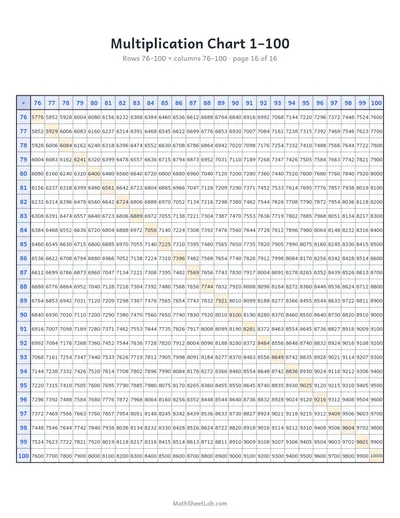
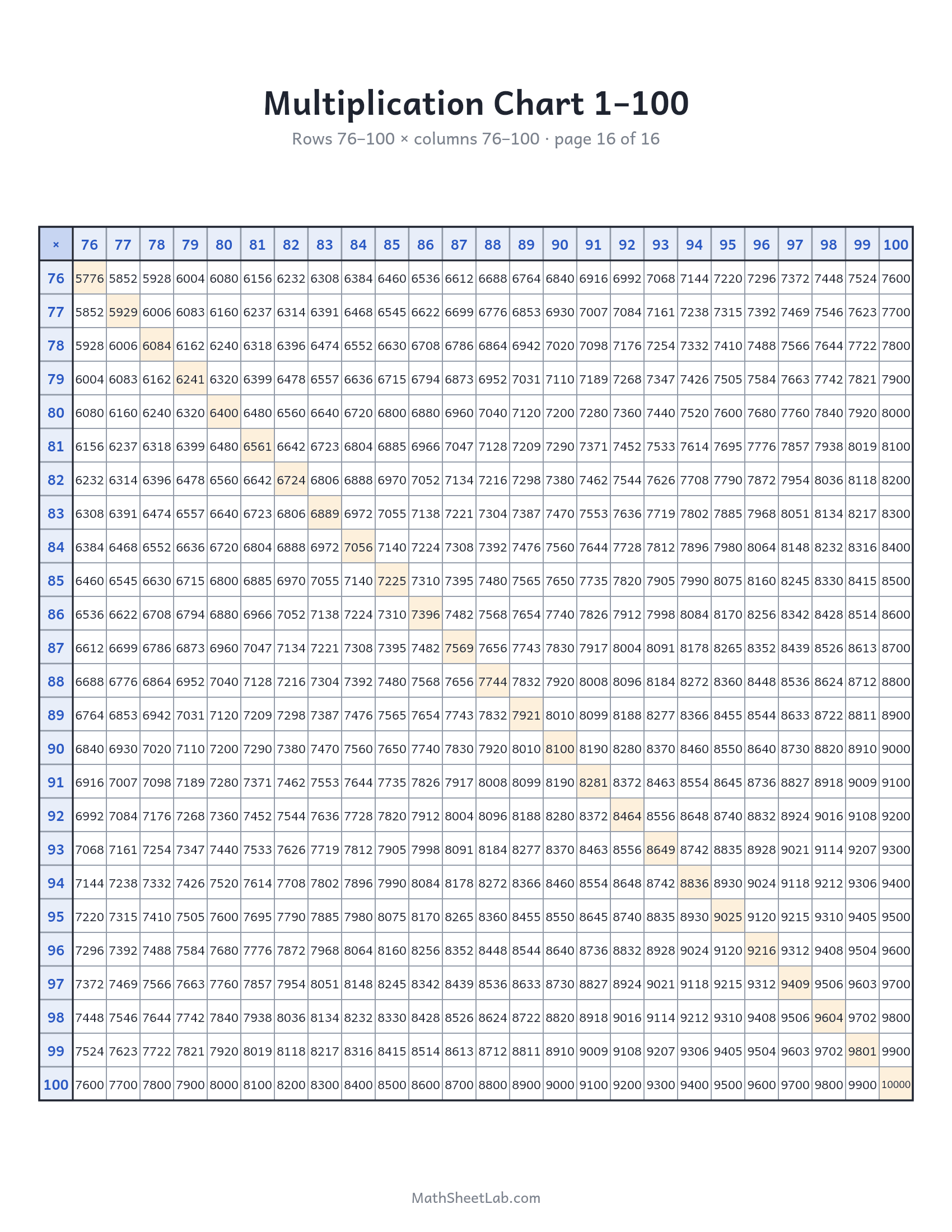
Page 16: rows 76–100 × columns 76–100
How to print it
- Download or print the set. Press Download PDF for all 16 pages in one file, or Print all 16 pages. Every page also has its own Print and PDF buttons in the gallery below.
- Fit to page. In the print dialog choose “Fit to page” — the chart is laid out for US Letter and scales cleanly onto A4.
- Copy freely. Print or photocopy as many as you need for home, classroom or tutoring use. It is free, with no sign-up.
About the multiplication chart 1–100
Ten thousand products will not fit on one sheet at a size anyone can read, so this chart is cut into sixteen 25 × 25 blocks. At this size it is a lookup table rather than a times-tables aid. Older students use it to check long multiplication (every answer on a 2-digit by 2-digit worksheet is on it), to hunt factor pairs (360 turns up 18 times, from 4 × 90 to 90 × 4) and to look for patterns. The square numbers run down the shaded diagonal through pages 1, 6, 11 and 16, ending at 100 × 100 = 10,000. Row 100 is row 1 with two zeros on the end, and each number in row 50 is half the one in the same column of row 100.
Grade level: this chart is used in our 5th grade math worksheets collection.
Frequently asked questions
What is a 100 × 100 multiplication chart?
The times-table grid carried on to 100. The numbers 1 to 100 run down the side and across the top, and each of the 10,000 cells holds the product of its row and column, from 1 × 1 = 1 up to 100 × 100 = 10,000.
Why is the chart split over 16 pages?
On one Letter page each cell would be under a tenth of an inch wide, far too narrow for four-digit products. Sixteen blocks keep the numbers readable. Every page repeats its own row and column headers, so you can print only the blocks you need: pages 1, 2, 5 and 6 together make the 1–50 chart.
How do I put the pages together?
Lay them out in four rows of four in page order, so page 1 is top left and page 16 is bottom right. Trim the white margins and tape the seams from the back. You can keep every page’s blue headers as signposts. For one continuous grid more than two feet square, cut the row labels (the left column) off every page except 1, 5, 9 and 13, and the column labels (the top row) off every page except 1–4.
How do I find which page a product is on?
Each factor falls into one of four bands: 1–25, 26–50, 51–75 or 76–100. The first factor’s band picks the row of pages and the second factor’s band picks the page in that row. For 63 × 38, rows 51–75 meet columns 26–50 on page 10, where the cell reads 2394.