Integer number line (−10 to 10)
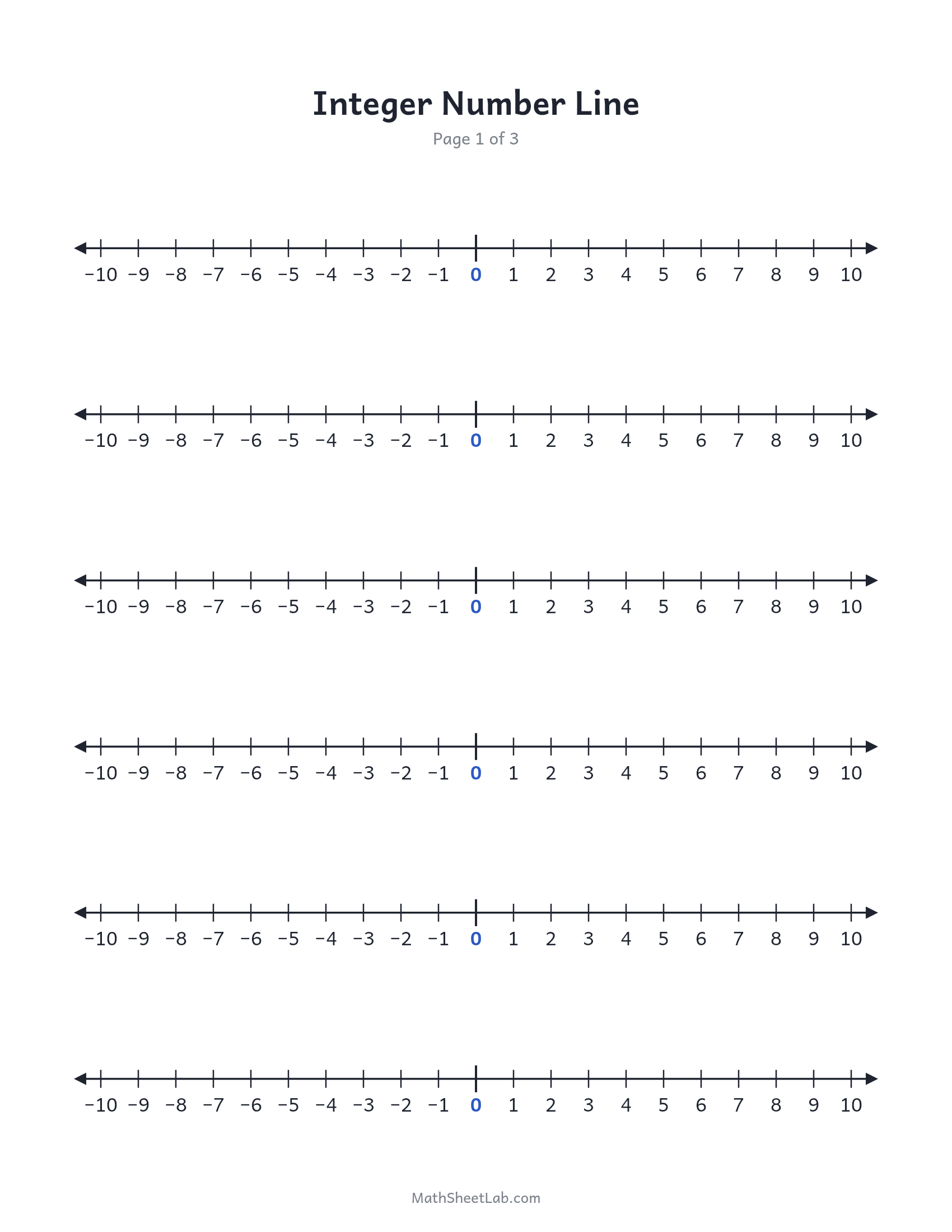
Number lines that run through zero: six labeled lines from −10 to 10, a −20 to 20 page, and a blank page with zero marked.
All 3 pages
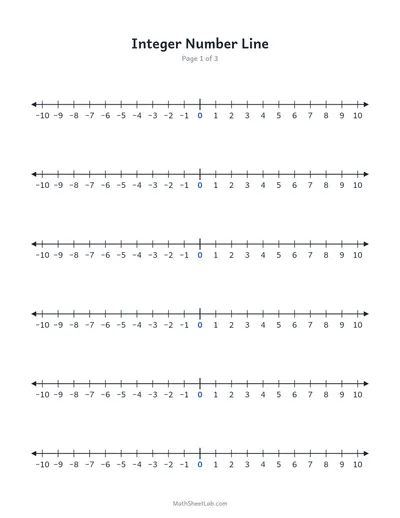
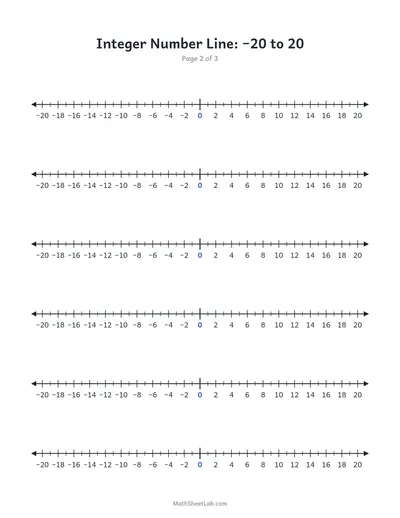
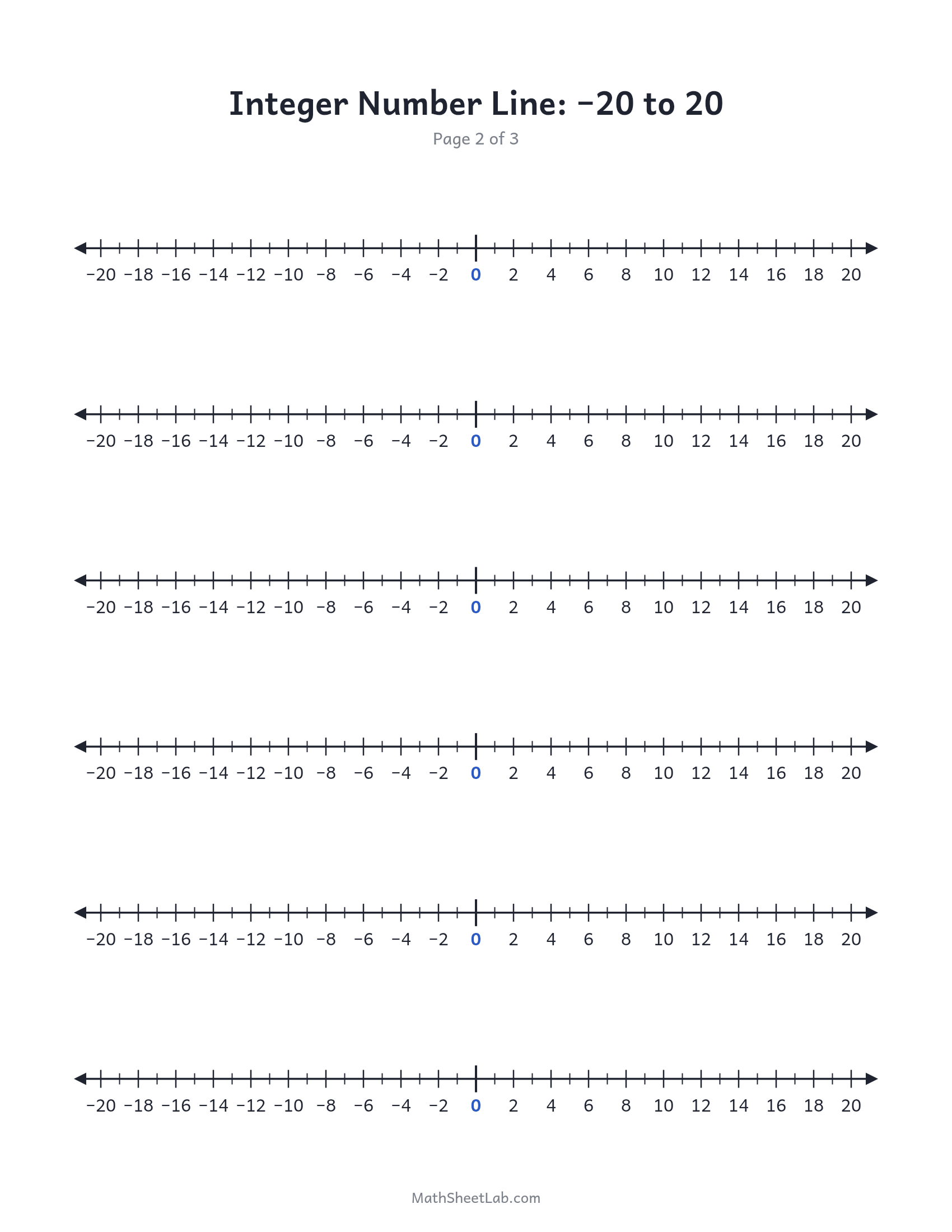
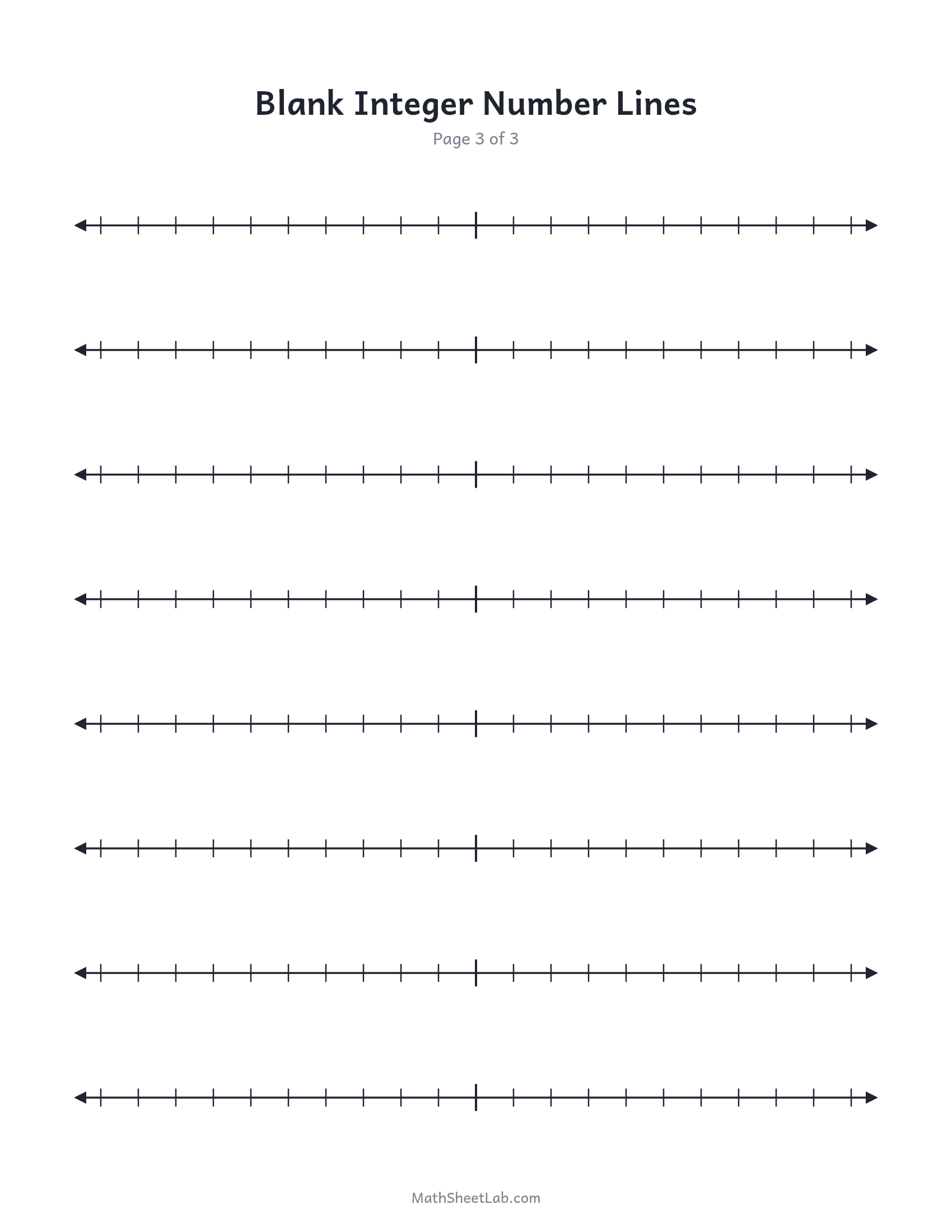
Page 1 has six lines from −10 to 10, page 2 widens the range to −20 to 20 with a tick for every whole number and labels on the even ones, and page 3 leaves the numbers off so students label the lines themselves.
-
−10 to 10
-
−20 to 20
-
Blank, zero marked
How to print it
- Open the print view. Press Print for a clean print-ready view of page 1, or download it as a PDF or PNG. The other pages are in the gallery below, with a button to download them all.
- Fit to page. In the print dialog choose “Fit to page” — the chart is laid out for US Letter and scales cleanly onto A4.
- Copy freely. Print or photocopy as many as you need for home, classroom or tutoring use. It is free, with no sign-up.
About the integer number line
An integer number line puts the negative numbers to the left of zero, which turns the integer rules into directions. Adding a positive number moves right and adding a negative moves left, so 3 + (−7) is a jump of seven to the left that lands on −4. Subtracting a negative goes the other way: −2 − (−5) = 3. The line also settles comparisons, since −8 sits further left than −3 and so is smaller, even though 8 is bigger than 3. Zero is printed in bold blue on every labeled line, and the labeled pages hold six lines each, one problem per line with room above for the jump arcs. In the Common Core standards, negative numbers arrive in 6th grade and integer addition and subtraction in 7th.
Frequently asked questions
How do you add integers on a number line?
Start at the first number. Move right for a positive number and left for a negative one. For −6 + 9, start at −6 and jump 9 to the right to land on 3.
How do you subtract a negative number on a number line?
Subtracting reverses the direction. For 4 − (−3), start at 4 and move 3 to the right instead of the left. The answer is 7.
When should students use the −20 to 20 page?
For problems that go past ten on either side of zero, such as −14 + 6 or 12 − 19. Every whole number has a tick, so students can count each jump one step at a time. Only the even numbers are labeled, to keep the labels readable, and the odd numbers are the shorter ticks in between.
What is the blank page for?
Students write the labels themselves. The center tick is taller and bolder to mark zero, so they can number outward in both directions, or count by twos or fives for a wider range.