Fractions on a number line
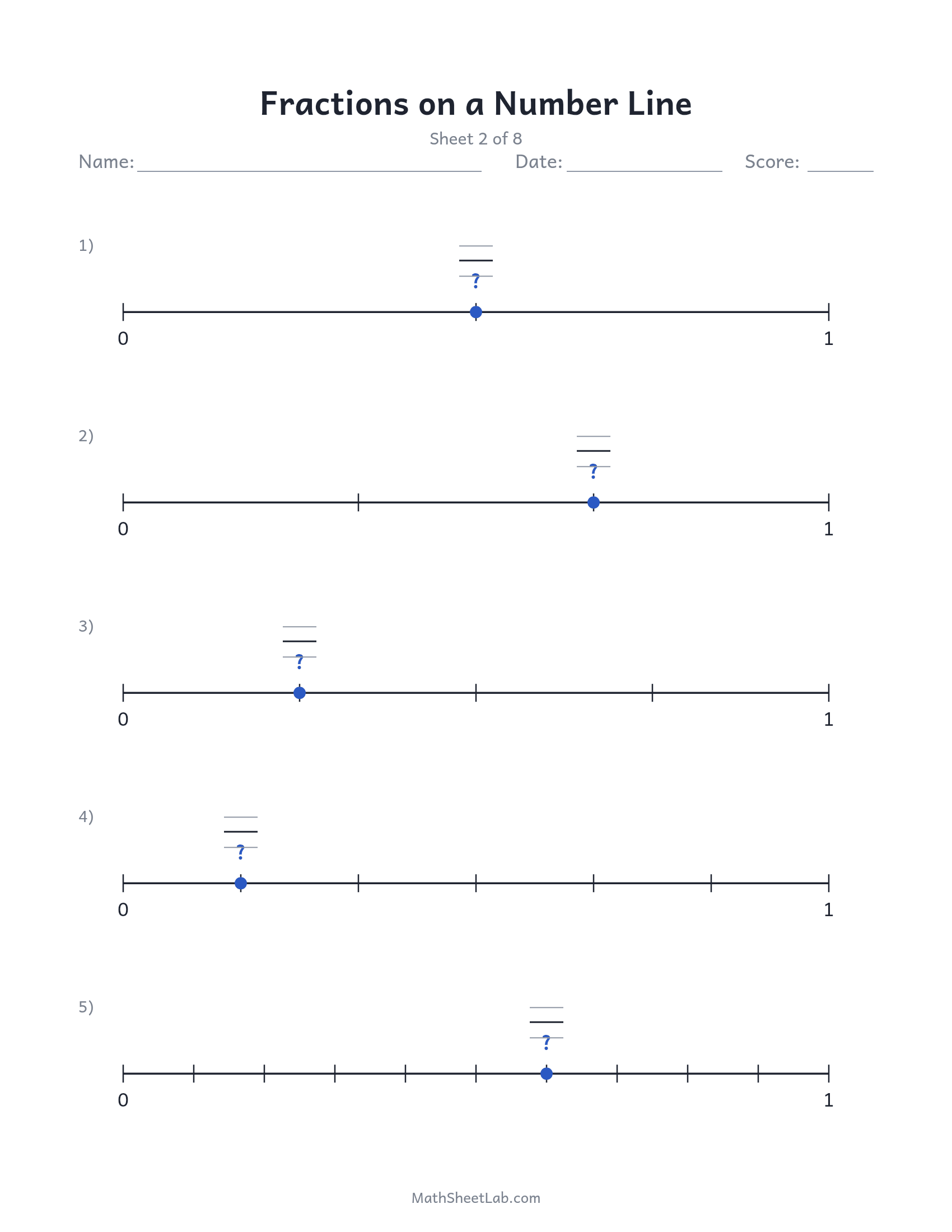
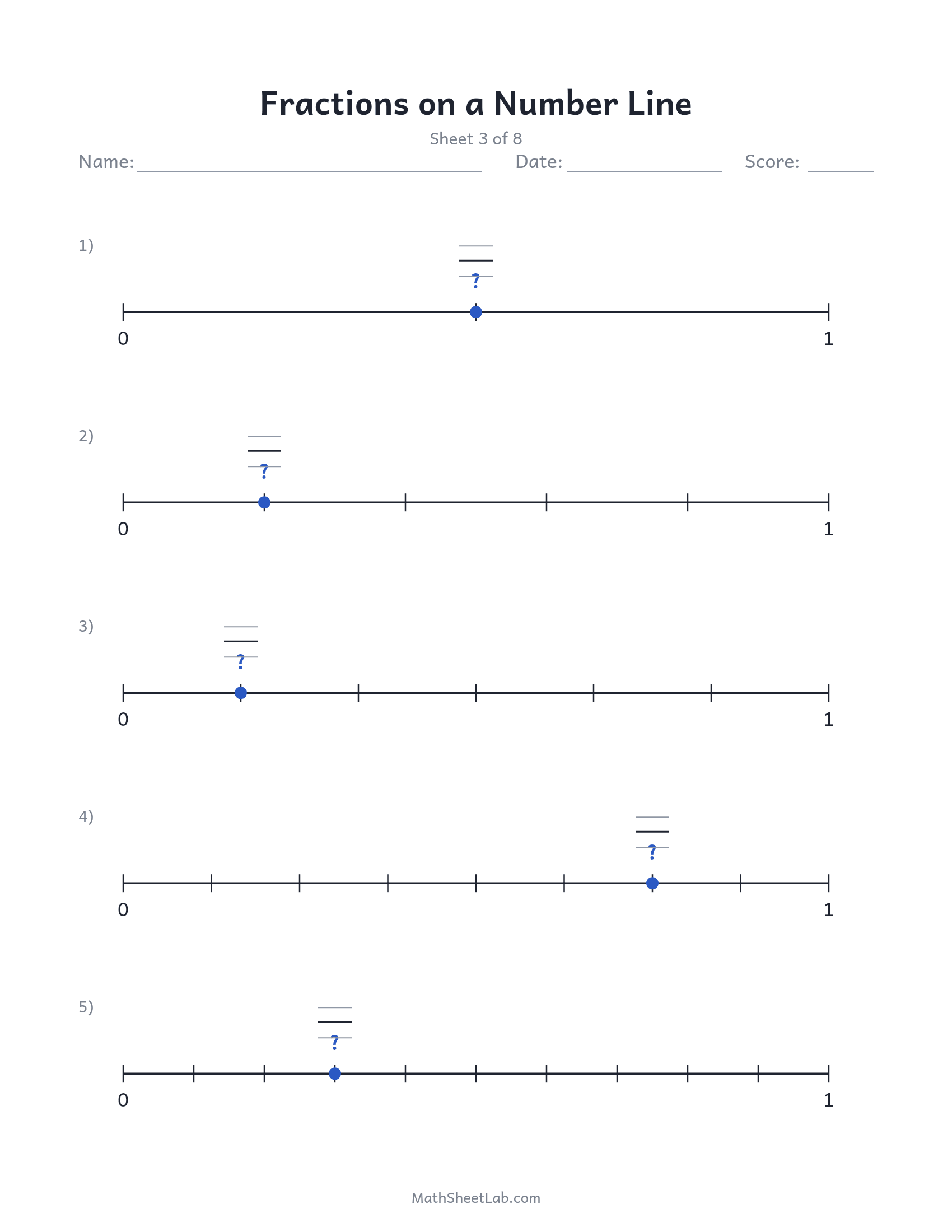
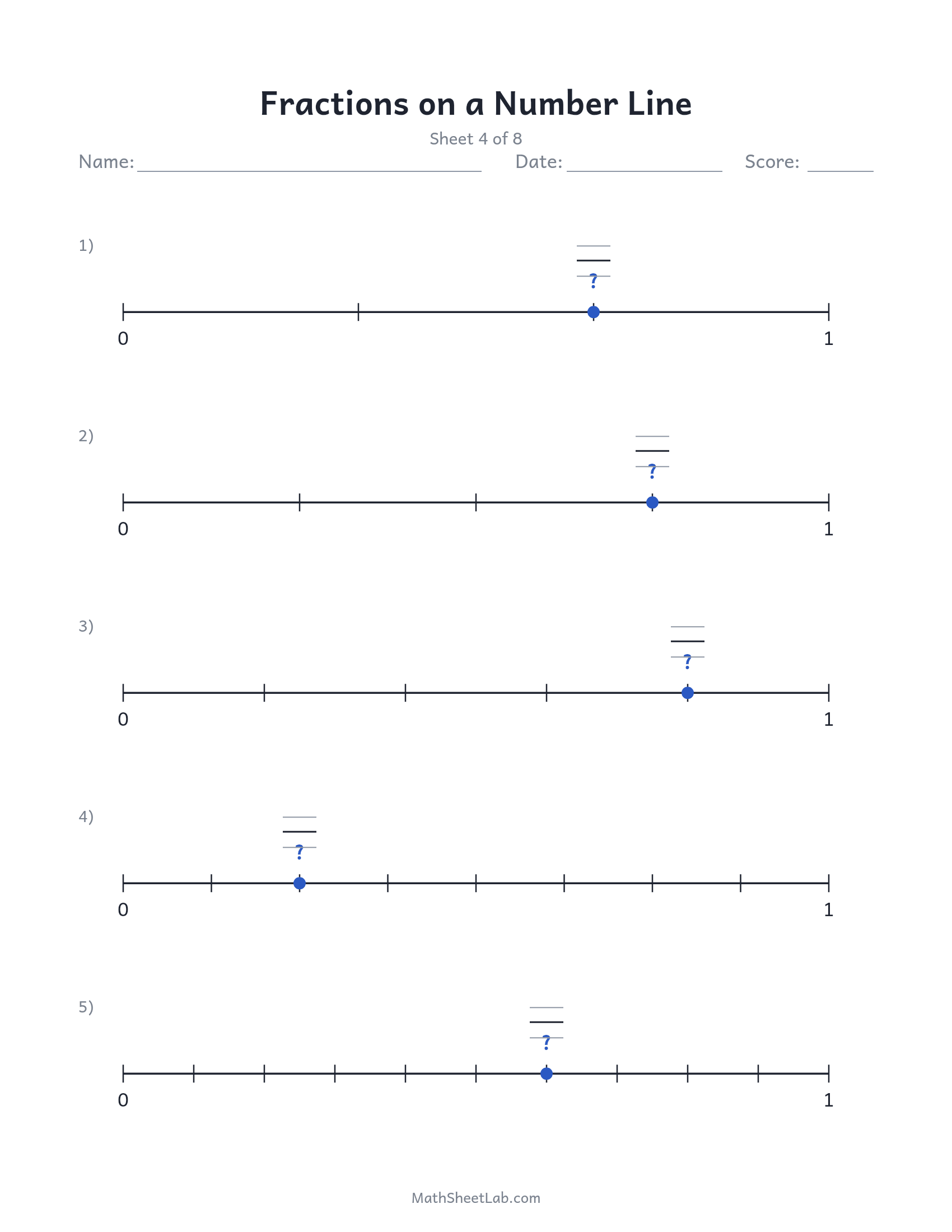
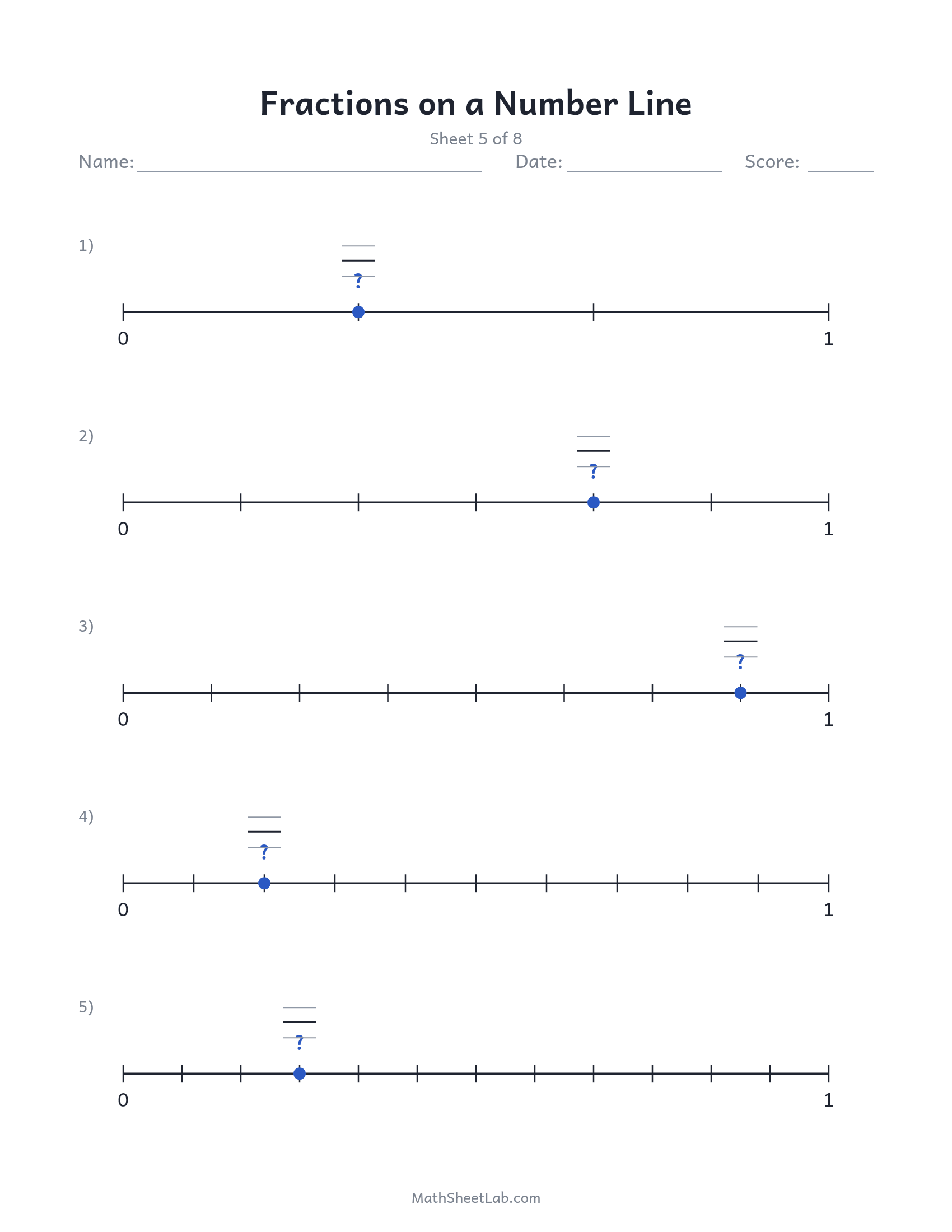
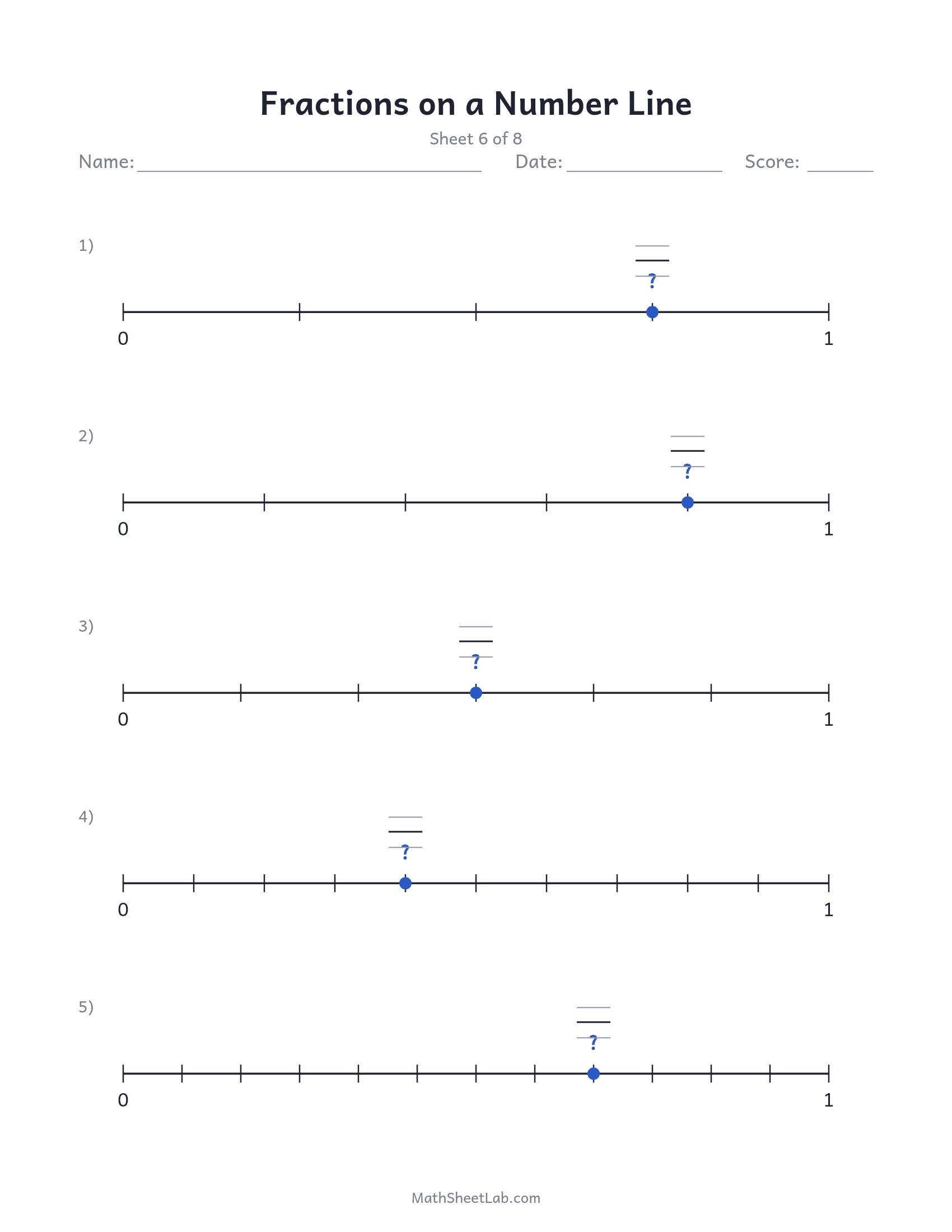
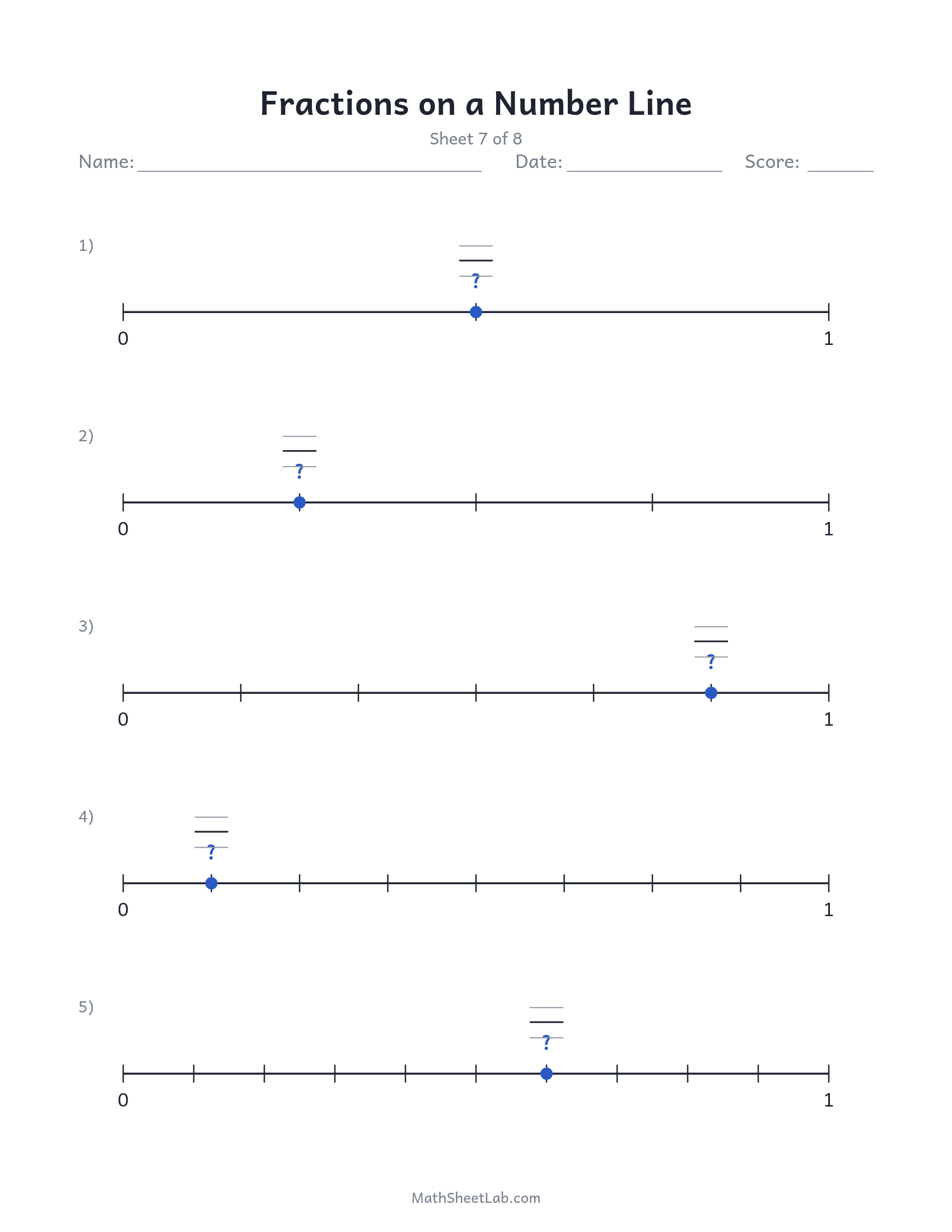
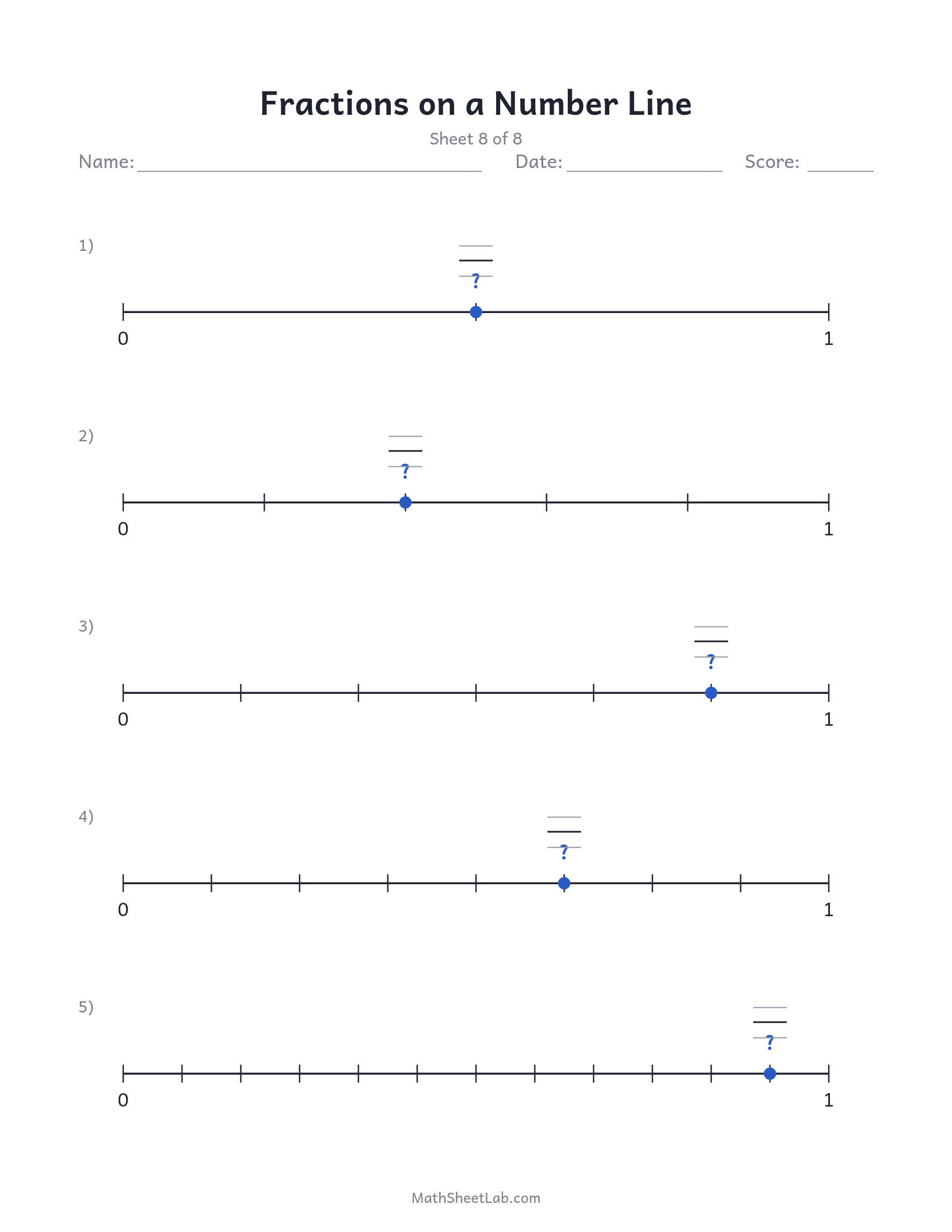
Five number lines from 0 to 1, each with a marked mystery point — count the jumps, name the fraction.
Best fit: 3rd–4th grade · 8 sheets, answer keys included · Free, no sign-up
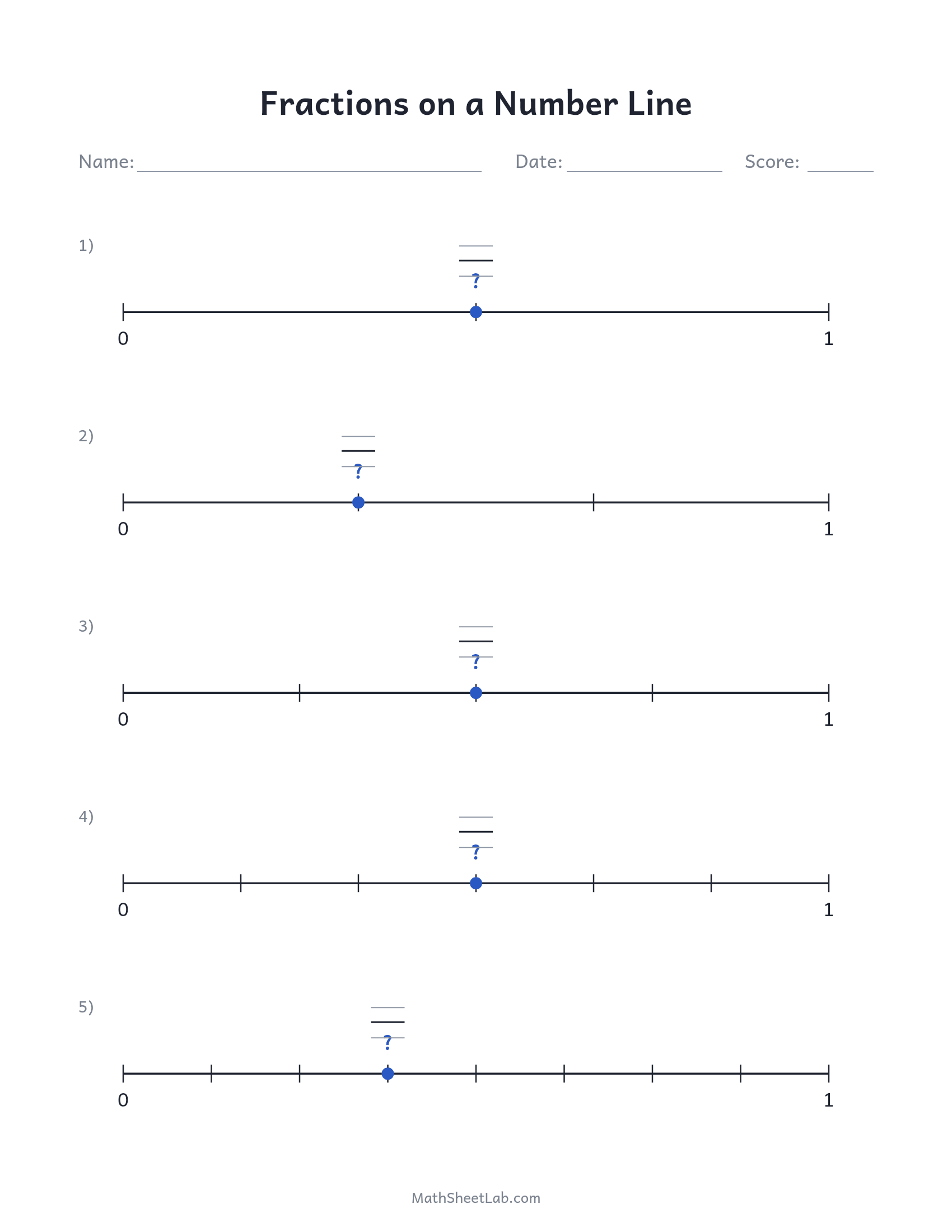
The full set: 8 worksheets with answer keys
Eight sheets in the same layout with different problems: download them as one PDF or print one at a time.
Worksheets
-
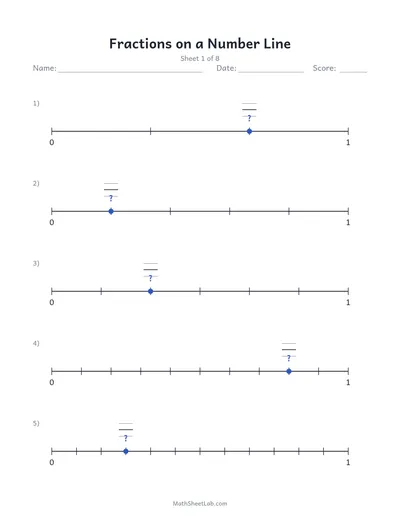
Sheet 1
-
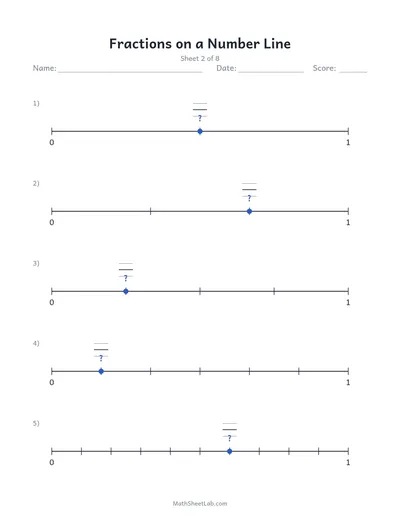
Sheet 2
-
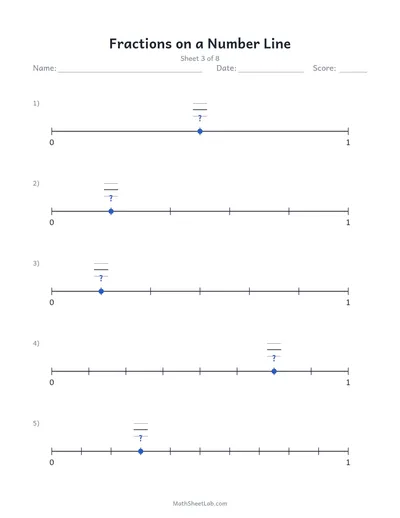
Sheet 3
-
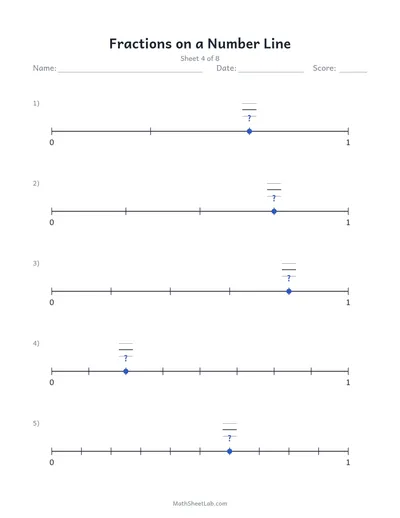
Sheet 4
-
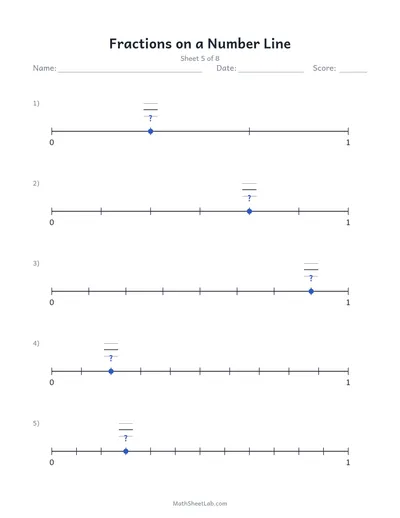
Sheet 5
-
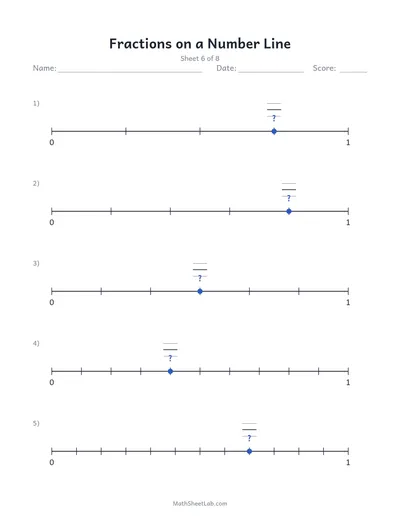
Sheet 6
-
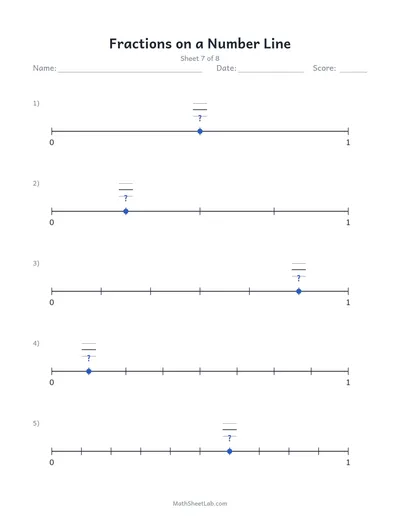
Sheet 7
-
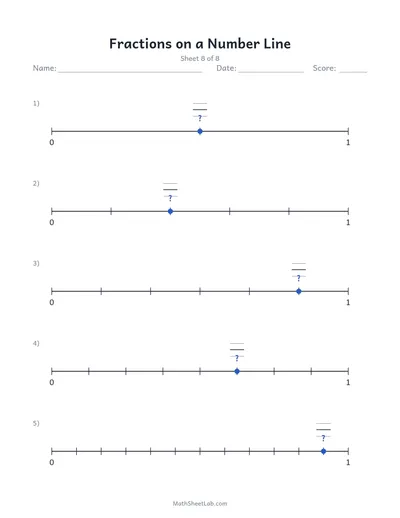
Sheet 8
Answer keys
-
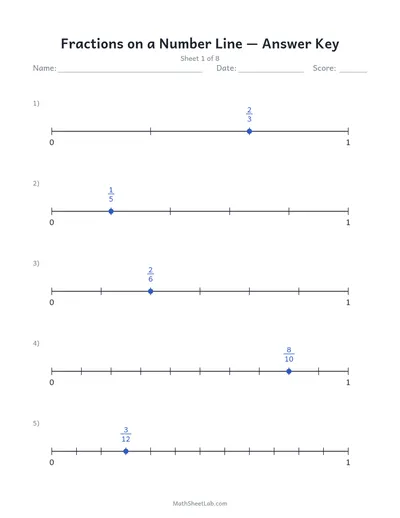
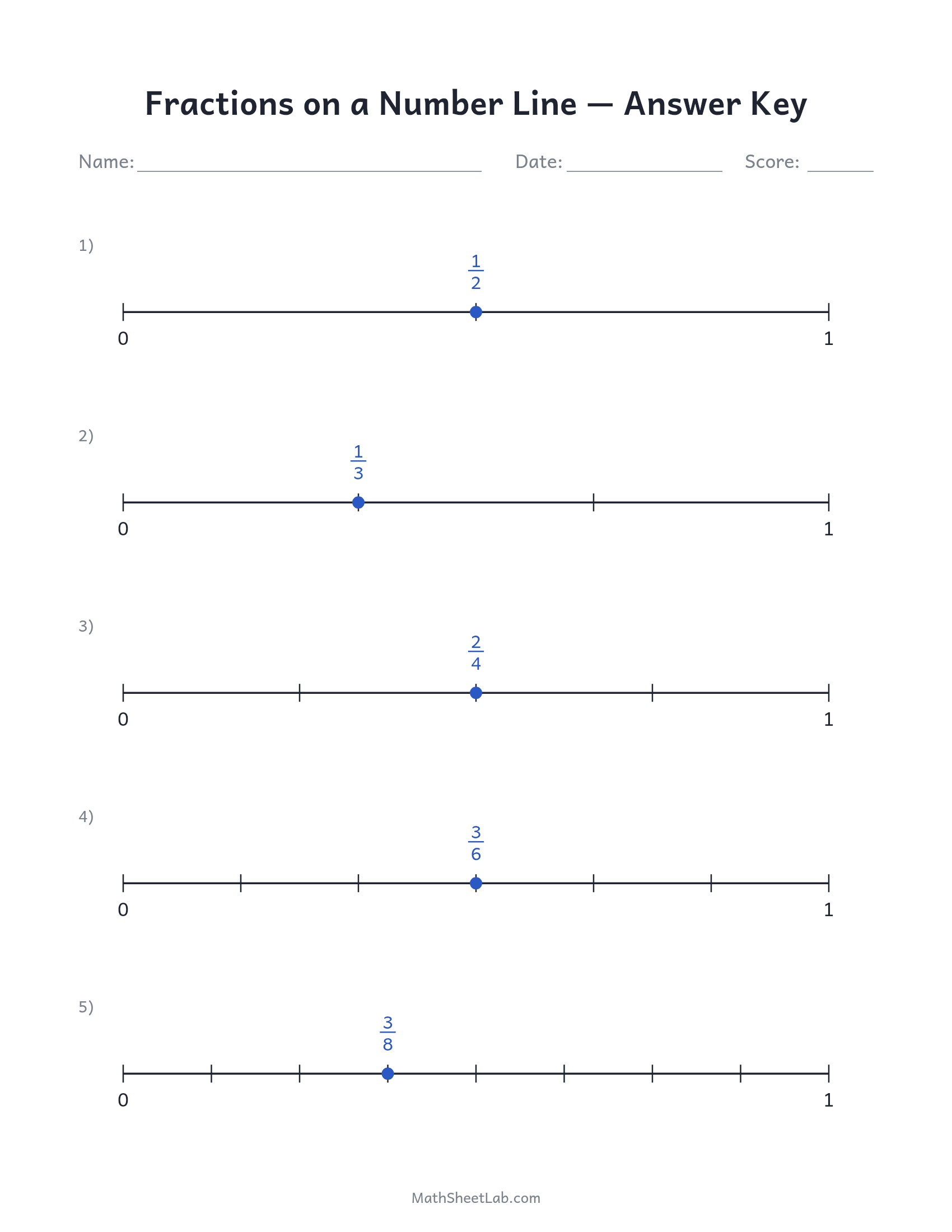
Sheet 1 answers
-
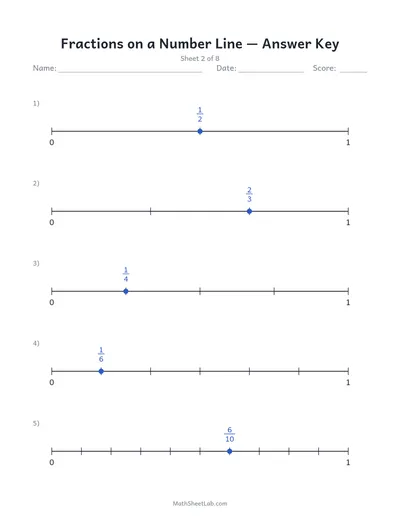
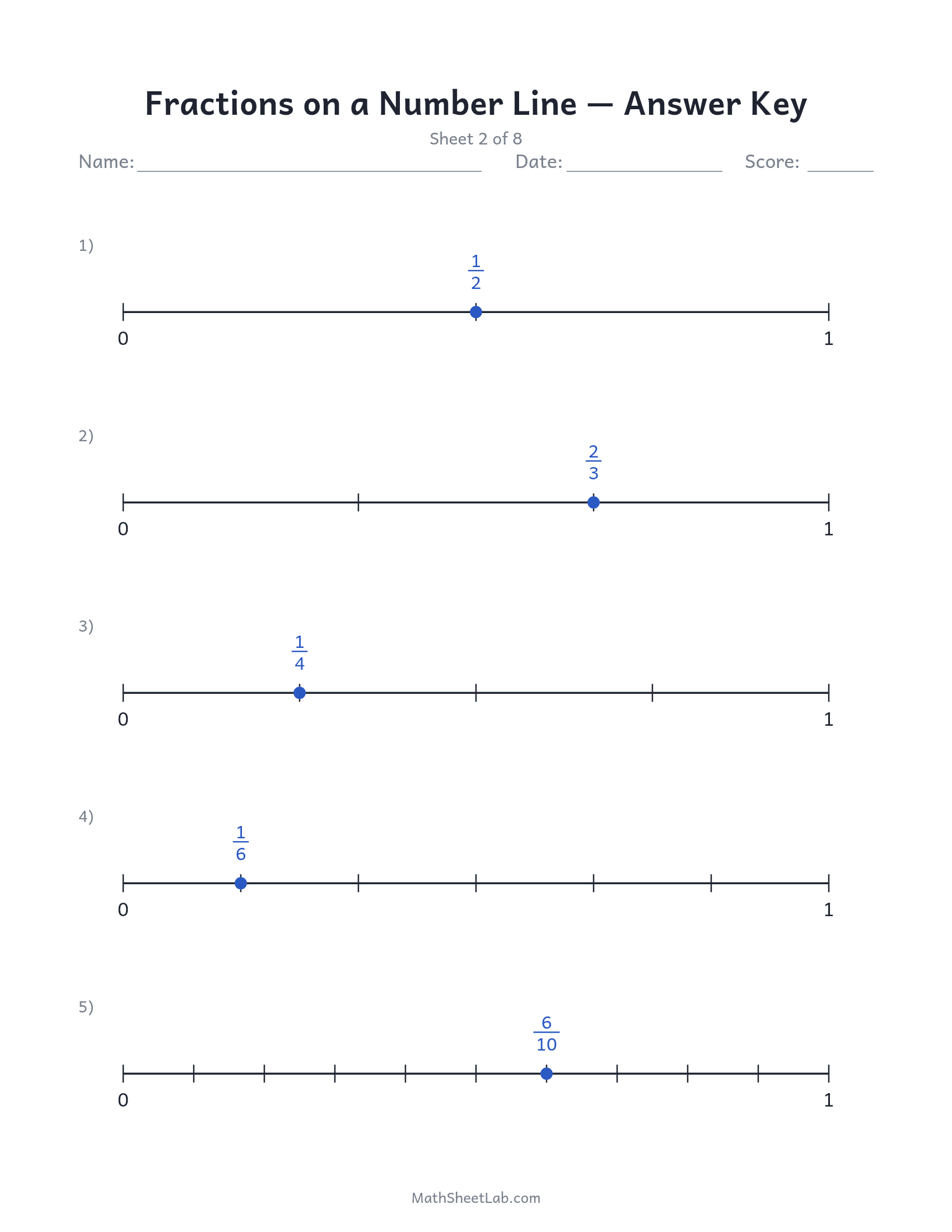
Sheet 2 answers
-
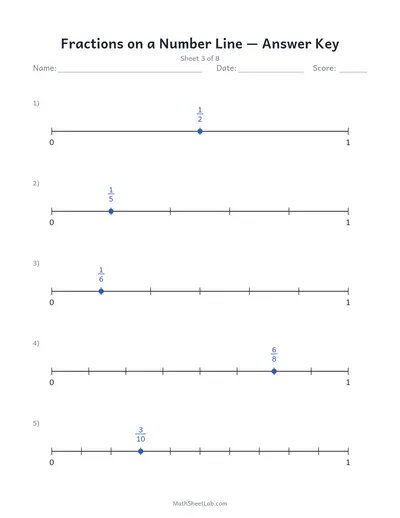
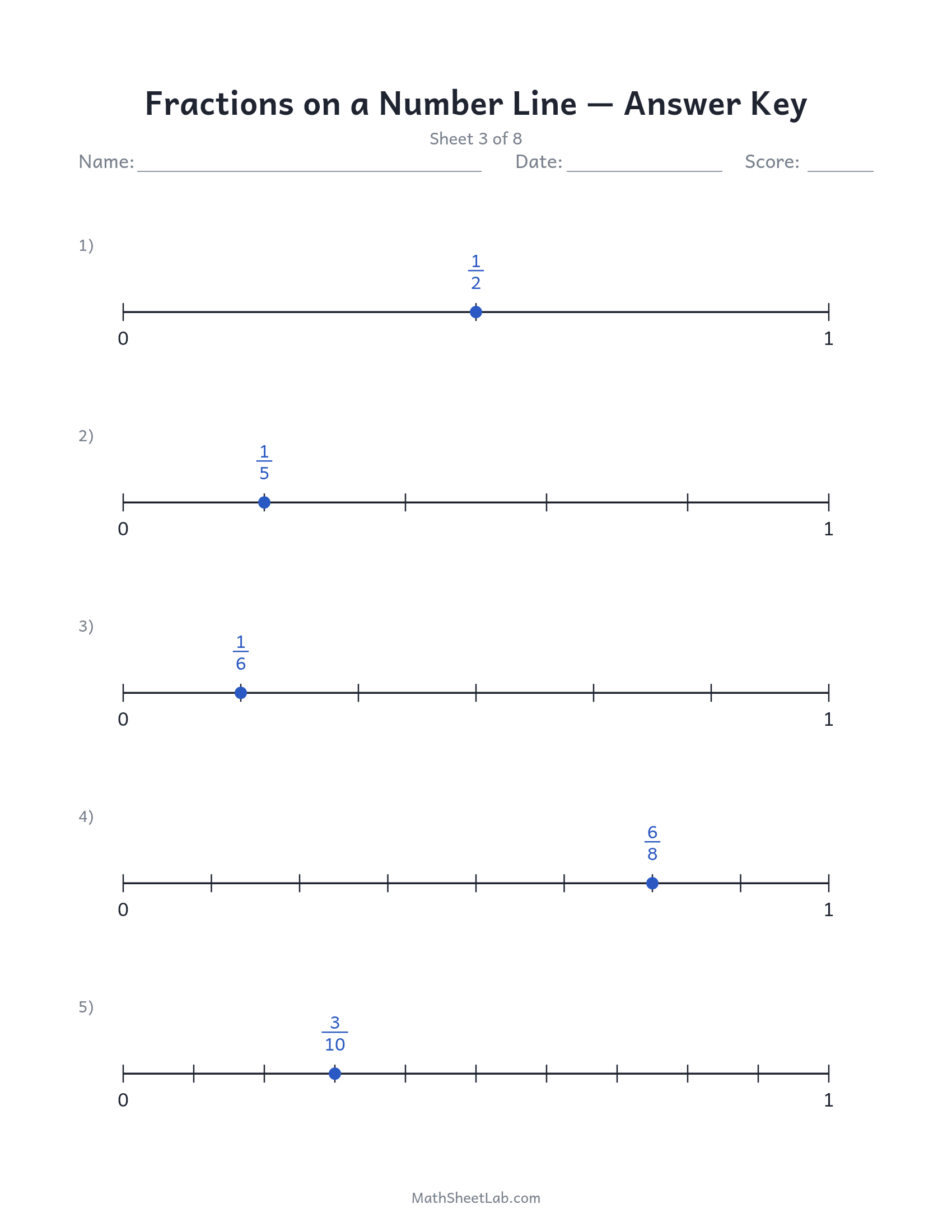
Sheet 3 answers
-
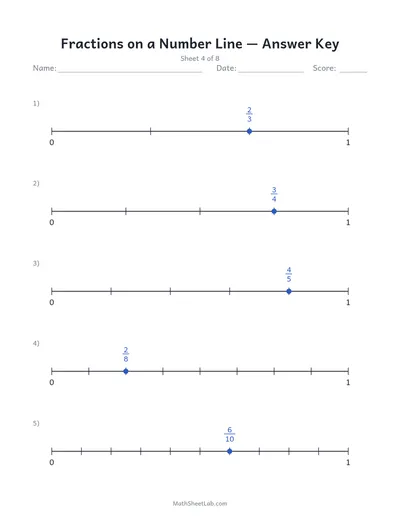
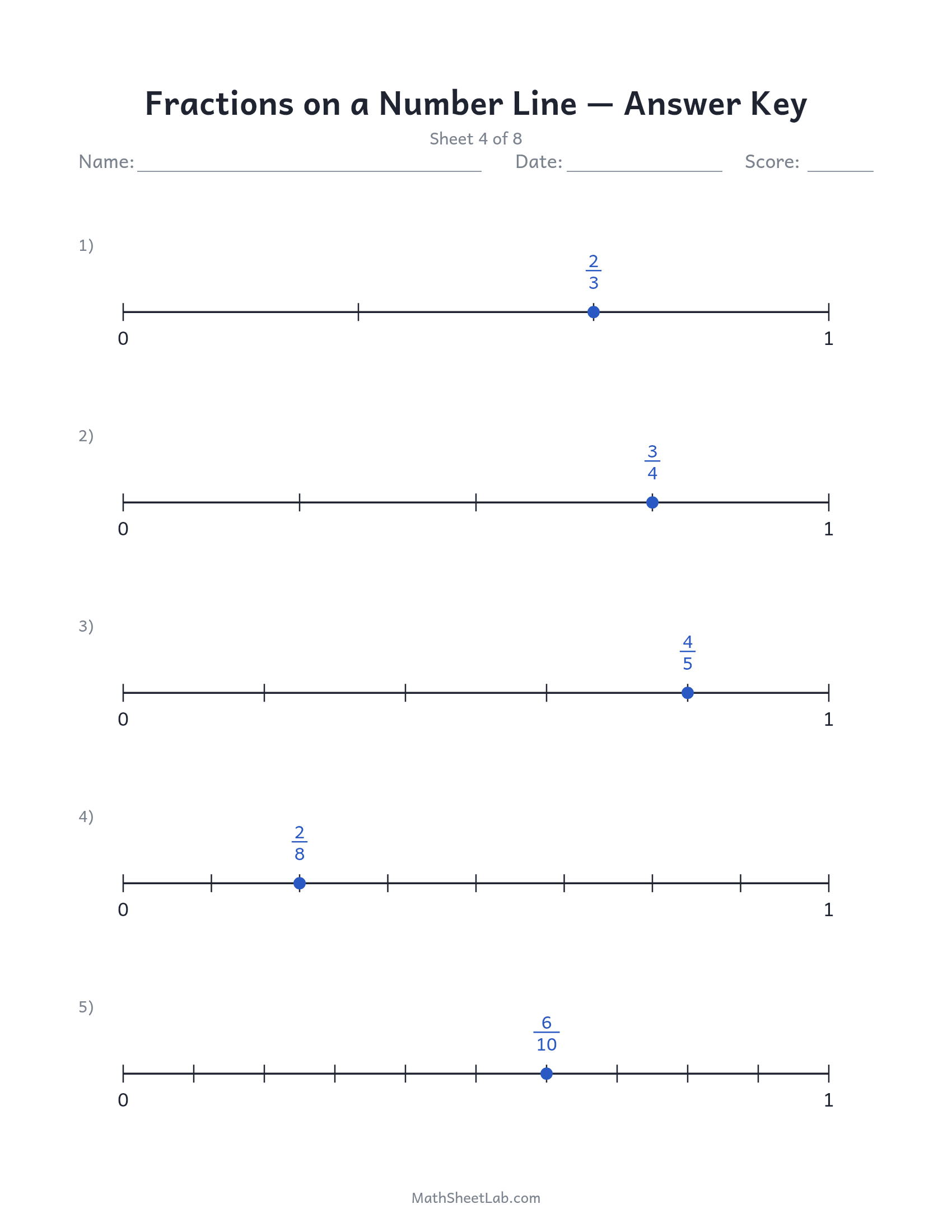
Sheet 4 answers
-
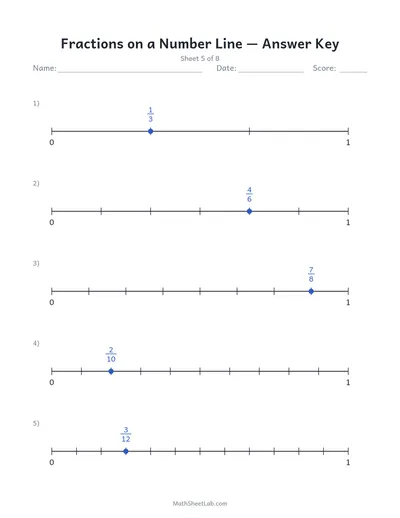
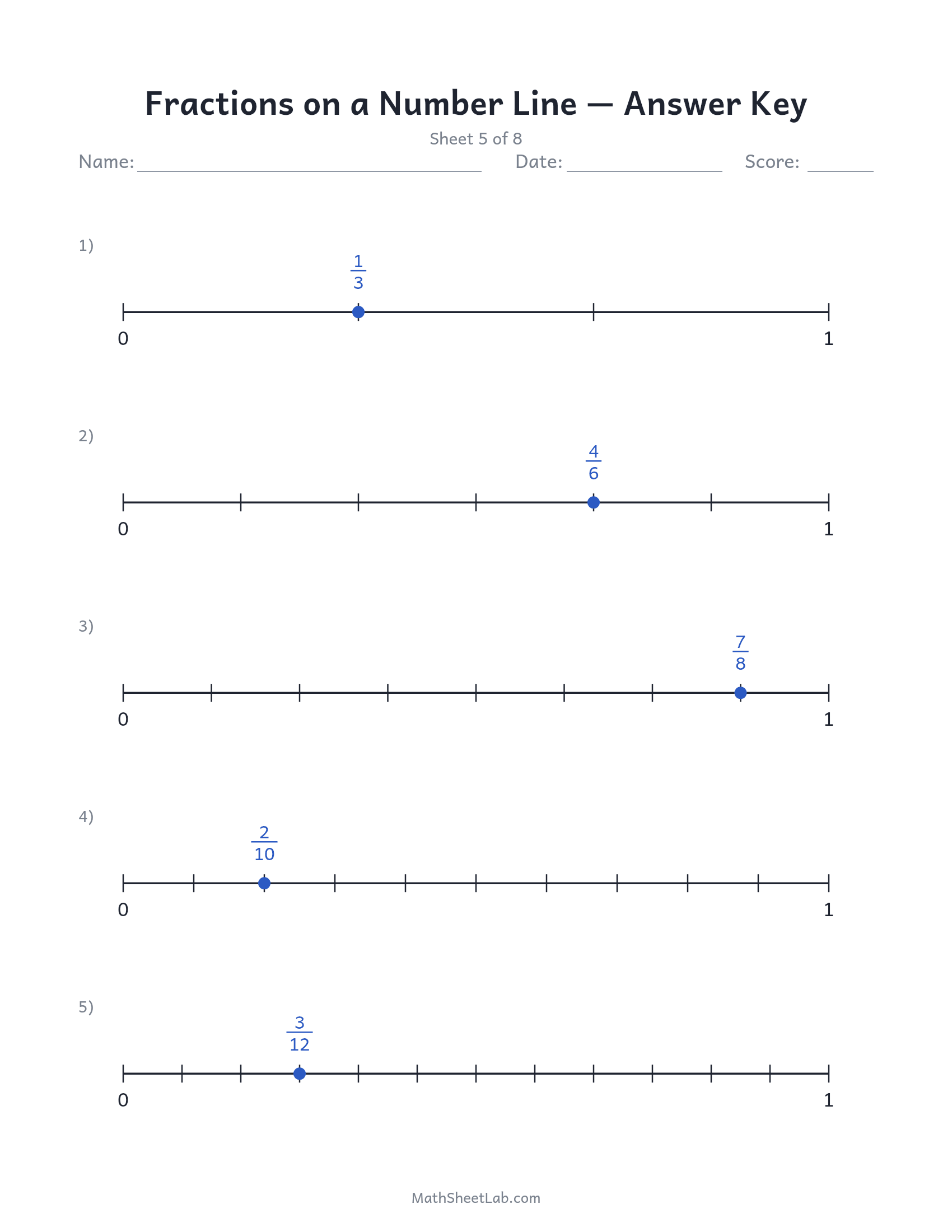
Sheet 5 answers
-
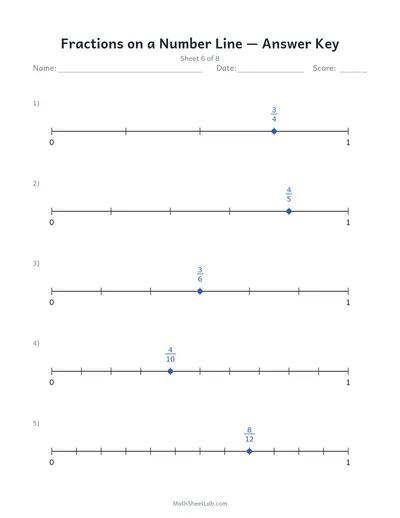
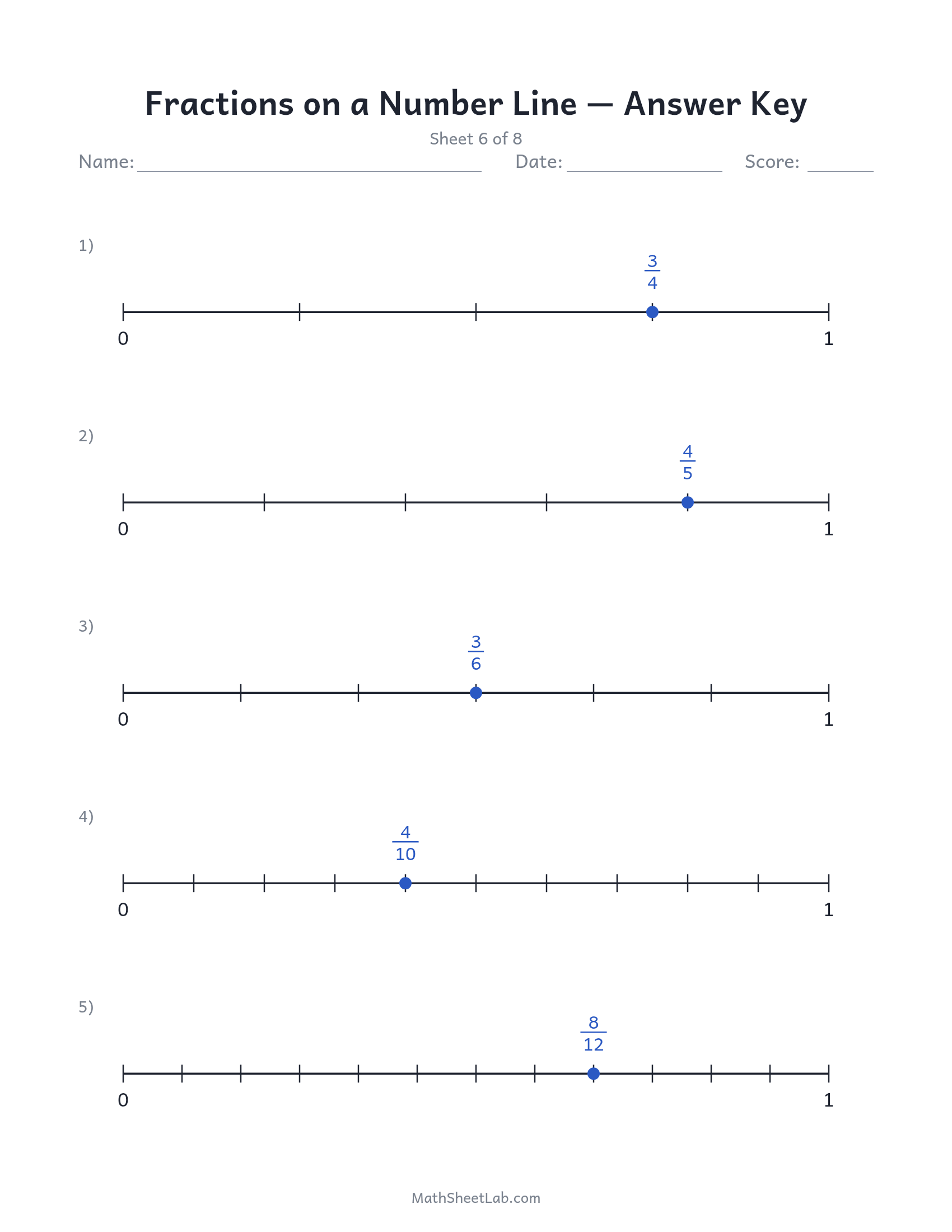
Sheet 6 answers
-
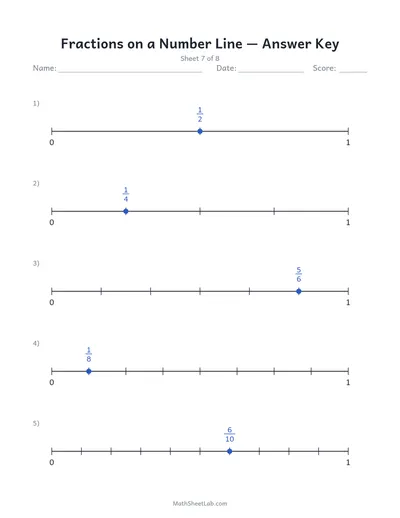
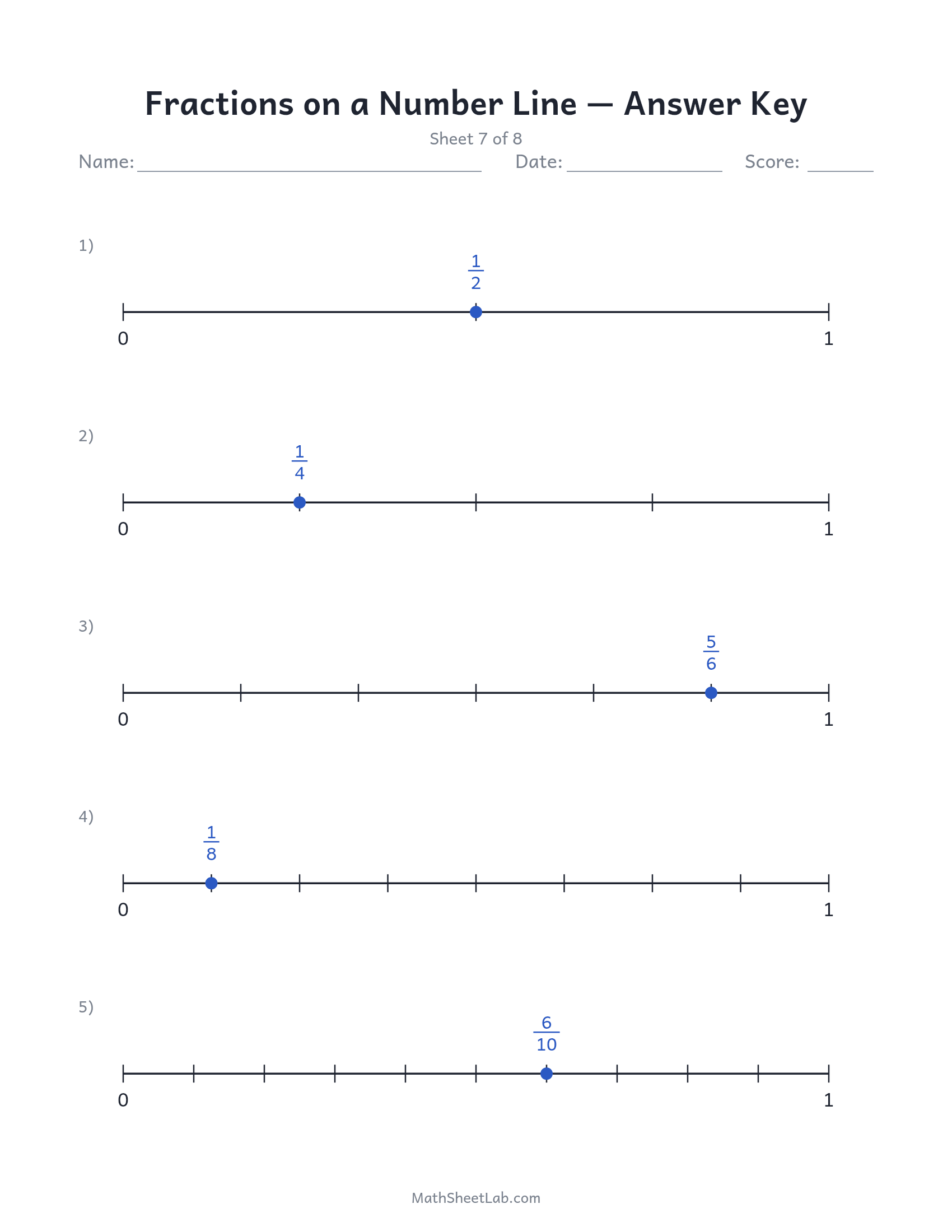
Sheet 7 answers
-
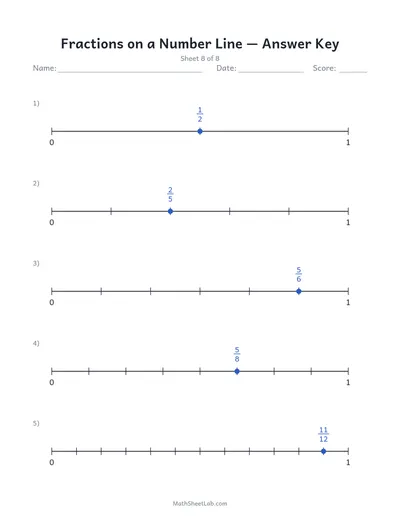
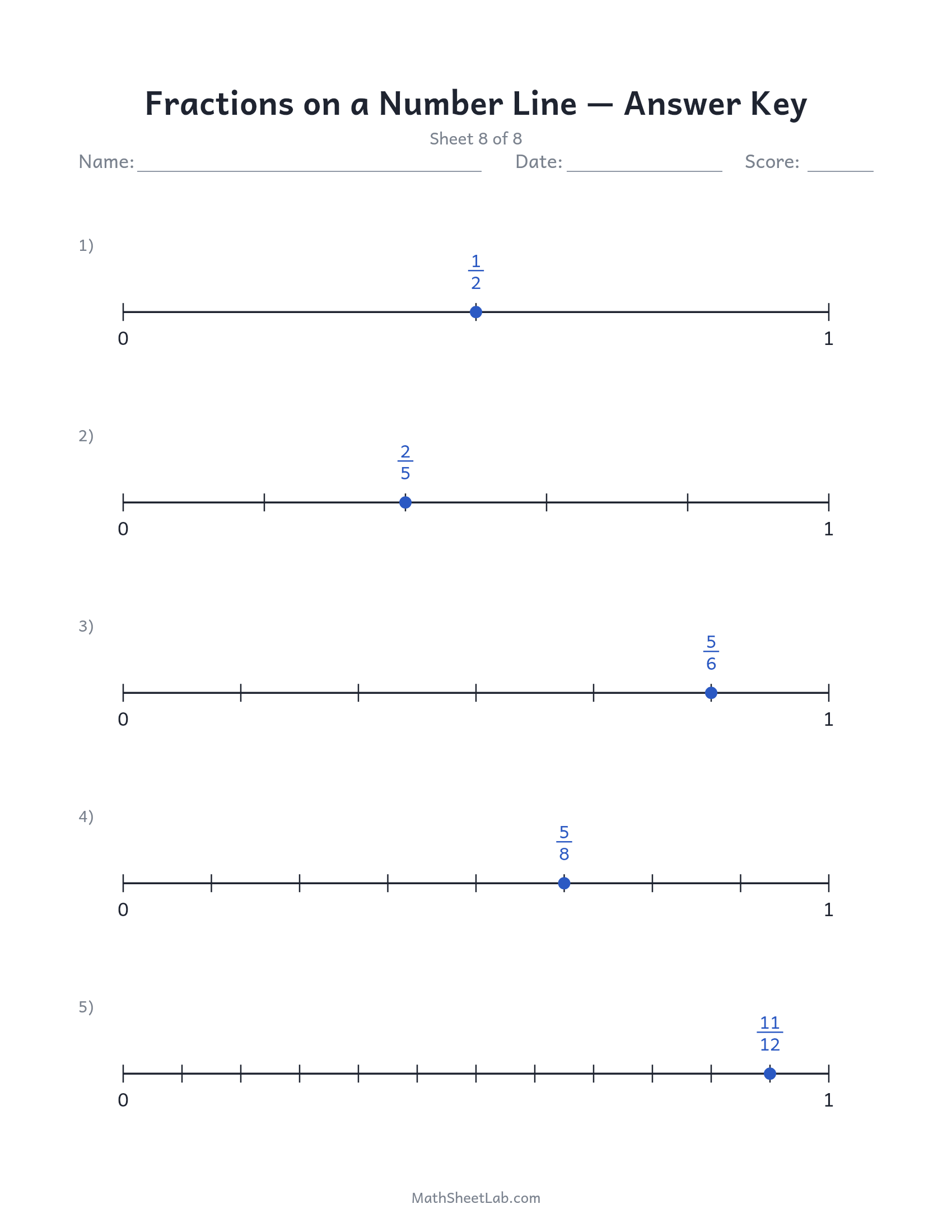
Sheet 8 answers
About these worksheets
Placing fractions on a number line starts in 3rd grade and shows fractions as numbers with a place on the line, not only as parts of a shape. Each sheet has five lines from 0 to 1, each cut into a different number of equal parts: sheet 1 uses thirds, fifths, sixths, tenths and twelfths, and sheet 2 uses halves, thirds, fourths, sixths and tenths. The child counts intervals (not tick marks, the classic off-by-one mistake) and names the marked point. No value appears twice on a sheet: if one line marks 1/2, no other line marks 2/4 or 3/6. The keys name each point in its own line’s parts, so a point on the tenths line is 8/10 rather than 4/5.
Grade level: these worksheets are part of our 3rd grade math worksheets and 4th grade math worksheets collections.
Frequently asked questions
What is the most common mistake on fraction number lines?
Counting tick marks instead of intervals. Between 0 and 1 with fourths there are three interior ticks but four jumps — the denominator counts the jumps.
Why teach fractions on a number line at all?
Once fractions have positions, comparing and ordering them comes down to which point sits further right, which is much harder to see with shapes alone.
What changes from sheet to sheet?
The denominators and the points. Each sheet uses five of these eight: halves, thirds, fourths, fifths, sixths, eighths, tenths and twelfths, sorted from fewest parts to most. Every sheet has at least one line in fifths, tenths or twelfths, which Common Core leaves to 4th grade. The marked points are picked at random.